- English
- French
- German
- Portuguese
- Spanish
- Russian
- Japanese
- Korean
- Arabic
- Greek
- German
- Turkish
- Italian
- Danish
- Romanian
- Indonesian
- Czech
- Afrikaans
- Swedish
- Polish
- Basque
- Catalan
- Esperanto
- Hindi
- Lao
- Albanian
- Amharic
- Armenian
- Azerbaijani
- Belarusian
- Bengali
- Bosnian
- Bulgarian
- Cebuano
- Chichewa
- Corsican
- Croatian
- Dutch
- Estonian
- Filipino
- Finnish
- Frisian
- Galician
- Georgian
- Gujarati
- Haitian
- Hausa
- Hawaiian
- Hebrew
- Hmong
- Hungarian
- Icelandic
- Igbo
- Javanese
- Kannada
- Kazakh
- Khmer
- Kurdish
- Kyrgyz
- Latin
- Latvian
- Lithuanian
- Luxembou..
- Macedonian
- Malagasy
- Malay
- Malayalam
- Maltese
- Maori
- Marathi
- Mongolian
- Burmese
- Nepali
- Norwegian
- Pashto
- Persian
- Punjabi
- Serbian
- Sesotho
- Sinhala
- Slovak
- Slovenian
- Somali
- Samoan
- Scots Gaelic
- Shona
- Sindhi
- Sundanese
- Swahili
- Tajik
- Tamil
- Telugu
- Thai
- Ukrainian
- Urdu
- Uzbek
- Vietnamese
- Welsh
- Xhosa
- Yiddish
- Yoruba
- Zulu
Threaded Flange Applications in HVAC, Water, and Gas Distribution
Threaded flanges are important parts of infrastructure for HVAC, water treatment, and gas distribution. They offer mechanical closing through internal tapered threads that match pipe threads without the need for welds. These screwed flanges make installation go quickly in tight areas and dangerous places where hot work permits slow down project schedules. As required by ASME B16.5, EN 1092-1, and JIS B2220 standards, they can handle pressure ratings from PN6 to PN160 across size ranges from DN15 to DN5000. They are made of carbon steel, stainless steel, and alloy steel, depending on the needs of municipal water systems, commercial HVAC networks, and low-pressure gas pipelines.
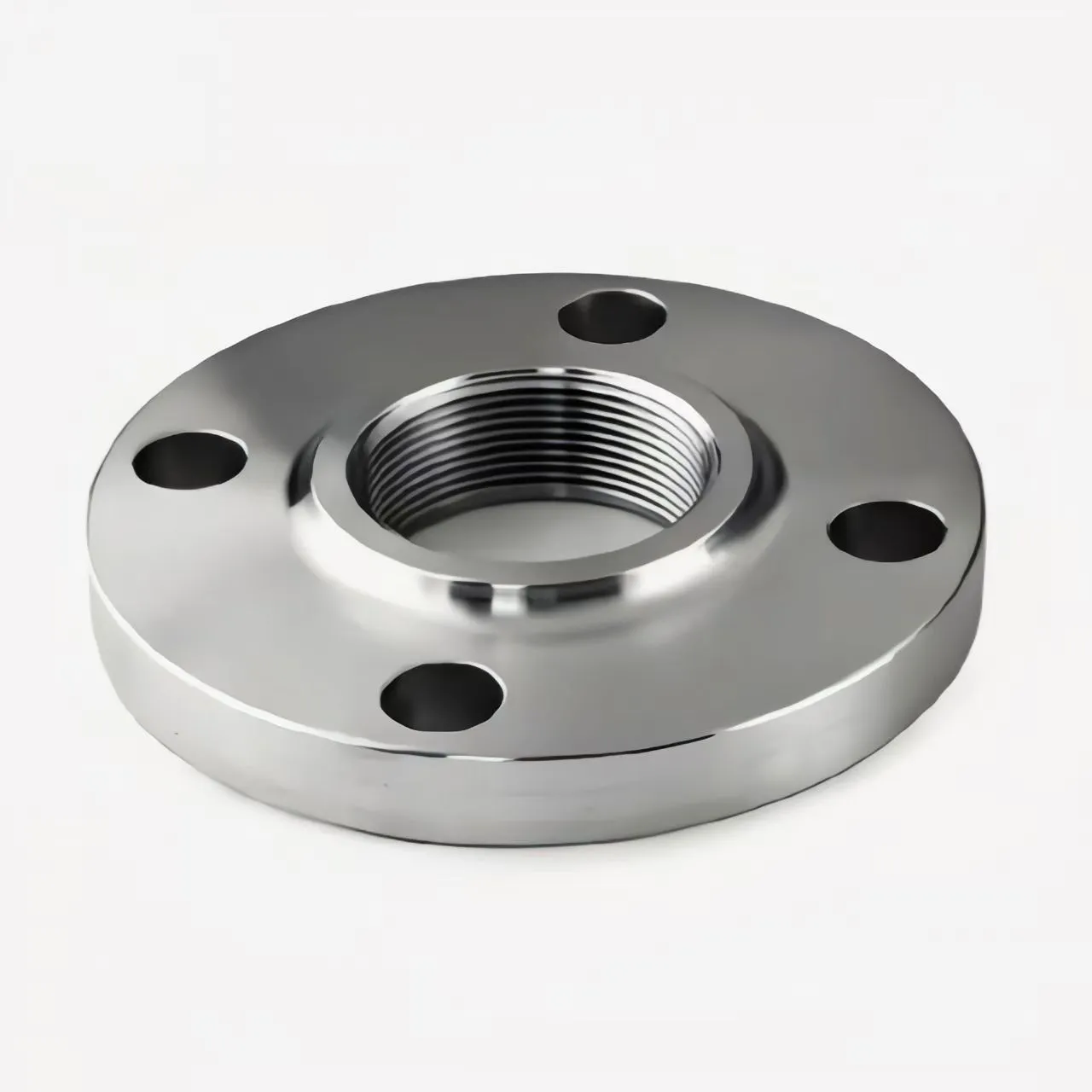
Understanding Threaded Flanges: Design, Function, and Standards
How Threaded Flanges Work?
Threaded flanges use precisely machined NPT internal threads that meet ASME B1.20.1 standards. The tapered profile wedges the pipe into the flange, creating a tight metal-to-metal seal through interference rather than welding. A 60-degree thread angle distributes stress across multiple contact points, improving durability under pressure changes. Installation involves threading the pipe into the flange with tools, while PTFE tape or sealant fills micro-gaps to prevent leaks. This method avoids heat-affected zones and reduces installation time significantly by eliminating welding, heat treatment, and inspection steps.
Material Standards and Selection Criteria
Material choice determines performance under temperature, pressure, and corrosion conditions. ASTM A105 carbon steel suits general water and HVAC systems, handling -29°C to 400°C cost-effectively. Stainless steels ASTM A182 F304 and F316 provide superior corrosion resistance in chloride-rich or chemical environments. Alloy steels maintain strength above 450°C, making them suitable for high-temperature gas service. Engineers must compare ASME B16.5 pressure-temperature ratings with real operating conditions, including thermal cycling and pressure surges. Proper material selection prevents premature failure, reduces maintenance needs, and ensures long-term system reliability.
Industry Compliance Framework
Threaded flanges follow global standards to ensure compatibility and safety. In North America, ASME B16.5 defines dimensions and pressure classes from Class 150 to 600 for NPS ½"–24". European systems use EN 1092-1 with PN6–PN40 ratings, while JIS B2220 governs Japanese applications. Additional standards like DIN and GOST address regional requirements. Manufacturers must provide documentation including material test reports, dimensional inspection records, and pressure testing certificates. This traceability ensures compliance, supports quality assurance, and reduces liability risks during commissioning and long-term industrial operation.
Key Applications of Threaded Flanges in HVAC, Water, and Gas Distribution
HVAC System Integration
Threaded flanges are used for cold water distribution, condenser loops, and refrigerant pipe that is less than 2 inches in diameter in commercial building HVAC systems. These flanges are built into rooftop air handling units at valve stations and pump discharge points. This lets yearly repair workers get to the units without having to cut any pipes. The non-welded arrangement protects the galvanized coats on the steel pipes, which keep rust from changing the chemical makeup of the cooling tower water. Heating hot water systems benefit from quick disassembly capabilities during annual boiler inspections and heat exchanger cleaning procedures. Mechanical rooms with limited clearance for welding equipment utilize threaded flanges exclusively, avoiding fire watch requirements and ventilation challenges associated with welding fumes. Their vibration resistance suits applications near rotating equipment where welded joints might crack under cyclic loading.
Municipal Water Distribution Networks
Water treatment facilities use threaded flanges for instrument connections, sampling points, and auxiliary piping. The preserved zinc coating on galvanized pipes prevents internal corrosion and tuberculation, maintaining flow efficiency and hygiene. These flanges handle pressures up to PN40, with Class 150 commonly used for municipal systems. Their ability to absorb pressure fluctuations from pumps reduces the risk of seal failure. Easy installation and maintenance minimize service interruptions, making them ideal for infrastructure upgrades where continuity of water supply and reduced downtime are critical.
Low-Pressure Gas Distribution Applications
Threaded flanges are used in gas distribution systems for small-diameter lines under 4 inches, including meter sets and pressure control units. Their spark-free installation meets safety requirements in hazardous environments. Compact tools allow installation in confined urban spaces where welding is difficult. Stainless steel variants are used in industrial gas systems carrying air, nitrogen, or argon, ensuring leak-tight performance. In sensitive applications like cleanrooms, electropolished finishes prevent contamination. Their reliability and ease of disassembly make them suitable for systems requiring frequent modification or maintenance.
Comparing Threaded Flanges with Other Flange Types: Making The Right Choice
Installation Speed and Labor Requirements
When compared to weld neck options, threaded flanges require 40% to 60% less installation work because only pipe threading equipment and hand tools are needed instead of trained welders and inspection staff. Threaded connections can be made by a two-person crew in 15 to 20 minutes, while the same welded parts take 45 to 60 minutes, which includes setup, welding, cooling, and checking. This edge in efficiency grows when projects have hundreds of connections, which has a big effect on budgets for labor and building plans. Slip-on flanges can be installed in a moderate amount of time, but they need fillet welds on both sides of the flange, which means they need to be x-rayed before they can be used in critical service applications. Socket weld flanges work well with small-bore high-pressure pipes, but they need skilled welders who know how to work in tight spaces and keep the gaps small. Threaded joints get rid of these issues, so the quality is always the same, even if the worker doesn't know much more than basic pipe fitting.
Pressure and Temperature Limitations
Threaded flanges are best suited for moderate pressure applications, typically Class 150 and 300, with limited use up to Class 600 in small sizes. Stress concentrations at thread roots reduce pressure capacity compared to welded flanges. Temperature variations can loosen connections due to differential expansion between materials. Carbon steel performs up to 450°C, while stainless steel can reach 538°C with proper sealing. For low-temperature service below -29°C, impact-tested materials are required. Engineers must evaluate worst-case operating conditions to ensure safe and reliable performance.
Long-Term Maintenance Considerations
Threaded flanges are ideal for systems requiring frequent disassembly, allowing maintenance without cutting or welding. This preserves pipe integrity and reduces downtime. They enable easy inspection access for corrosion monitoring and thickness measurement. However, galvanic corrosion can occur when dissimilar metals are used, requiring compatible materials or dielectric isolation. Proper sealant selection prevents leakage and electrochemical reactions. Compared to welded joints, threaded connections simplify maintenance cycles and reduce repair costs, making them suitable for dynamic industrial systems with regular servicing requirements.
Procurement Guide for Threaded Flanges: What B2B Buyers Need to Know?
Supplier Evaluation Criteria
Third-party certifications, such as ISO 9001 quality management and ASME manufacturing authorization, show that reliable threaded flange suppliers follow the rules. Documentation for material traceability should include heat numbers that connect finished goods to mill test records that confirm their chemical make-up and mechanical features. Shanxi HongKai Forging Co., Ltd. has uniform quality control that makes sure all of their manufacturing processes are consistent across production lots. These processes include forging, heat treatment, precise machining, and hydrostatic testing. Lead times for big orders are affected by how much a supplier can produce. Well-known manufacturers keep raw material stocks high enough to support regular 3- to 4-week delivery times. Customization options, such as non-standard drilling patterns, special materials, and certified pressure testing, can be used to meet the specific needs of each project without adding too much to the cost. Being close to major shipping ports lowers the cost of freight and the risk of damage during transit for international orders that need to combine containers.
Specification Sheet Navigation
The ASME B16.5 guideline sheets list the different types of faces, such as raised face (RF) and flat face (FF). The raised face is the standard for most uses because it puts more stress on the gasket seating. When using drilling templates, make sure that the bolt circle diameters and number of bolt holes match up with parts from different manufacturers that fit on the flange. Stamped pressure class marks on the flange faces make sure that the rating is correct during installation and testing in the field. Dimensional limits set by standards control the width of the flange, the depth of the bore, and the pitch of the threads. Acceptance criteria tell the difference between surfaces that hold pressure and features that are not important. When placing an order for more than 50 pieces, buyers should ask for verified dimensional reports. These reports should confirm statistical process control and reject any batches that are out of range before they are shipped. GO/NO-GO plug gauges used for thread gaging prove that the NPT thread is compliant, which stops installation problems and leak routes.
Pricing Benchmarks and Cost Drivers
When you buy more than 100 units in bulk, carbon steel threaded flanges in the Class 150, NPS 1-inch size usually cost between $8 and $15 each. Prices go up as the diameter and pressure class go up. The cost of raw materials and the trouble of machine work make stainless steel F316 equivalents three to four times as expensive as carbon steel equivalents. Alloy steel specialty materials cost more than other materials because they have to meet very high standards of service performance. For certified items that need full traceability paperwork, certification costs like material testing, dimensional checking, and pressure testing add 10 to 15 percent to the base price. Through overtime work and special access to machines, accelerated production plans shorten lead times, which raises costs by 20–30% over normal delivery times. Effective buying strategies balance the costs of keeping inventory with savings for large orders, lowering the overall cost of purchase over the course of a project.
Installation and Maintenance Best Practices for Threaded Flanges
Proper Threading Techniques
To install a threaded flange correctly, the pipe end must first be prepared. This includes cutting a clean thread with sharp dies that have been oiled with thread cutting oil. Damaged threads with torn crests or missing roots make the sealing less effective and the structure less strong, so they need to be re-cut or the pipe end needs to be taken off. The thread engagement depth should reach the hand-tight position three to four threads from full engagement. This lets pipe wrenches be used to tighten the connection one last time without putting too much stress on it. Follow the manufacturer's instructions for applying thread sealer. Only use paste-like substances on male threads, and keep the first two threads clean to keep dirt from getting into the system. When looking at the pipe end, PTFE tape is wrapped clockwise, using three to four layers that don't meet and make leak routes. When there is no air in the assembled thread gap, liquid anaerobic sealants cure and provide reliable sealing on power-tightened connections.
Inspection and Testing Protocols
Monitoring the tightening torque stops thread galling and makes sure there is enough compression for leak-free operation. When calibrated to project specs, torque wrenches apply uniform force. Typical values range from 50 to 150 ft-lbs, based on the size and material of the pipe. A visual check shows that the sealant has been squeezed out evenly around the thread's diameter, with no holes that would suggest that the engagement isn't complete. Before they are used, hydraulic testing makes sure that the connections are solid by pressinguring the systems to 1.5 times their design pressure for at least 30 minutes. If the pressure drops by more than 5%, it means there is a break that needs to be fixed or the part needs to be replaced. Dye penetrant testing on important service lines shows surface-breaking flaws in threaded areas that are under a lot of stress over and over again. During regular maintenance checks, the outside thread surfaces are looked at for rust pitting, erosion, and mechanical damage from hitting something or tightening too much. Ultrasonic measures of the thickness of pipe walls next to threaded areas find internal rust that weakens the thread roots. Using thermal imaging while the machine is running can find hot spots that show internal leaks caused by worn-out thread seals. Documentation standards keep track of the times of installations, the torque values, the types of sealants used, and the results of inspections. This helps with predictive maintenance programs and failure analysis investigations. Failures that happen out of the blue during key production times can be avoided by setting replacement intervals based on working hours, pressure cycles, and environmental exposure.
Conclusion
Weld-free construction, coating protection, and flexible upkeep are just a few of the many benefits that threaded flanges offer in HVAC, water distribution, and gas systems. Their compliance with international standards including ASME B16.5, EN 1092-1, and JIS B2220 ensures global project compatibility, while material options spanning carbon steel, stainless steel, and alloy compositions address diverse environmental challenges. Procurement workers get a competitive edge by evaluating suppliers based on their manufacturing capabilities, the level of difficulty of their certifications, and the quality of their expert support. This lowers the total cost of ownership, which includes the initial purchase price.
FAQ
1. What pressure ratings are available for threaded flanges in water distribution?
Threaded flanges are used in water delivery systems for pressures ranging from PN6 (about 90 PSI) to PN40 (580 PSI). The most common municipal standard is ASME Class 150, which is 285 PSI at room temperature. Higher grades, like Class 300, deal with pump discharge pipes and links to storage tanks that are higher up, where static head causes more pressure. The actual pressure capacity depends on the material choice and the depth of the thread engagement. For applications that are getting close to the maximum rated values, engineering review is needed.
2. Can stainless steel threaded flanges handle chlorinated water?
Grades F304 and F316 of stainless steel don't rust when chlorine is present in drinking water systems. Grade F316 is recommended for sites near the coast where chloride levels are higher than 250 parts per million. When you do the right passivation processes after machining, you create protective chromium oxide layers that stop pitting erosion. Regular cleaning gets rid of the chlorine waste that builds up in thread roots and could cause localized rusting if conditions stay the same.
3. How do threaded flanges perform in seismic zones?
When placed correctly and the thread engagement meets the standards of ASME B31.3, threaded connections work well in Class 150 and Class 300 uses with a diameter of less than 4 inches. Weld neck flanges may be needed for uses with a larger diameter and higher pressure in earthquake zones because they better distribute stress during ground motion. Building codes and engineering specifications govern flange type selection based on seismic design category and occupancy classification.
Partner with HONG KAI FORGING for Reliable Threaded Flange Supply
HONG KAI FORGING is ready to help you with your building projects by making threaded flanges that are precisely machined and meet strict ASME, EN, and DIN standards. Our integrated production plant in Shanxi Province can forge parts and machine them to very high precision. It can make flanges from DN15 to DN4000 with pressure ratings from PN6 to PN160. Our material traceability systems, thorough testing methods, and global logistics network help us deliver on time to project sites in North America, Europe, and Asia, which is why procurement managers look to us as a reliable threaded flange maker. Contact kevin.zhao@hkflange.com to talk about your needs, get approved test reports, and get reasonable quotes from a company with decades of experience making great forgings and happy customers.
References
1. American Society of Mechanical Engineers. (2021). ASME B16.5: Pipe Flanges and Flanged Fittings NPS 1/2 Through NPS 24 Metric/Inch Standard. New York: ASME Press.
2. European Committee for Standardization. (2018). EN 1092-1: Flanges and Their Joints - Circular Flanges for Pipes, Valves, Fittings and Accessories, PN Designated - Part 1: Steel Flanges. Brussels: CEN.
3. Japanese Standards Association. (2019). JIS B2220: Steel Pipe Flanges. Tokyo: Japanese Standards Association.
4. Smith, P.R. & Zappe, R.W. (2020). Valve Selection Handbook: Engineering Fundamentals for Selecting the Right Valve Design for Every Industrial Flow Application (6th ed.). Houston: Gulf Professional Publishing.
5. Nayyar, M.L. (2019). Piping Handbook (8th ed.). New York: McGraw-Hill Education.
6. Becht, C. & Sims, J.R. (2017). Flange Joint Analysis and Design for Industrial Piping Systems. Journal of Pressure Vessel Technology, 139(4), 041201-041209.
Clear Communication, and Reliable Technical Support