- English
- French
- German
- Portuguese
- Spanish
- Russian
- Japanese
- Korean
- Arabic
- Greek
- German
- Turkish
- Italian
- Danish
- Romanian
- Indonesian
- Czech
- Afrikaans
- Swedish
- Polish
- Basque
- Catalan
- Esperanto
- Hindi
- Lao
- Albanian
- Amharic
- Armenian
- Azerbaijani
- Belarusian
- Bengali
- Bosnian
- Bulgarian
- Cebuano
- Chichewa
- Corsican
- Croatian
- Dutch
- Estonian
- Filipino
- Finnish
- Frisian
- Galician
- Georgian
- Gujarati
- Haitian
- Hausa
- Hawaiian
- Hebrew
- Hmong
- Hungarian
- Icelandic
- Igbo
- Javanese
- Kannada
- Kazakh
- Khmer
- Kurdish
- Kyrgyz
- Latin
- Latvian
- Lithuanian
- Luxembou..
- Macedonian
- Malagasy
- Malay
- Malayalam
- Maltese
- Maori
- Marathi
- Mongolian
- Burmese
- Nepali
- Norwegian
- Pashto
- Persian
- Punjabi
- Serbian
- Sesotho
- Sinhala
- Slovak
- Slovenian
- Somali
- Samoan
- Scots Gaelic
- Shona
- Sindhi
- Sundanese
- Swahili
- Tajik
- Tamil
- Telugu
- Thai
- Ukrainian
- Urdu
- Uzbek
- Vietnamese
- Welsh
- Xhosa
- Yiddish
- Yoruba
- Zulu
Why Socked Welding Flange Provides Leak-Proof Joint Strength
Socked Welding Flange has a special design that makes the joint strong and leak-proof. They have a hollow counterbore that fits the pipe end and then a strong external fillet weld. This design gets rid of internal joint protrusion and makes an airtight seal that can withstand high-pressure conditions. During fitting, the socket naturally lines up the parts, making sure they fit perfectly. The external weld gives them better wear resistance—about 50% higher than regular slip-on designs. Because they are structurally sound and can be installed precisely, Socked Welding Flange are necessary for high-pressure, small-diameter uses that can't have any leaks.
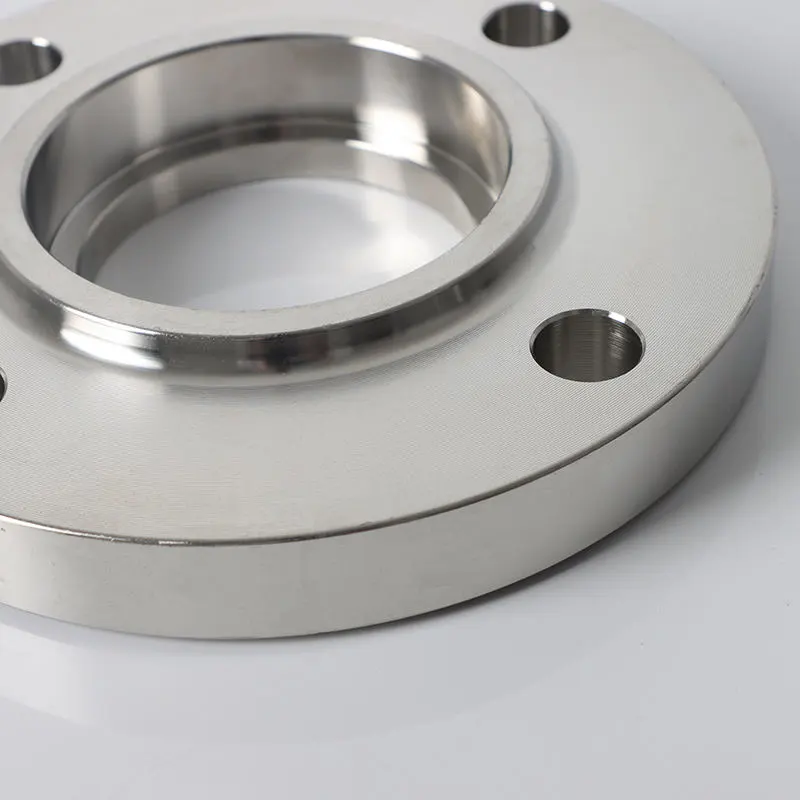
Understanding Socked Welding Flange and Leak-Proof Joint Technology
However, Socked Welding Flanges are a unique option designed for small-bore pipe systems that need very strong joints. Socked Welding Flange is a permanent, leak-proof connections that are made by combining exact manufacturing with reliable welding techniques. This is in contrast to threaded connections that depend on mechanical interference or slip-on designs that offer little structural strength.
The Fundamental Design Advantage
The core design has a counterbore that is precisely cut into the flange hub to fit the pipe's outside diameter. This socket's depth is usually between 0.5 and 0.75 inches, which is deep enough to connect properly and spread the load evenly. When the pipe goes into this socket, it makes a positive mechanical fit that lines up the parts automatically. This is a huge benefit in tight areas where traditional butt-weld preparation isn't possible. After that, the external fillet weld goes around the joint and fuses the pipe to the flange hub, joining the two together.
Material Selection and Sealing Performance
The choice of material has a direct effect on how well it seals and how reliable it is in use over time. For normal temperature services from -29°C to 400°C, carbon steel types like ASTM A105 are very strong and easy to weld. When acidic materials or high temperatures are present, stainless steels such as ASTM A182 F316L are better at resisting rust and stress corrosion cracking. Different types of alloy steel that contain chromium and molybdenum are used in tough situations in power plants and industrial plants, where changes in temperature and pressure can damage joints. When you come to HONG KAI FORGING, we make sure that every part you order comes with a certified mill test record that lists the chemical makeup and mechanical properties of the part.
How Socket Welds Prevent Leakage?
The ability to not leak comes from several technical ideas working together. During welding, the filler metal forms a continuous metallurgical link around the whole circle. This gets rid of any possible leak tracks that might be present in threaded joints with spiral gaps. The socket design keeps internal weld spatter from getting into the flow stream. This is very important for sensor lines where small particles can mess up sensitive measuring tools. The external weld position also makes visible inspection and non-destructive testing easier, so quality control teams can check the integrity of the joint without taking the pipe system apart.
Key Dimensions and Design Standards Ensuring Reliable Performance
Socket Welding Flange sizes are regulated by international standards to make sure that all projects around the world can use the same tools and know what to expect from them. When these standards are followed, procurement workers can be sure that parts will fit together perfectly, no matter where they come from.
Critical Dimensional Parameters
The weld quality and mechanical strength are directly affected by socket depth limits. ASME B16.5 specifies socket depths based on pipe wall thickness to ensure proper fit and controlled stress distribution. A standard 1/16 inch (1.6 mm) expansion gap prevents thermal stress buildup during expansion and contraction cycles. Different pressure classes require varying flange thickness, with Class 150 much thinner than Class 2500 due to lower mechanical load requirements. Bore tolerances are tightly controlled, typically within ±0.5 mm, to ensure alignment accuracy, smooth flow transition, and reduced vibration at pipe-to-flange connection points.
International Standard Compliance
ASME B16.5 governs North American applications from NPS 1/8 to 4 inches across pressure classes 150–2500. EN 1092-1 covers European DN6–DN100 flanges rated PN16–PN400. JIS B2220 applies to Japanese systems with pressure ratings from 10K to 40K, while DIN and GOST serve German and Russian industrial markets. HONG KAI FORGING supports all major global standards and operates advanced dimensional inspection systems, including coordinate measuring machines and optical comparators, ensuring precise compliance, interchangeability, and reliable performance across international engineering projects and procurement specifications worldwide.
Manufacturing Quality Control
Controlled forging aligns grain flow direction, improving strength and reducing porosity in early production stages. Heat treatment normalizes internal stress and maintains carbon steel hardness below HB 200, preventing brittle failure under sudden load. Machining ensures surface finish between 125–250 RMS as per ASME standards, improving gasket sealing reliability. Hydrostatic testing subjects flanges to pressures above rated limits for structural validation. Magnetic particle and ultrasonic inspection detect internal cracks and hidden defects, ensuring only fully compliant, defect-free components are approved for shipment and industrial application use.
Comparing Socked Welding Flange With Other Flange Types: The Procurement Perspective
To do strategic buying, you need to know the practical trade-offs between the different flange technologies that are out there. When it comes to performance, Socked Welding Flanges are unique because they mix ease of fitting with long-term dependability.
Socket Weld Versus Slip-On Flanges
Slip-on flanges are cost-effective and easy to install using two fillet welds but have lower fatigue resistance and limited suitability for vibration or cyclic pressure environments. Socked Welding Flange use a single external fillet weld, reducing stress concentration and improving fatigue resistance by approximately 50%. This results in longer service life and reduced maintenance costs. They are preferred in hydraulic, steam, and vibrating systems where reliability is critical. Although initial cost is higher, lifecycle performance and reduced failure risk make them more economical for demanding industrial applications.
Socket Weld Versus Threaded Flanges
Threaded flanges simplify installation without welding but risk leakage at thread interfaces, especially under thermal cycling or high-temperature steam above 200°C. Sealants and tapes degrade over time, reducing reliability. Socked Welding Flange eliminate these risks through permanent welded joints, ensuring stable performance under extreme conditions. Threaded types suit low-pressure, non-critical water systems requiring frequent maintenance access. However, for toxic, flammable, or high-integrity service, Socked Welding Flange are preferred due to superior sealing performance and elimination of fugitive emission risks in safety-critical environments.
Socket Weld Versus Weld Neck Flanges
Weld neck flanges provide superior strength through tapered stress distribution, making them ideal for high-pressure cyclic applications. However, they require precise beveling and radiographic inspection, increasing installation cost and complexity. Socked Welding Flange offer a simpler alternative for small-bore piping, eliminating bevel preparation while maintaining reliability. For NPS 2 inches and below, they deliver strong performance at lower total cost. This makes them suitable for budget-sensitive projects that still require safety compliance, especially where space constraints and installation efficiency are important factors.
Installation Best Practices to Ensure Leak-Proof Joints
How well Socked Welding Flanges are installed affects whether they work as well as they should to prevent leaks. Following set processes is what separates systems that work well from those that have constant leaking problems.
Step-by-Step Installation Procedure
Pipe ends must be straight-cut using saws or cutters; torch cutting is avoided due to heat distortion. Burrs are removed to prevent stress concentration. The pipe is fully inserted into the socket, then retracted 1/16 inch to form an expansion gap for thermal movement. Alignment is checked within 1° tolerance using precision tools. Welding parameters must control heat input carefully; for carbon steel, E7018 electrodes are used with controlled amperage and travel speed. Multi-pass welds require interpass temperature control below 250°C to maintain metallurgical stability and prevent grain growth.
Common Installation Errors and Prevention
Misalignment is the most frequent installation error, causing bending stress and early fatigue cracking. Proper alignment tools and pre-weld verification are essential. Undersized fillet welds reduce load capacity and increase failure risk; weld size must match or exceed pipe wall thickness. Contaminated joints or moisture in electrodes can cause porosity and leakage. Proper storage of welding consumables and surface cleaning eliminate these risks. Following standardized procedures and inspection checkpoints ensures structural integrity and long-term reliability of Socket Welding Flange connections.
Post-Weld Inspection and Validation
Cracks, holes, and not enough throat width are examples of surface-breaking flaws that can be seen with the naked eye. Liquid penetrant testing improves the ability to visually check by showing tiny cracks that can't be seen by naked eye. Radiographic study of important service welds can find defects below the surface, but the external location of the weld makes it harder to examine radiographically than butt welds. Hydrostatic pressure testing, which involves putting finished parts under 1.5 times their design pressure for at least 10 minutes, confirms the stability of the whole system. Finding leaks with bubble solution or mass spectrometry makes sure there are no escape fumes before the system is turned on.
Procurement Insights: Buying the Right Socket Welding Flange for Your Business
Strategic sourcing focuses beyond unit price, emphasizing total cost of ownership, including quality assurance, logistics reliability, and technical support. ISO 9001-certified manufacturers ensure controlled production systems, while API-marked Socked Welding Flange confirm compliance for critical service applications. Each shipment should include traceable material test records tied to heat numbers. Capacity evaluation ensures stable supply under demand fluctuations. HONG KAI FORGING integrates forging, heat treatment, machining, and testing across three sites, reducing subcontracting risks and maintaining consistent quality and delivery performance.
Supplier Evaluation Criteria
Reliable suppliers operate ISO 9001 systems ensuring controlled manufacturing processes. API certification confirms suitability for critical oil and gas applications. Material test reports must trace chemical and mechanical properties to heat numbers. Third-party inspection capability allows real-time quality verification during production. Integrated production systems combining forging, heat treatment, machining, and testing reduce outsourcing risks and improve consistency. HONG KAI FORGING uses fully integrated facilities to maintain quality stability, shorten lead times, and ensure reliable Socket Welding Flange supply for global industrial projects.
Understanding Pricing Structures
The price of a Socket Welding Flange depends on the cost of the raw materials, how hard it is to make, and the pressure class that is needed. Carbon steel flanges are about 40–60% cheaper than stainless steel versions of the same thing, but process fit must come before original price when choosing a material. Because of the higher safety factors, materials with higher pressure classes need to be thicker and heat treated in more difficult ways. This leads to higher prices. When you buy in bulk, you can take advantage of economies of scale. Usually, orders over 500 pieces get big savings of 10-15%. But buying teams should weigh the costs of keeping inventory against the saves in unit prices. This is especially important for projects with long timelines where capital stuck in too much inventory hurts the bottom line.
Certification and Compliance Requirements
The ASME Boiler and Pressure Vessel Code says that projects must use materials and manufacturing methods that are in line with the code. This must be confirmed by an approved review. Third-party approval from groups like Lloyd's Register or TÜV makes sure that a product meets all the requirements. Hydrogen sulfide-containing sour service settings must follow NACE MR0175, which calls for specific material grades and hardness limits that stop sulfide stress cracks. European CE marking means that the product meets the safety standards set by EU guidelines for pressure tools. The requirements for the purchase should be made clear in the specifications, and sellers should be expected to provide proof that meets the needs of regulatory officials and project engineers.
Building Supplier Partnerships
Long-term ties with suppliers have perks beyond just making transactions go more smoothly. Long-term partners get to know your technical needs and quality standards very well, which cuts down on unclear specifications and review cycles. Preferred sellers give priority to shipping plans for customers who buy from them again and again, especially when capacity issues across the industry make lead times longer. When sellers see your company as a strategic account rather than an occasional buyer, you can work together on technical issues related to special designs or materials that aren't standard. HONG KAI FORGING has built relationships with engineering companies and end-users in the energy, petroleum, and water treatment sectors that last through multiple project cycles. These partnerships are based on reliable quality delivery and quick technical support.
Conclusion
In conclusion, Socked Welding Flange works without leaking because they use engineering principles that combine precise control of dimensions with strong welding metals. Their unique design makes them more resistant to fatigue than slip-on options and makes fitting faster than butt weld setups. Following international standards makes sure that everything works together and that performance is consistent across a wide range of uses. Strategic buying focuses on quality systems for suppliers, full certification, and partnership-based methods that lower the total cost of ownership. Socked Welding Flange work reliably for decades in harsh industrial settings when they are properly designed, produced, and installed.
FAQ
1. What pressure ratings are available for Socked Welding Flange?
To suit a wide range of working conditions, Socked Welding Flange are made in a number of different pressure classes. For use in North America, ASME B16.5 covers Class 150, 300, 600, 900, 1500, and 2500 grades. The European EN 1092-1 standard lists the following numbers: PN16, PN25, PN40, PN63, PN100, PN160, PN250, and PN400. 10K, 16K, 20K, 30K, and 40K are the classes used by Japanese JIS B2220. The right pressure class is chosen based on the design pressure, temperature, and safety factor standards set by the project engineering team.
2. How do I verify socket welding flange quality before installation?
Reviewing material test results that show its chemical make-up and mechanical features is the first step in making sure the quality is correct. By measuring with tools, we can be sure that the socket depth, flange thickness, and bolt hole spacing all meet the requirements set by the standard. Surface flaws like cracks, laminations, or grinding imperfections can be seen with the naked eye. Testing for hardness makes sure that the right amount of heat treatment has been done. For important tasks, magnetic particle or liquid penetrant screening can find cracks in the surface that can't be seen with the naked eye.
3. Can Socked Welding Flange be used in high-temperature applications?
When made from the right types of material, Socked Welding Flange can be used in high-temperature situations. Different types of carbon steel can handle temperatures up to 400°C, while grades of stainless steel like 316L can handle temperatures up to 600°C. When something is used at high temperatures, its creep strength, resistance to rust, and thermal expansion must all be taken into account. Check the ASME B31.3 pressure-temperature values to make sure that the material grade and pressure class you chose are right for your needs.
Partner With HONG KAI FORGING for Superior Socket Welding Flange Solutions
HONG KAI FORGING is ready to help you with your next project by making Socked Welding Flange that are precisely designed and meet the highest international standards. Our combined production sites in Shanxi Province combine advanced forging skills with strict quality control to make sure that every part meets your technical requirements and time frames for delivery. We help procurement managers and project engineers find a trustworthy Socket Welding Flange maker that guarantees accurate measurements, material tracking, and quick technical support. We have a wide choice of products that meet ASME B16.5, EN 1092-1, DIN, and JIS norms for all types of pressure and materials. Get in touch with kevin.zhao@hkflange.com right away to talk about your specific needs and get detailed quotes that come with approved material paperwork and low bulk prices.
References
1. American Society of Mechanical Engineers. (2020). ASME B16.5: Pipe Flanges and Flanged Fittings NPS 1/2 Through NPS 24 Metric/Inch Standard. New York: ASME Press.
2. European Committee for Standardization. (2018). EN 1092-1: Flanges and Their Joints – Circular Flanges for Pipes, Valves, Fittings and Accessories, PN Designated – Part 1: Steel Flanges. Brussels: CEN.
3. Becht, C. (2017). Process Piping: The Complete Guide to ASME B31.3 (4th ed.). New York: ASME Press.
4. Maher, J. & Smith, R. (2019). "Fatigue Performance Comparison of Socket Weld and Slip-On Flange Connections in High-Cycle Applications." Journal of Pressure Vessel Technology, 141(3), 031401.
5. Mokhtarian, K. (2021). Piping Materials Guide (2nd ed.). Houston: Gulf Professional Publishing.
6. National Association of Corrosion Engineers. (2015). NACE MR0175/ISO 15156: Petroleum and Natural Gas Industries – Materials for Use in H2S-Containing Environments in Oil and Gas Production. Houston: NACE International.
Clear Communication, and Reliable Technical Support