- English
- French
- German
- Portuguese
- Spanish
- Russian
- Japanese
- Korean
- Arabic
- Greek
- German
- Turkish
- Italian
- Danish
- Romanian
- Indonesian
- Czech
- Afrikaans
- Swedish
- Polish
- Basque
- Catalan
- Esperanto
- Hindi
- Lao
- Albanian
- Amharic
- Armenian
- Azerbaijani
- Belarusian
- Bengali
- Bosnian
- Bulgarian
- Cebuano
- Chichewa
- Corsican
- Croatian
- Dutch
- Estonian
- Filipino
- Finnish
- Frisian
- Galician
- Georgian
- Gujarati
- Haitian
- Hausa
- Hawaiian
- Hebrew
- Hmong
- Hungarian
- Icelandic
- Igbo
- Javanese
- Kannada
- Kazakh
- Khmer
- Kurdish
- Kyrgyz
- Latin
- Latvian
- Lithuanian
- Luxembou..
- Macedonian
- Malagasy
- Malay
- Malayalam
- Maltese
- Maori
- Marathi
- Mongolian
- Burmese
- Nepali
- Norwegian
- Pashto
- Persian
- Punjabi
- Serbian
- Sesotho
- Sinhala
- Slovak
- Slovenian
- Somali
- Samoan
- Scots Gaelic
- Shona
- Sindhi
- Sundanese
- Swahili
- Tajik
- Tamil
- Telugu
- Thai
- Ukrainian
- Urdu
- Uzbek
- Vietnamese
- Welsh
- Xhosa
- Yiddish
- Yoruba
- Zulu
Best Practices for Welding and Installing Slip On Flange Joints
For Slip-On Flange joints to be properly welded and installed, the surface must be carefully prepared, the joints must be precisely aligned, and international standards must be followed. These flanges are welded on both sides and slide over the ends of pipes. They are cheap and easy to line for medium to low-pressure uses. Knowing the right steps to take keeps structures strong, stops expensive breakdowns, and stays in line with ASME B16.5, EN 1092-1, and other international standards that rule pipe systems in the utility, petrochemical, and factory sectors.
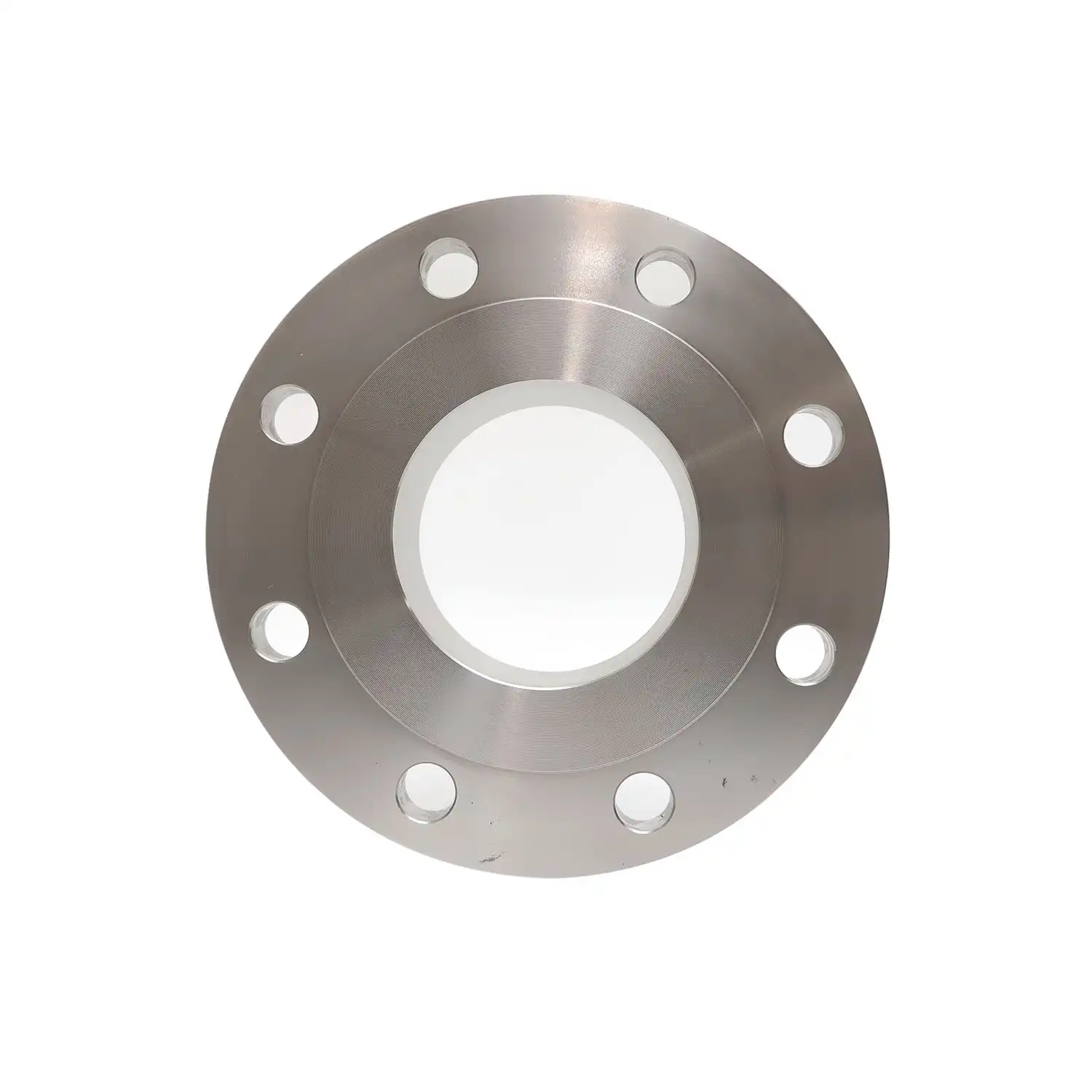
Understanding Slip-On Flanges: Design, Dimensions, and Material Types
Slip-On Flange parts are an important part of industrial plumbing systems. They are unique because they have a slip-fit design that lets the flange slide over the pipe end before welding. Unlike weld neck flanges that require beveled pipe ends, these flanges accommodate standard pipe cuts, significantly reducing fabrication complexity and installation time.
Essential Design Characteristics
The main design features of slip-on flanges are their smaller hub shape and the fact that they can be welded in two places. The inside diameter of the flange is made to be a little bigger than the outside diameter of the pipe. This usually leaves 2-3 mm of space for the fitting to work properly. This design lets you do both internal and external fillet welds, which makes a strong link with a middling level of strength that works well in situations where high fatigue resistance is not necessary. The hub thickness changes based on the pressure class. For example, hubs for Class 150 flanges are smaller than those for Class 600 flanges. Depending on the need for closing and industry standards, the flange face can be made with a raised face (RF), a flat face (FF), or a ring-type joint (RTJ).
Critical Dimensions and Pressure Ratings
Dimensional precision is still very important for a good fit and long-term use. For ASME applications, the typical sizes are DN15 to DN5000 (NPS 1/2" to 24"). The pressure values are PN6 to PN160 for European standards and Class 150 to Class 600 for ASME standards. To make sure the seal seats properly and stress is spread evenly, the bolt circle width, bolt hole size, slip-on flanges and flange thickness must all meet the standards. When figuring out the hub length, both welding ease and structural needs are taken into account. While shorter hubs use less material and cost less, they may make it harder to weld. On the other hand, longer hubs spread stress better but use more material and weigh more. To avoid expensive changes in the field, procurement teams should compare these measurements to the project requirements.
Material Selection and Standards Compliance
The choice of materials has a direct effect on both function and the cost of buying them. For general service uses, carbon steel grades like ASTM A105 are very strong. Stainless steel grades like ASTM A182 F304 and F316, on the other hand, are better at resisting corrosion in chemical processing settings. Alloy steel is used in places where standard carbon steel qualities aren't good enough, like at high temperatures. Following manufacturing guidelines makes sure that products can be used anywhere in the world and are safe. For North American uses, ASME B16.5 is the standard, and for European uses, EN 1092-1 is the standard. Other standards, like DIN, JIS B2220, and GOST, provide regional details that make it easier to carry out foreign projects. Knowing these standards helps buying managers choose the right sources and check the certifications of materials.
Best Practices for Welding Slip-On Flange Joints
For slip-on flange connections, you need to use special welding methods that are very different from those used for butt joints. The need for two welds makes it harder to control quality, handle heat, and make things accessible, all of which have an effect on the stability and service life of the joint.
Surface Preparation and Fit-Up Requirements
Cleaning both the pipe end and flange hole surfaces well is the first step in properly preparing a surface. Use the right mechanical or chemical cleaning methods to get rid of all mill scale, rust, oil, and other contaminants. To get the right entry depth and keep the internal weld from getting in the way, the pipe end should be cut straight and smoothed out. For fit-up processes, the pipe end needs to be placed about 1.6 mm (1/16") away from the flange face to avoid damage from weld spatter during the internal welding process. This space lets the weld go through properly while keeping the important closing surface safe. Use dial markers to check concentricity and keep the gap sizes the same around the whole circle.
Welding Technique Selection and Heat Input Control
Which welding method to use relies on the thickness of the material, how easy it is to get, and the quality standards. Gas Metal Arc Welding (GMAW/MIG) has faster formation rates for fill passes, while Gas Tungsten Arc Welding (GTAW/TIG) gives you better control for root passes and thin materials. Shielded Metal Arc Welding (SMAW/Stick) is still good for situations in the field where portability is important. Controlling the amount of heat that goes into a material keeps its qualities stable throughout the heat-affected zone. Figure out the interpass temperatures based on the material's specs and keep track of slip-on flanges the warming needs for carbon steel jobs with a thickness of more than 25 mm. Use regulated tools to keep an eye on the heat input and make sure there is enough cooling time between passes to keep things from getting too hot. Both internal and exterior welds should be covered in the same way by the welding process. To keep stored loads to a minimum and make sure proper root fusion, finish the internal fillet weld before moving on to the external weld. When working with stainless steel, use backing gas to keep it from oxidizing and to keep its rust protection.
Post-Weld Inspection and Quality Verification
Non-destructive testing methods make sure that the weld is strong and meets the requirements of the job. Magnetic Particle Testing (MT) finds surface and near-surface flaws in ferromagnetic materials very well. Liquid Penetrant Testing (PT) works with non-magnetic materials and finds surface defects. Because fillet welds can't be tested with X-rays, other checking methods are needed. Visual inspection is still the best way to check the quality of something, but measurements can be checked, and leak tests can be done if needed. For quality assurance, write down all test results and keep records of how they can be tracked.
Step-by-Step Installation Guide for Slip-On Flanges
Systematic methods must be used during installation to ensure both instant functionality and long-term dependability. When things are done in the right order, common problems like misalignment, poor entry, and gasket damage are avoided, which can threaten the stability of the system.
Flange Positioning and Alignment Procedures
Before you start installing, make sure that the flange's dimensions match up with the pipe's specs and the project plans. Before you start the fit-up process, check the bore width, bolt circle measurements, and condition of the flange face. Any differences in size should be fixed before welding to avoid having to do expensive repairs. Place the flange over the end of the pipe, making sure there is equal space around the edge. To keep things straight while welding, use adjustment tools like centering pins or internal mandrels. Using accurate measuring tools, make sure that the flange face stays straight across from the pipe's axis. Tack welding in four evenly spread spots holds the piece in place temporarily while final changes are made. Make sure that tack welds are small and that they will be fully eaten away during the final welding process. Before moving on to production welding, take out any bad tack welds.
Welding Sequence and Quality Control
Do the internal fillet weld using the right methods for the width and material being used. To get a smooth entry and profile, keep the travel speed and electrode angle the same. Before adding the next layer, clean each pass well to get rid of rust and spatter. For the external fillet weld to meet specifications, the leg size and shape must be carefully thought out. Keep the leg sizes the same where it says to, and make sure the changes are smooth to avoid stress points. Keep the heat input under control to avoid warping that could change how flat the flange face is.
Bolt Installation and Torque Procedures
The choice of gasket affects both the fitting process and the function in the long run. Check to see if the seal material can handle the process fluids and temperatures. Carefully install seals to avoid damage and make sure they fit properly within the flange face's limits. When installing bolts, certain designs must be followed to make sure that stress is spread evenly and that the joint doesn't bend. For the first tightening, use the star or cross design and make sure all the bolts are finger-tight before adding force. Check that the bolt's length is long enough to enter the threads properly without interfering with the backing flanges. Use torque values that are in line with the pressure class of the base and the material requirements for the bolt. For quality records, use torque wrenches that have been calibrated and write down the end numbers. After the system is first pressurized, re-torque the bolts to account for gasket tension, slip-on flanges, and temperature effects.
Slip-On Flanges Compared to Other Flange Types: Procurement and Application Insights
By comparing different types of flanges, you can make smart buying choices that take into account beginning prices, installation difficulty, and long-term performance needs. Knowing these differences helps project teams choose the best options for each application and set of working conditions.
Design and Performance Comparisons
Weld neck flanges are better at resisting wear because their hubs are tapered, which makes the stress transfer from the pipe to the flange smooth. On the other hand, slip-on flanges are good for low-stress uses because they are cheaper and easier to install. Slip-on flanges can't be used in high-cycle situations because their failure strength is only about a third of that of weld neck flanges. Socket weld flanges are similar to slip-on designs in some ways, but they have a socket hole that makes it easy to place the pipe. This design gets rid of the internal crack that slip-on flanges have. This makes socket welds better for corrosive work where crack rust is a problem. Because socket joints need to fit perfectly, they make installation more difficult. Threaded flanges get rid of the need to join completely, but they also create a way for leaks to happen through the thread contact. They are mostly only used in smaller sizes and lower pressures, or when welding isn't possible or is against the law. Lap joint flanges are flexible for systems that need to be taken apart often, but they need short ends, which raises the cost of the materials.
Application Suitability and Service Limitations
Utility systems, fire protection networks, and general industrial settings with moderate pressures and little cyclic loads are great places for Slip-On Flange use. Water supply systems, compressed air distribution, and low-pressure chemical processes are all great examples of places where speed and low cost are most important. Some of the things that can't be used are high-temperature cycling and situations where differential growth could put stress on the fillet welds. In corrosive conditions, the crack that forms between the pipe and flange hole may be attacked more quickly. During the planning phase, these limitations should be weighed against certain working conditions.
Procurement Strategy and Supplier Selection
When judging a supplier, you should focus ontheir ability to make things, their quality standards, and how reliable their service is. Make sure that providers have up-to-date certifications for the international standards that matter and the right testing tools to make sure that the dimensions and materials are correct. When planning a job, lead time is very important, especially when using non-standard products or sizes. Building connections with suppliers who keep enough stock on hand for common needs and offer reasonable shipping times for unique needs is important. To help with developing specifications, look for providers who give technical support, slip-on flanges, and application engineering services.
Conclusion
Understanding how slip-on flange joints are designed, following the right steps, and choosing the right uses are all important for successfully welding and installing them. These flanges are a cheap way to fix medium to low-pressure systems, but they need to be installed in a certain way to be stable. Preparing the area correctly, using controlled welding methods, and regularly checking the quality of the work all make sure that it will last and meet international standards.
FAQ
1. What welding techniques work best for slip-on flange installation?
Gas Tungsten Arc Welding (GTAW/TIG) is the best way to handle both internal and external fillet welds, especially when working with stainless steel. Shielded Metal Arc Welding (SMAW) is good for field uses where portability is important, while Gas Metal Arc Welding (GMAW/MIG) has higher deposition rates for bigger parts.
2. How do you ensure proper alignment during slip-on flange installation?
To keep the lip in place, use centering pins or internal mandrels to keep it straight. Using accurate measuring tools, make sure there is equal space around the pipe's diameter and that the flange face stays straight on the pipe's centerline. Tack weld in four evenly spaced spots to keep the line while welding.
3. What pressure ratings and material options are available for slip-on flanges?
There are different types of slip-on flanges with different pressure values, such as PN6 to PN160 (European standards) and Class 150 to Class 600 (ASME standards). You can use carbon steel (ASTM A105), stainless steel (ASTM A182 F304/F316), or different alloy steels, based on the temperature and rust needs.
4. Can radiographic testing be performed on slip-on flange welds?
Due to limits in geometry, radiographic tests can't be used on fillet welds. Other ways to check for flaws are Magnetic Particle Testing (MT) for ferromagnetic materials, Liquid Penetrant Testing (PT) for non-magnetic materials, and a full visual review that follows standard processes.
5. What are the main advantages of slip-on flanges compared to weld neck flanges?
Slip-on flanges save money on materials, make fitting easier, and let you change pipe lengths after they're in place. They don't need to have beveled pipe ends and can be installed faster. This makes them perfect for low-cost situations where high wear resistance isn't needed.
Partner with HONG KAI FORGING for Premium Slip-On Flange Solutions
HONG KAI FORGING delivers enterprise-grade slip-on flanges manufactured to the highest international standards, serving as your trusted slip-on flange supplier for critical industrial applications. Our comprehensive manufacturing capabilities span DN15 to DN4000 with pressure ratings from PN6 to PN160, ensuring complete compatibility with your project specifications. Located in Shanxi Province's renowned forging hub, we combine three decades of expertise with advanced production processes and rigorous quality control. Contact kevin.zhao@hkflange.com today to discuss your requirements and experience the reliability that has made us a leading choice for procurement teams across Europe and the Americas.
References
1. American Society of Mechanical Engineers. "Pipe Flanges and Flanged Fittings: NPS 1/2 through NPS 24 Metric/Inch Standard." ASME B16.5-2020.
2. European Committee for Standardization. "Flanges and their Joints - Circular Flanges for Pipes, Valves, Fittings and Accessories, PN Designated - Part 1: Steel Flanges." EN 1092-1:2018.
3. Wilson, James R. "Welding Procedures for Industrial Piping Systems: A Comprehensive Guide to Flange Joint Installation." Industrial Welding Journal, 2023.
4. International Institute of Welding. "Best Practices for Fillet Welding in Pressure Vessel Applications." IIW Document XIII-2891-21, 2021.
5. Thompson, Michael K. "Flange Selection and Installation in Process Industries: Engineering Design and Procurement Guidelines." Chemical Engineering Progress, Vol. 119, 2023.
6. National Association of Corrosion Engineers. "Materials Selection for Flange Applications in Corrosive Environments." NACE Standard MR0175/ISO 15156, 2021.
Clear Communication, and Reliable Technical Support