- English
- French
- German
- Portuguese
- Spanish
- Russian
- Japanese
- Korean
- Arabic
- Greek
- German
- Turkish
- Italian
- Danish
- Romanian
- Indonesian
- Czech
- Afrikaans
- Swedish
- Polish
- Basque
- Catalan
- Esperanto
- Hindi
- Lao
- Albanian
- Amharic
- Armenian
- Azerbaijani
- Belarusian
- Bengali
- Bosnian
- Bulgarian
- Cebuano
- Chichewa
- Corsican
- Croatian
- Dutch
- Estonian
- Filipino
- Finnish
- Frisian
- Galician
- Georgian
- Gujarati
- Haitian
- Hausa
- Hawaiian
- Hebrew
- Hmong
- Hungarian
- Icelandic
- Igbo
- Javanese
- Kannada
- Kazakh
- Khmer
- Kurdish
- Kyrgyz
- Latin
- Latvian
- Lithuanian
- Luxembou..
- Macedonian
- Malagasy
- Malay
- Malayalam
- Maltese
- Maori
- Marathi
- Mongolian
- Burmese
- Nepali
- Norwegian
- Pashto
- Persian
- Punjabi
- Serbian
- Sesotho
- Sinhala
- Slovak
- Slovenian
- Somali
- Samoan
- Scots Gaelic
- Shona
- Sindhi
- Sundanese
- Swahili
- Tajik
- Tamil
- Telugu
- Thai
- Ukrainian
- Urdu
- Uzbek
- Vietnamese
- Welsh
- Xhosa
- Yiddish
- Yoruba
- Zulu
How to Select the Best Slip On Flange for Your OEM Needs?
When choosing the best Slip-On Flange for OEM uses, you need to think carefully about the operating conditions, pressure levels, and material compatibility. These inexpensive flanges fit over the ends of pipes and use two-sided welding to make connections that are safe in medium to low-pressure systems. Slip-on designs, unlike weld neck options, give you more alignment freedom during installation. They also keep the structure strong with fillet welds on both the inside and outside. As part of the selection process, dimensions, pressure classes, material grades, and safety standards are looked at to make sure that industrial pipe systems in the manufacturing, petrochemical, and utility sectors will work well for a long time.
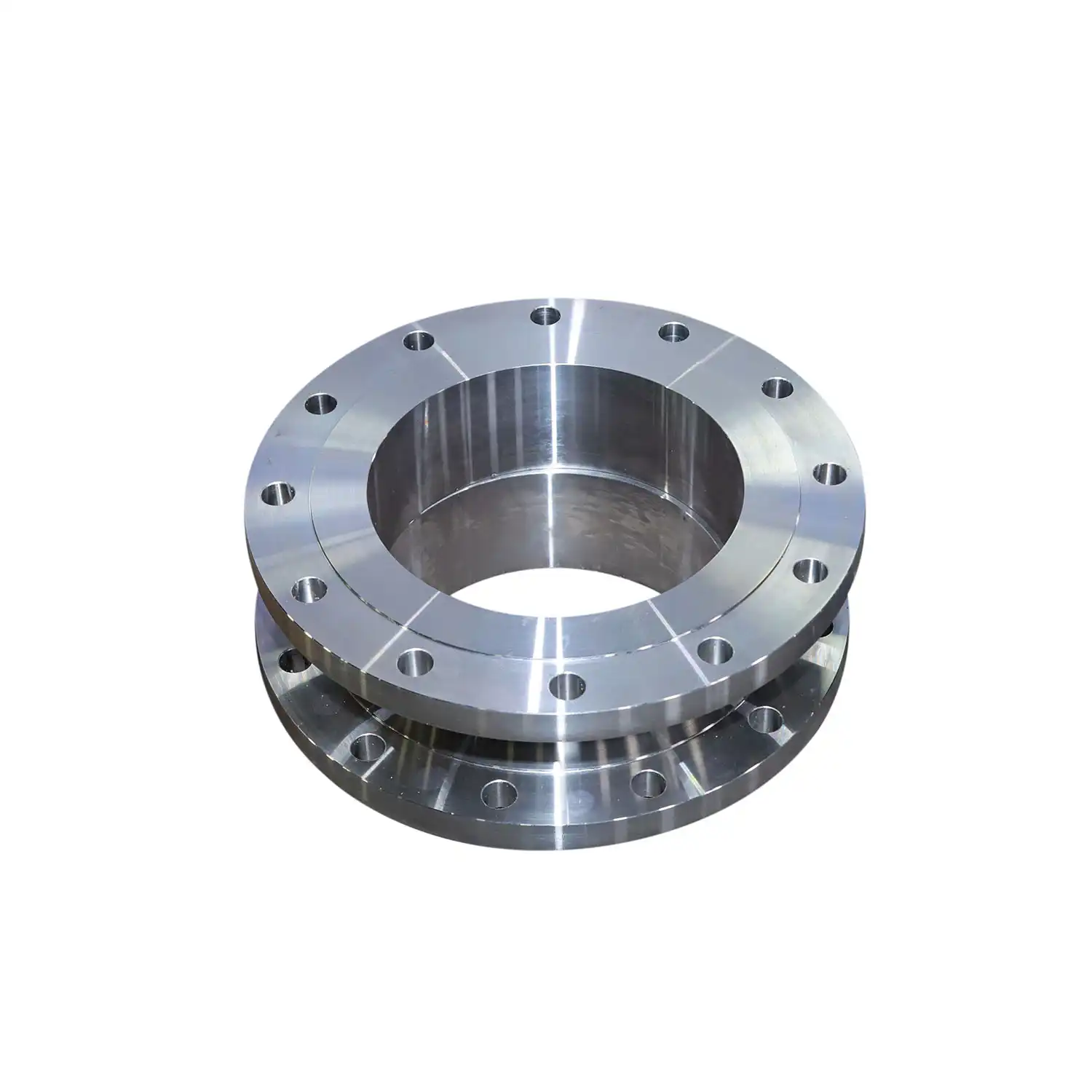
Understanding Slip-On Flanges and Their Importance in OEM Applications
Slip-on flanges are an important part of industrial plumbing systems. They are mounted in a special way: the flange slides over the pipe end before it is welded. This design gets rid of the need for beveled pipe ends, which makes alignment much easier during the manufacturing and fitting stages.
Design Characteristics and Construction
The engineering design of slip-on flanges includes a hub shape that fits standard pipe sizes and gives enough room for welding functions. The flange hole diameter is usually about 1/8 inch larger than the pipe's outer diameter. This makes fitting easier and ensures that the weld goes all the way through. Installers will be able to make uniform fillet welds on both the inside hub face and the outside pipe surface thanks to this space. The two-step welding process makes a strong mechanical link that evenly spreads stress loads across the joint. Slip-on designs allow small changes during positioning, which cuts down on installation time and the need for repair in complex pipe systems. Socket-weld flanges need exact pipe insertion depths.
Technical Specifications and Standards Compliance
These days, slip-on flanges are made to meet many foreign standards, such as ASME B16.5, EN 1092-1, DIN, and JIS B2220. These guidelines spell out important details like the size of the flange face, the design of the bolt holes, the maximum pressure that can be applied, and the materials that must be used. Pressure grades range from PN6 to PN160 (Class 150 to Class 600), and sizes range from DN15 to DN5000 (NPS 1/2" to 24"). For general service uses, material requirements include carbon steel grades like ASTM A105; for corrosive environments, they include stainless steel grades like A182 F304 and F316; and for high-temperature operations, they include special alloy steels. Each type of material goes through a lot of tests to make sure it meets the standards for chemical composition, mechanical properties, slip on flange and correctness of dimensions.
Essential Criteria for Selecting Slip-On Flanges for OEM Projects
To choose the right plate, you must first carefully look at the working situations and the performance needs. By knowing these factors, buying teams can choose the right materials, pressure ratings, and dimensional arrangements to ensure long-lasting, reliable service.
Operating Environment Assessment
The service setting has a direct effect on the choice of material and the required pressure number. To find the right flange specs, you have to look at things like temperature changes, exposure to corrosive media, and cycle loading conditions. Carbon steel flanges work well in normal temperature ranges up to 400°C, while chemical processing uses stainless steel types for better corrosion protection. The regularity of pressure cycling affects how well fatigued workers do their jobs. Slip-on flanges are strong enough for steady-state operations, but weld neck options may be better for situations where the pressure changes often. These offer better wear resistance by making it easier for stress to be distributed.
Dimensional Compatibility and Installation Constraints
Coordinating the sizes correctly makes sure that the new system works well with old pipe systems and equipment links. To get effective sealing performance, all flange face types—including raised face, flat face, and RTJ—must line up with the parts they're mated with. The bolt hole patterns and flange outer sizes need to be checked against the assembly area and entry needs. Accessibility of installations affects the quality of welding and the ability to check. In confined areas, it may be hard to get into certain positions for welding or to do a radiographic check. These restrictions should be looked at during the planning stage so that changes have to be made in the field, which would cost more and take longer than planned.
Comparison with Alternative Flange Types
Learning about the pros and cons of the different types of flanges helps you make smart decisions. Weld neck flanges have a tapered hub design that makes them more wear-resistant. However, they need to be installed with angled pipe ends and exact alignment. Socket weld flanges are small enough for small hole uses, but they don't let you change the length of the pipe as slip-on designs do. Blind flanges are used when the ends of pipes need to be closed off temporarily or permanently, while threaded flanges allow mechanical links that don't need to be welded. Each type meets different operational needs, and when making a choice, you should think about both how easy it is to put right away and how easy it will be to maintain in the long run.
Step-by-Step Guide to Choosing the Right Slip-On Flange
Systematic evaluation processes help reduce mistakes in selection and make sure that the flange works well throughout its service life. This organized method takes into account both technical needs and practical issues like installation and upkeep.
Step 1: Define Application Requirements
First, write down the running conditions, such as the highest working pressure, the temperature range, and the properties of the fluid. Make a list of any special needs, like fire-safe approval, the ability to work in cold temperatures, a slip-on flange, or the need to be able to track materials. These factors set the standard for the next steps of the review process. Think about how changes in future operations might affect how well the flange works. If you want to change the way something works, make it bigger, or make it last longer, you may need higher-grade materials or higher pressure values than what is currently required.
Step 2: Material Selection and Compatibility
When choosing materials, efficiency needs are balanced with cost concerns. For normal uses, carbon steel grades are a cost-effective option, while stainless steel grades are better for environments where corrosion is a problem. For uses that need to withstand high temperatures or pressures, special metals may be needed. When flange materials and linked pipes are galvanically compatible, rusting doesn't happen as quickly when the metals don't match. If you choose the right materials, you won't have to use separation measures, which make installation harder and upkeep more difficult.
Step 3: Verify Dimensional and Pressure Specifications
Check the measurements of the flange against the needs of the piping system, such as the standard bore size, pressure class, and flange face type. Check the bolt hole patterns and outer diameters of the flanges to make sure they work with the current infrastructure and that there is enough room for fitting. When choosing a pressure grade, the right safety factors should be taken into account based on the rules and standards that apply. Think about both steady pressure loads and moving forces that come from things like shaking, thermal expansion, or fluid hammer effects.
Step 4: Supplier Evaluation and Quality Assurance
Check out possible providers' production skills, quality licenses, and delivery history. Check that the relevant standards are being met by looking over the paperwork and, if necessary, auditing the facility. Established sellers with a history of reliability lower the risks of buying things and make sure that the quality of the goods is always the same. Material approval, dimensional inspection, and pressure testing, as required by relevant standards, should all be part of quality assurance processes. Complete reference packages make installation easier and help with future maintenance.
Comparing Slip-On Flanges: Material Types, Welding Methods, and Pressure Ratings
Comparing the technical aspects of the different choices lets you make the best choice for your application. Knowing about the qualities of materials, how they weld, and how much pressure they can handle helps engineers make choices that balance performance with cost.
Material Properties and Performance Characteristics
For general service uses, carbon steel flanges made from ASTM A105 forgings are very strong and flexible. These materials work well in temperatures ranging from -29°C to 400°C, which means they can be used in most industrial pipe systems. The material's weldability makes it easier to place in the field using normal welding methods. Grades of stainless steel, like 304 and 316, are better at resisting rust in chemical processing and naval settings. At very low temperatures, the austenitic structure makes the metal very tough, slip on flange, and it stays strong at high temperatures up to 540°C. To keep these materials from becoming sensitive and losing their rust protection, they need to be welded in a certain way. In some high-temperature or high-pressure situations, carbon steel doesn't work well enough, so alloy steel types are used instead. Materials like ASTM A182 F11 and F22 offer better resistance to creep and strength retention at temperatures higher than what carbon steel can handle.
Welding Procedures and Installation Techniques
To make sure the structure stays strong and the pressure stays inside, installing a Slip-On Flange needs two fillet welds. The outside weld joins the back of the flange to the outside of the pipe, and the inside weld connects the hub of the flange to the end of the pipe. The right weld size and depth will move the load and stop leaks while the machine is running. The order of the welding changes how the joint is distorted and how stress is distributed within it. Usually, the external weld is finished before the internal join so that there is less distortion and the parts can fit together properly. The amount of preheating needed depends on the type of steel and how thick it is. For example, carbon steel usually only needs a small amount of preheating, while alloy steels may need temperatures up to 200°C. It may be necessary to do a heat treatment after the welding process for pressure vessels or when required by the building rules. This process reduces leftover stresses and makes the features of the material better, especially for high-strength or thick-section flanges.
Pressure Rating Classifications and Safety Factors
Maximum working pressures are set by pressure values, which are based on the qualities of the material, the temperature, and safety factors that are built into design standards. Class 150 flanges can handle pressures of up to 20 bar at room temperature, and Class 600 flanges can handle pressures of up to 110 bar at the same temperature. Temperature has a big effect on how much pressure something can hold. Material strength degradation curves show that as working temperatures rise, allowed pressures fall. Because of this connection, the total pressure and temperature factors must be carefully looked at during the selection process. Standard pressure rates include safety factors that take into account changes in material properties, production tolerances, and wear and tear over time. These factors make sure that there are enough safety gaps for regular operating changes while keeping the structure's integrity for the whole design life.
Procuring Slip-On Flanges: How to Source and Partner with Reliable OEM Suppliers
Good buying strategies make sure that people can get high-quality goods while also reducing costs and improving delivery times. Building ties with capable suppliers helps with both short-term project needs and long-term operating needs.
Supplier Evaluation Criteria
A manufacturing capability evaluation looks at things like technical know-how, production capacity, and quality control systems. When compared to wholesalers or selling companies, established producers with facilities that include forging, machining, and testing offer better quality control and more reliable delivery. ISO 9001 quality management systems, pressure equipment guidelines (PED) for European markets, and industry-specific standards like API or NACE compliance are some of the things that are needed to get certified. These licenses show that you care about quality and give you peace of mind that the product meets certain standards. Logistics prices and delivery times are affected by where something is located, especially for big orders or urgent needs. For standard goods, slip on flange with longer delivery times, foreign sources may be cheaper, but domestic providers may be better at communication and customer service.
Procurement Process Optimization
When making a request for quote (RFQ), you should include specific details like the amount of work you need, when you need it, and any quality paperwork that is needed. Comprehensive RFQs let sellers give correct prices and find possible technology problems early in the buying process. Responses from suppliers need to be carefully looked at and compared to prices. Think about the total cost of ownership, which should include shipping, inspection, storage, and any quality problems that might happen. Established providers who have a history of good work may be able to charge more because they are less risky and more reliable. The terms of the contract should include standards for quality, release dates, payment terms, and rules about who is responsible for what. Clear specs and acceptance criteria keep disagreements from happening and make sure that the product meets the needs. Include ways for inspections, tests, and keeping records to help with installation and launching.
Conclusion
Selecting the optimal Slip-On Flange for OEM applications requires systematic evaluation of technical requirements, operational conditions, and supplier capabilities. The decision process includes choosing the material, making sure the dimensions are correct, confirming the pressure number, and thinking about quality assurance. The right choice guarantees dependable performance, cost-effective maintenance, and long-term success in operation. When engineers know the pros and cons of slip-on designs versus other types of flanges, they can make better choices that balance performance needs with cost concerns, which leads to project success and continued operations.
FAQ
1. What pressure ratings are available for slip-on flanges?
Slip-on flanges accommodate pressure ratings from PN6 to PN160 according to European standards, equivalent to ANSI Class 150 through Class 600. The actual pressure capability depends on operating temperature, with higher temperatures reducing allowable pressures according to material strength curves defined in applicable standards.
2. How do slip-on flanges compare to weld neck flanges in terms of fatigue performance?
Slip-on flanges exhibit approximately one-third the fatigue strength of weld neck flanges due to stress concentrations at fillet weld locations. This limitation makes them suitable for steady-state applications but less appropriate for systems experiencing frequent pressure cycling or vibration.
3. What welding procedures are required for slip-on flange installation?
Installation requires two fillet welds: one to connect the back face of the flange to the outside of the pipe, and another to connect the hub of the flange to the end of the pipe. To keep it from breaking while welding, the pipe should be entered so that it is flat with the face of the flange but pulled back 1/16" to 1/8".
4. Can slip-on flanges be used in high-temperature applications?
Temperature power is based on the choice of material. Some types of carbon steel can handle temperatures up to 400°C, while some types of stainless steel can handle temps up to 540°C or higher. Specialized alloy steels are used when the temperature needs to be very high, and the normal limits of the material don't work.
5. What inspection methods apply to slip-on flange installations?
Fillet weld designs make X-rays impossible, so surface inspection methods like magnetic particle testing (MT) or liquid penetrant testing (PT) are needed. Visual inspection checks the shape and quality of the weld, and pressure testing makes sure the joint will hold up under normal use.
Partner with HONG KAI FORGING for Premium Slip-On Flange Solutions
HONG KAI FORGING delivers enterprise-grade slip-on flange manufacturer capabilities spanning three decades of industrial expertise. Our comprehensive product range covers DN15 to DN4000 with full compliance to ASME B16.5, EN 1092-1, and international standards. Located in Shanxi Province's forging hub, we maintain integrated production facilities including forging, heat treatment, precision machining, and quality testing. Contact kevin.zhao@hkflange.com to discuss your project requirements and discover how our certified flanges, competitive pricing, and reliable global delivery support your operational success.
References
1. American Society of Mechanical Engineers. "Pipe Flanges and Flanged Fittings: NPS 1/2 through NPS 24 Metric/Inch Standard." ASME B16.5-2020.
2. European Committee for Standardization. "Flanges and Their Joints - Circular Flanges for Pipes, Valves, Fittings and Accessories." EN 1092-1:2018.
3. Harvey, John F. "Theory and Design of Pressure Vessels." 2nd Edition, Van Nostrand Reinhold Company, New York, 1985.
4. Bickford, John H. "Gaskets and Gasketed Joints." 2nd Edition, Marcel Dekker Inc., New York, 1998.
5. Jawad, Maan H. and Farr, James R. "Structural Analysis and Design of Process Equipment." 3rd Edition, John Wiley & Sons, New Jersey, 2019.
6. Antaki, George A. "Piping and Pipeline Engineering: Design, Construction, Maintenance, Integrity, and Repair." Marcel Dekker Inc., New York, 2003.
Clear Communication, and Reliable Technical Support