- English
- French
- German
- Portuguese
- Spanish
- Russian
- Japanese
- Korean
- Arabic
- Greek
- German
- Turkish
- Italian
- Danish
- Romanian
- Indonesian
- Czech
- Afrikaans
- Swedish
- Polish
- Basque
- Catalan
- Esperanto
- Hindi
- Lao
- Albanian
- Amharic
- Armenian
- Azerbaijani
- Belarusian
- Bengali
- Bosnian
- Bulgarian
- Cebuano
- Chichewa
- Corsican
- Croatian
- Dutch
- Estonian
- Filipino
- Finnish
- Frisian
- Galician
- Georgian
- Gujarati
- Haitian
- Hausa
- Hawaiian
- Hebrew
- Hmong
- Hungarian
- Icelandic
- Igbo
- Javanese
- Kannada
- Kazakh
- Khmer
- Kurdish
- Kyrgyz
- Latin
- Latvian
- Lithuanian
- Luxembou..
- Macedonian
- Malagasy
- Malay
- Malayalam
- Maltese
- Maori
- Marathi
- Mongolian
- Burmese
- Nepali
- Norwegian
- Pashto
- Persian
- Punjabi
- Serbian
- Sesotho
- Sinhala
- Slovak
- Slovenian
- Somali
- Samoan
- Scots Gaelic
- Shona
- Sindhi
- Sundanese
- Swahili
- Tajik
- Tamil
- Telugu
- Thai
- Ukrainian
- Urdu
- Uzbek
- Vietnamese
- Welsh
- Xhosa
- Yiddish
- Yoruba
- Zulu
Best Slip On Flange Options for High-Volume Pipeline Builds
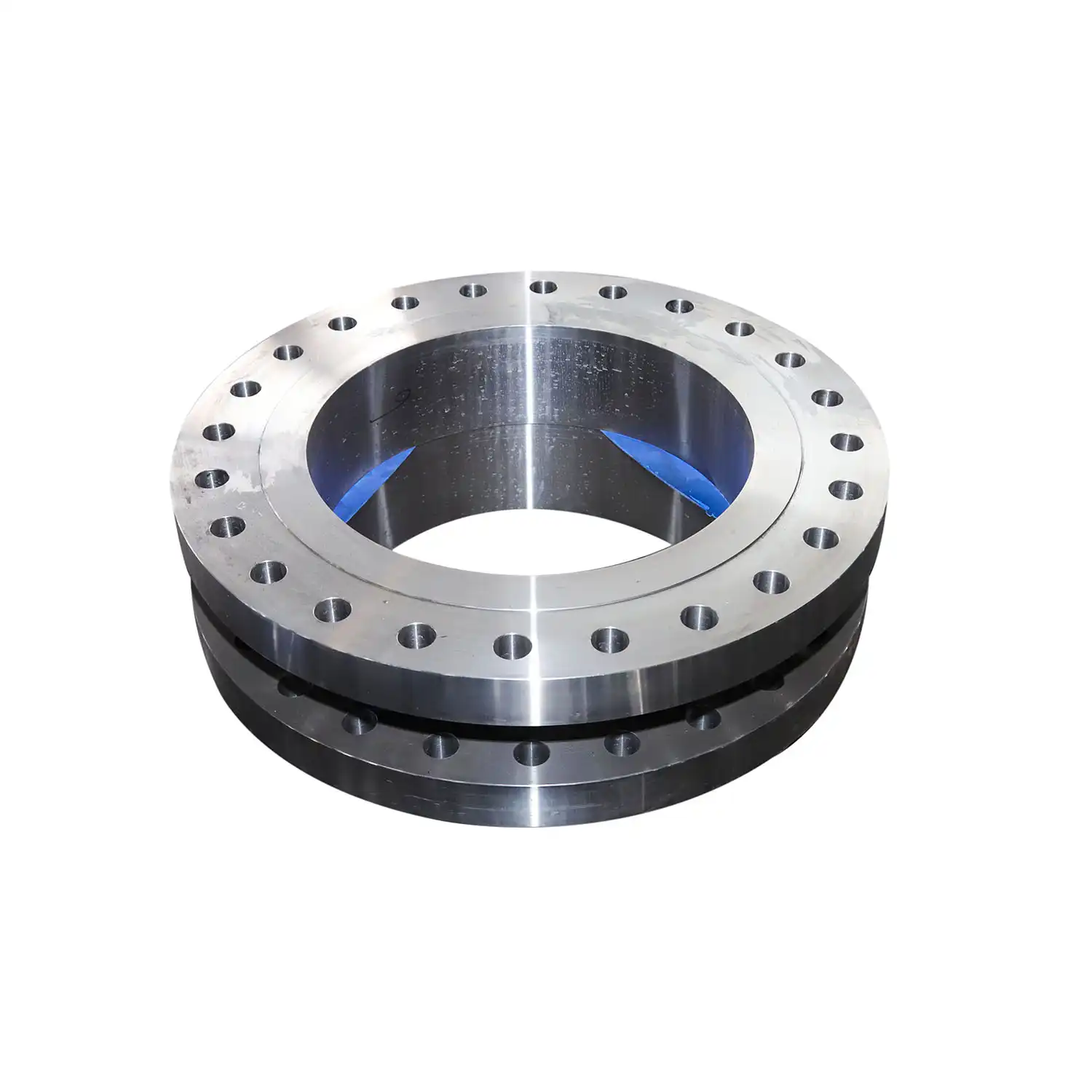
When trying to build a high-volume pipeline, choosing the right type of fitting has a direct effect on the project costs, how quickly the pipeline is installed, and how reliable it will be in the long run. The Slip On Flange stands out as a flexible and affordable option that strikes a good mix between performance and cost. This part goes over the pipe end and is welded on both sides. It has a modest amount of strength, making it good for medium to low pressure uses, and it makes alignment easier during manufacturing. Slip On Flanges made to standards like ASME B16.5 and EN 1092-1 come in sizes ranging from DN15 to DN4000 and pressure ratings from PN6 to PN160. They give procurement teams the flexibility they need for a wide range of industrial uses, such as water supply, heating systems, and low-pressure chemical pipelines.
Introduction
Large-scale pipeline projects require components that balance strict performance requirements with cost control. Procurement managers and engineers often struggle to source reliable piping parts for infrastructure development. This guide explains how Slip-On Flanges can support high-volume applications while maintaining efficiency. It covers material selection, standard compliance, and supplier evaluation based on real procurement scenarios. The goal is to help readers understand technical specifications, certifications, and bulk purchasing strategies. By learning the advantages and limitations of Slip-On Flanges, decision-makers can better align sourcing choices with project schedules, budgets, operational demands, and long-term reliability expectations across industrial pipeline systems worldwide.
Understanding Slip On Flanges in Pipeline Builds
Working Principle and Design Features
Slip On Flanges are different from other types of flanges because they have a simple way of connecting. There is a small space between the pipe end and the flange face as the pipe moves into the flange hole. Then, fillet welds are put on both inside and outside the connection point by welders. This makes a strong part that can handle mild pressure. This design doesn't need cut pipe ends, which makes it easier to make and lets the length of the pipe be slightly adjusted during fitting. Compared to weld neck options, these hub profiles are lower, which means they use less material and cost less. This makes them especially appealing for projects on a budget where moderate wear resistance is needed.
Industrial Applications and Service Environments
Slip On Flange links are used for non-critical service lines in pipeline systems in many industries. These flanges are used in delivery networks where pressure stays between Class 150 and 300 at water treatment plants. Chemical processing companies put them on extra lines that handle fluids with moderate temperatures and don't have to worry about a lot of turbulence or shaking. Slip On Flange designs are used in cooling water circuits and compressed air systems in petrochemical processes where speed of installation is more important than high wear resistance. Companies that make things need these parts to connect to utilities so that they can get process water, plant air, and other services. The alignment flexibility of these flanges is helpful for HVAC setups in small mechanical rooms where standard welding methods are hard to use because of lack of space.
Material Options and Standards Compliance
Material choice directly affects Slip On Flange performance under different working conditions. Carbon steel such as ASTM A105 is widely used for general and high-temperature applications due to its strength and cost efficiency. Stainless steels like A182 F304 and F316 offer superior corrosion resistance in chemical or sanitary environments. Alloy steels are suitable for extreme temperatures or specialized media. Global standards such as ASME B16.5, EN 1092-1, JIS B2220, DIN, and GOST ensure uniform sizing, quality, and interchangeability across international pipeline systems.
Choosing the Best Slip On Flange for High-Volume Pipeline Projects
Comparison With Alternative Flange Types
Slip On Flanges provide a balance between cost, performance, and installation convenience compared with other flange types. Weld neck flanges deliver superior fatigue resistance for high-pressure, high-temperature systems but require higher cost and precise welding preparation. Lap joint flanges improve alignment flexibility but increase assembly complexity. Socket weld flanges suit small-bore, high-pressure systems but may create turbulence. Threaded flanges eliminate welding but risk leakage under vibration. Blind flanges seal pipeline ends but serve different functions. Slip On Flanges remain a cost-effective solution for moderate service conditions and fast installation.
Critical Selection Factors for Bulk Procurement
Bulk procurement requires evaluating pressure rating, temperature limits, material compatibility, and system design needs. ASME Class 150–600 and PN6–PN160 define safe operating pressures. Carbon steel suits moderate temperatures, while stainless and alloy steels handle corrosive or high-heat environments. Proper material matching prevents thermal stress at weld joints. Size range from DN15 to DN4000 must match supplier capability. Beyond unit price, procurement teams must consider installation cost, maintenance frequency, and service life to ensure long-term project efficiency and reliability.
Matching Specifications to Project Requirements
Flange selection must align with real operating conditions to ensure safety and cost efficiency. Water systems typically use Class 150 carbon steel or PN10–PN16 grades. Chemical applications may require 316 stainless steel for corrosion resistance. Fire protection systems follow AWWA standards with protective coatings. Marine applications benefit from compact Slip On Flange designs for space constraints. Proper specification prevents over-design, which increases cost, and under-design, which reduces safety. Matching material, pressure class, and application ensures stable long-term pipeline performance.
Sourcing and Procuring Slip On Flanges for Bulk Pipeline Builds
Identifying Qualified Manufacturers and Distributors
Reliable sourcing starts with evaluating certified manufacturers using ISO 9001 quality systems and full material traceability. Mill test reports confirm chemical and mechanical properties. Third-party inspections verify dimensions and pressure compliance. Integrated manufacturers like Shanxi Hongkai Forging control forging, machining, heat treatment, and testing, ensuring consistency and efficiency. Production capability from DN15 to DN4000 across ASME, EN, DIN, JIS, and GOST standards supports global projects. Supplier selection should prioritize quality consistency, delivery reliability, and production scalability for large infrastructure demands.
Evaluating Pricing and Bulk Purchase Advantages
Prices for Slip On Flanges on the market depend on the type of material, the size, the pressure rating, and the number of orders. Prices for carbon steel units in popular sizes like 2-inch Class 150 are usually the most affordable. On the other hand, prices for large-diameter stainless steel flanges in higher pressure classes are higher because they cost more to make and require more work. When you order a lot of something, you get a big deal on the price. Prices go down faster after 100 pieces, and they're best when you order 500 pieces or more. When you buy from a single seller, operations are streamlined, administrative costs are cut, and your ability to negotiate better payment terms is strengthened. Long-term supply deals keep prices stable across multi-phase projects and make sure that production capacity is used during times of high demand. To make accurate cost comparisons, procurement teams should ask for thorough quotes that include material grades, relevant standards, testing requirements, delivery schedules, and payment terms.
Customization and OEM Procurement Options
Standard catalog specs work well for many uses, but sometimes project-specific needs call for custom solutions. Non-standard bore sizes can be used to fit different pipe plans or meet internal flow needs. Special types of materials are used in places that are unusually corrosive or where the temperature differences are too wide for normal products. For certain sealing system needs, custom face finishes like tongue-and-groove, ring-type-joint, or serrated shapes can be used. Manufacturers who offer technical help can look at project drawings, suggest the best specs, and make flanges that meet all the exact material and size requirements. Communication routes, such as the time it takes to answer expert questions, and language skills, affect how well a project is coordinated. Reliable suppliers keep expert teams that know a lot of different international standards. This helps bridge the gap between the specifications in design papers and the manufacturing capabilities.
Installation and Maintenance Best Practices for Slip On Flanges
Step-by-Step Installation Procedures
The right way to put something starts with careful planning and then follows a set of steps for welding. Before putting the parts together, the flange face must be checked for surface flaws, the dimensions must match the specs, and the material marks must be confirmed. Before sliding the flange onto the pipe, you need to make sure that there is enough space between the pipe end and the flange face. Usually, a small gap is enough to let the weld go all the way through. To line up bolt holes with matching flanges, you have to rotate the Slip On Flange part before spot welding it. This makes sure that the compression of the gasket stays the same all the way around. First, internal fillet welds are made along the hub. Then, external fillet welds are made at the pipe surface using the right filler materials that match the properties of the base metal and qualified welding techniques. To get rid of any remaining stresses, post-weld heat treatment may be needed for some alloy steels or important business uses. The final review checks the quality of the welds visually, makes sure the flanges are straight, and tests the pressure using either water or air, depending on the project requirements.
Routine Inspection and Preventive Maintenance
Maintaining the soundness of the Slip On Flange over its working life requires regular inspection and quick action. Visual inspections should check the outside of things for rusting, looking for rust, cracks, or covering wear that could weaken the structure. Bolt tension verification stops gasket creep and keeps the seal's integrity by using measured torque tools to make sure that the right preload values stay the same. Leakage detection through pressure tracking or visual checking can find seal problems early on, before they get so bad that they stop working. By checking the state of the gaskets during planned shutdowns, sealing elements that are worn out or squeezed can be replaced so that the system can be kept safe. Strategies for stopping rust, such as protective coatings, cathodic protection, or injecting a corrosion inhibitor, make parts last longer in harsh settings. Documentation methods that keep track of inspection results, repair actions, and the history of parts help with reliability analysis and guide future buying choices.
Why Partner With Certified Slip On Flange Manufacturers?
Quality Assurance and Certification Standards
Manufacturing certifications are factual proof of the ability to produce and the success of quality control. Getting ISO 9001 approval shows that you have structured process controls in place for design, production, inspection, and delivery. Certifications from recognized testing labs show that the chemical makeup and mechanical qualities of a material meet the standards set by the specification. Compliance with the Pressure Equipment Directive (PED) means that a product meets European safety rules for parts that handle pressure. The Boiler and Pressure Vessel Code from ASME gives manufacturers permission to make products for North American markets. These certificates lower the risk of procurement by making sure that sellers have documented quality systems that can be checked regularly by a third party. Companies with multiple foreign certifications show they are committed to quality standards in all global markets. This gives customers faith that their products will work well together no matter where the project is located or what the building codes say.
Technical Support and Engineering Assistance
Experienced makers add value beyond just providing parts by offering expert advice and helping to solve problems. Application engineering helps match the specs of a flange to its service environment by looking at things that affect its long-term dependability, such as pressure spikes, temperature changes, and vibrations. Material selection advice based on fluid compatibility, temperature range, and weather exposure makes sure that the best metals are used in the right setups. Installing problems can be fixed by helping building workers who are having trouble with alignment, welding, or putting things together. Having supporting documentation like dimensional models, material certificates, and test results makes it easier to make sure the project is of high quality and follows all the rules. Quick and easy ways to communicate, like having a direct expert contact available, help solve problems faster and keep project delays to a minimum. Shanxi Hongkai Forging keeps engineering teams that are up-to-date on foreign standards and application needs across all industrial sectors. They also offer consulting services that go beyond just supplying parts to help projects run smoothly.
Conclusion
When choosing the right flange parts for building a high-volume pipeline, you have to balance technical performance, price limits, and the reliability of the supplier. Slip On Flanges are a cheap way to fix problems in medium to low-pressure situations where fast fitting and easy alignment are important. Knowing how they were designed, what standards apply, and the best conditions for service helps you make smart buying choices that support the success of your project. Partnering with certified makers that offer combined production capabilities, strict quality control, and quick expert support lowers the risk in the supply chain and ensures that parts will work reliably for a longer time.
FAQ
1. What pressure ratings are suitable for Slip On Flange applications?
In most cases, Slip On Flanges are used for uses from ASME Class 150 to Class 600, which is the same as PN6 to PN100 in European standards. There are parts with better scores, but the way they were made means they work best in medium to low-pressure situations where fatigue resistance needs to be mild.
2. How do the wait times for regular and custom flange sales compare?
Standard sizes and standards ship within two to four weeks, based on how much stock is available. Custom designs that need special materials, non-standard sizes, or special testing requirements usually make wait times 6 to 8 weeks longer. This is because of the time it takes to get the materials, schedule production, and check the quality.
3. Can manufacturers accommodate project-specific testing requirements?
Reliable providers keep testing tools that can do things like hydrostatic pressure testing, non-destructive examination, dimensional checking, and material proof. Custom testing procedures that go beyond standard requirements can be set up. The costs and time effects will be talked over during the quote development process.
Partner With HONG KAI FORGING for Reliable Slip On Flange Supply
When making choices about purchases that affect the success of high-volume pipelines, buyers need providers that can combine excellent manufacturing with quick customer service. HONG KAI FORGING makes certified Slip On Flanges to ASME, EN, DIN, JIS, and GOST standards in our combined production plant. The sizes range from DN15 to DN4000, and the pressure ratings go from PN6 to PN160. Serving the European and American markets for 30 years shows that we are dedicated to quality, low prices, and on-time service. Forging, heat treatment, precision cutting, and thorough testing are just some of the many skills that are used to make sure that every part meets the requirements. Throughout the course of your project, technical teams help with application advice, material selection, and paperwork. Get in touch with kevin.zhao@hkflange.com right away to talk about your needs with skilled Slip On Flange suppliers who know how to meet your bulk purchasing needs and provide solutions that help you meet your building timeline and budget goals.
References
1. American Society of Mechanical Engineers. ASME B16.5: Pipe Flanges and Flanged Fittings. New York: ASME International, 2020.
2. European Committee for Standardization. EN 1092-1: Flanges and Their Joints - Circular Flanges for Pipes, Valves, Fittings and Accessories. Brussels: CEN, 2018.
3. Becht Engineering. "Flange Design and Selection for Piping Systems." Journal of Pressure Vessel Technology, vol. 141, no. 3, 2019, pp. 45-62.
4. Smith, Robert L. Industrial Piping and Pipeline Engineering Design. McGraw-Hill Professional, 2017.
5. Parisher, Roy A., and Robert A. Rhea. Pipe Drafting and Design. 4th ed., Gulf 2qProfessional Publishing, 2019.
6. Nayyar, Mohinder L., editor. Piping Handbook. 8th ed., McGraw-Hill Education, 2020.
Clear Communication, and Reliable Technical Support