- English
- French
- German
- Portuguese
- Spanish
- Russian
- Japanese
- Korean
- Arabic
- Greek
- German
- Turkish
- Italian
- Danish
- Romanian
- Indonesian
- Czech
- Afrikaans
- Swedish
- Polish
- Basque
- Catalan
- Esperanto
- Hindi
- Lao
- Albanian
- Amharic
- Armenian
- Azerbaijani
- Belarusian
- Bengali
- Bosnian
- Bulgarian
- Cebuano
- Chichewa
- Corsican
- Croatian
- Dutch
- Estonian
- Filipino
- Finnish
- Frisian
- Galician
- Georgian
- Gujarati
- Haitian
- Hausa
- Hawaiian
- Hebrew
- Hmong
- Hungarian
- Icelandic
- Igbo
- Javanese
- Kannada
- Kazakh
- Khmer
- Kurdish
- Kyrgyz
- Latin
- Latvian
- Lithuanian
- Luxembou..
- Macedonian
- Malagasy
- Malay
- Malayalam
- Maltese
- Maori
- Marathi
- Mongolian
- Burmese
- Nepali
- Norwegian
- Pashto
- Persian
- Punjabi
- Serbian
- Sesotho
- Sinhala
- Slovak
- Slovenian
- Somali
- Samoan
- Scots Gaelic
- Shona
- Sindhi
- Sundanese
- Swahili
- Tajik
- Tamil
- Telugu
- Thai
- Ukrainian
- Urdu
- Uzbek
- Vietnamese
- Welsh
- Xhosa
- Yiddish
- Yoruba
- Zulu
Welding Neck Flange Selection: Material, Size & Pressure Ratings
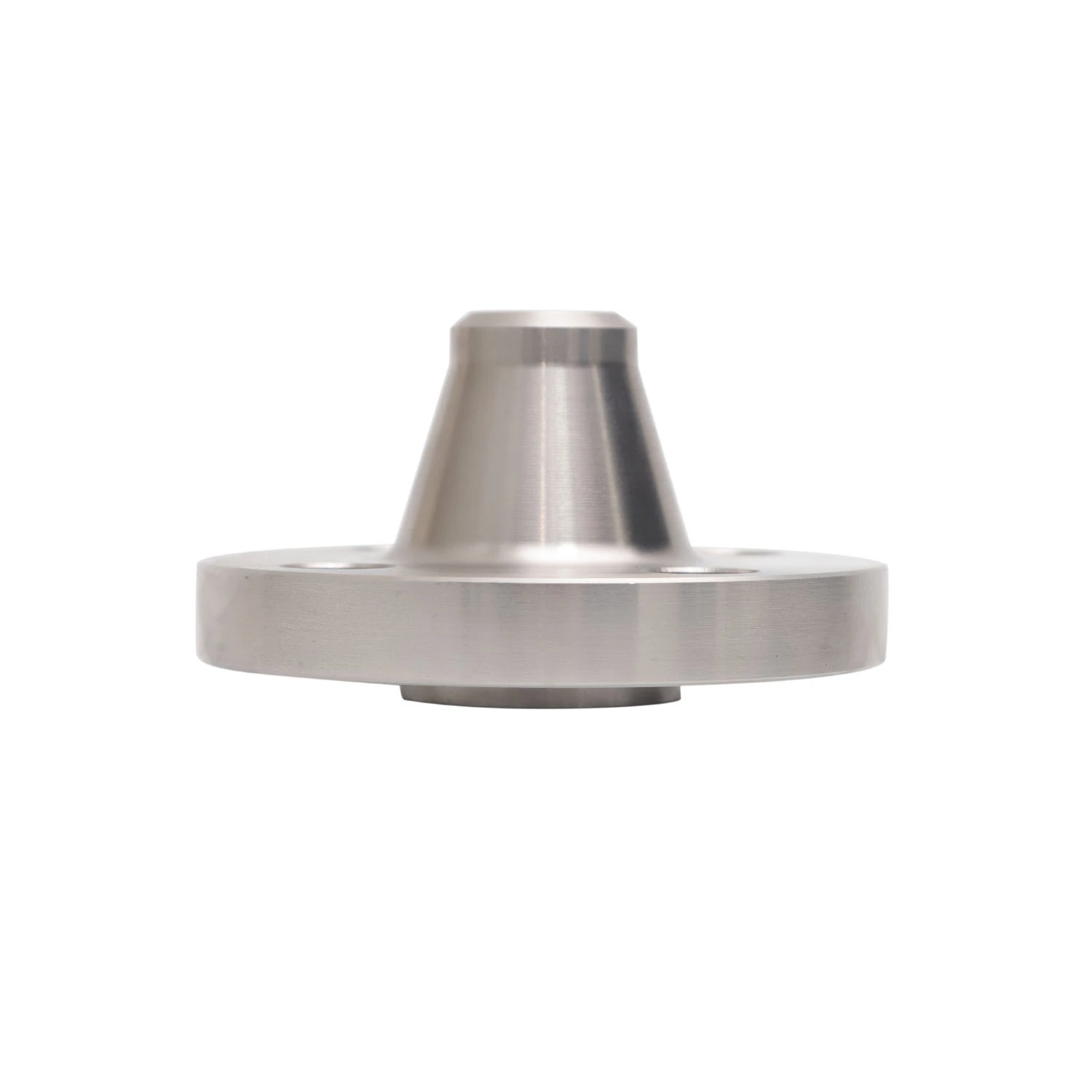
To choose the correct Welding Neck Flange, you need to know three important factors: the material suitability, the size requirements, and the pressure values. A Welding Neck Flange has a long, curved hub that is made for butt welding. It provides better structural stability by distributing stress well. This design reduces the chance of leaks in vital service, high-pressure, and high-temperature areas. Meeting standards like ASME B16.5, EN 1092-1, DIN, and GOST makes sure that the product is accepted all over the world. These flanges are made from carbon steel, stainless steel, and alloy steel and come in sizes ranging from DN15 to DN5000 and pressure grades from PN6 to PN160. They are made to meet the needs of a wide range of industries, including oil and gas, petrochemical, power generation, and chemical processing.
Understanding Welding Neck Flanges: Specifications and Types
Critical infrastructure's pipe systems rely on parts that won't break down in harsh situations. The long, slightly tapered hub makes a smooth transfer from the flange face to the pipe wall. This is an example of engineering precision. This shape isn't just for looks; it moves mechanical stress away from the weld zone, which stops cracks from starting in places like thermal power plants and remote platforms where loads change over time.
Core Design Features That Matter
The inside width of the connecting pipe is exactly matched to the bore diameter. This attention to detail gets rid of flow turbulence and lowers erosion-corrosion, which makes systems last longer in places where they move rough or salty materials. Radiographs can be used to check the whole butt-weld connection, which is something that slip-on or threaded connections can't do.
Standard Specifications Across Global Markets
Dimensional consistency across providers for the Welding Neck Flange is set by manufacturing guidelines. ASME B16.5 covers sizes from NPS ½" to 24" and pressure classes from 150 to 2500. ASME B16.47, on the other hand, covers bigger lengths from NPS 26" to 60". Installations in Europe must follow EN 1092-1 rules for sizes DN10 to DN2000 and pressure levels PN6 to PN400. When it comes to 10K to 40K grades, Japanese markets use JIS B2220, and API 605 gives details for special uses in oil refinery.
Variations in Hub Design
Standard neck lengths work for most uses, but long weld neck types can be used for specific fitting needs where extra space or control of thermal expansion is needed. The hub neck type you choose has a direct effect on the welding and testing processes. This makes early specification very important for managing project timelines and budgets.
Material Selection for Welding Neck Flanges: Matching Requirements to Grades
The choice of material affects whether your pipe system works regularly for decades or needs to be replaced before its time. Carbon steel types like ASTM A105 are most common in environments with mild temperatures and non-corrosive materials because they are cost-effective and strong enough. When the temperature or type of fluid changes, it's important to buy stainless steel and alloy steel grades.
Carbon Steel Applications and Limitations
Carbon steel flanges made to ASTM A105 can be used on water systems, steam lines below 425°C, and fuel service where rust isn't a big problem. This material has a tensile strength of about 485 MPa and can be welded easily, which makes it the main choice for water treatment plants and traditional power plants. But carbon steel rusts quickly in acidic or salty settings, which means it can't be used abroad or for chemical processing.
Stainless Steel for Corrosive Environments
Chromium in ASTM A182 F304 stainless steel forms an inert oxide layer that prevents corrosion by acids, alkalis, and chlorides. Refineries that process sulphuric liquid oil employ F304 because it doesn't rust in sulfidic acid. Welding Neck Flanges constructed of ASTM A182 F316L are essential in marine and chemical operations with high chloride levels because molybdenum resists cracking. Food and pharmaceutical businesses must utilise stainless steel since it is cleaner and less polluted.
Alloy Steel for High-Temperature Service
Standard carbon steel loses its mechanical strength at temperatures above 550°C, which is where steam lines in supercritical power plants work. At high temperatures, ASTM A182 F11 (1.25Cr-0.5Mo) and F22 (2.25Cr-1Mo) alloy steels keep their yield strength and resistance to creep. These chromium-molybdenum alloys also don't get damaged by hydrogen in refining hydrotreating units, which is different from carbon steel because hydrogen partial pressures and temperatures would quickly break down carbon steel.
Size and Pressure Ratings: Ensuring Compatibility and Safety
Flange size is more than just matching the pipe width. If you use Nominal Pipe Size (NPS) as a measurement guide, the hole width will be different for each pipe plan. When attaching a 6-inch NPS flange to Schedule 40 pipe versus Schedule 160 pipe, the bore sizes must be different because the wall thickness rises with the schedule number while the outside diameter stays the same.
Pressure Class Selection Fundamentals
For any given material, the pressure values go down as the working temperature goes up. It is possible for a Class 150 carbon steel flange that is rated for 285 PSI at 38°C to lose its power and only hold 180 PSI at 260°C. As you go up in class, 300, 600, 900, 1500, and 2500, the pressure control gets higher, but the materials cost more and the fitting is more difficult.
ASME Versus EN Standard Differences
The American ASME B16.5 standard and the European EN 1092-1 standard require different bolt holes, flange widths, and facing characteristics for Welding Neck Flanges in the same sizes. Although they can tolerate the same pressures and temperatures, DN100 PN40 European and 4-inch Class 300 ASME flanges cannot be used together. Foreign project procurement teams must explicitly clarify criteria to avoid costly installation adjustments.
The most common type of face is Raised Face (RF), which has a raised area around the hole where the gasket fits. Ring Type Joint (RTJ) facings have metal rings that are set in precisely machined holes. This provides better sealing in high-pressure situations above Class 900. Flat Face (FF) designs work well for cast iron valve joints where the stress on the face could break weak materials. The pressure, temperature, and media properties of your application determine which face to use, which in turn affects the choice of seal material and the steps used to assemble the joint.
Comparing Welding Neck Flanges with Other Flange Types: Making the Right Choice
Due to limited funds, buying managers often have to look at different options. However, knowing the differences in performance helps avoid costly mistakes. Installing slip-on flanges is faster and cheaper. They just slide over the outside of the pipe and have fillet welds on both sides. Slip-on flanges are not good for heavy cycle loads or pressures above Class 600, though, because this design places stress at the fillet weld toes. Slip-on flanges are a cheap way to connect pipes in municipal water systems with steady-state pressure profiles, but distilleries need tapered hub designs for better wear resistance because of temperature cycling and changing pressures.
Blind Flanges and Socket Weld Applications
Blind flanges shut tube ends for testing, maintenance, and growth. Their thickness must be estimated accurately since they are pressurised on the flange face and have no openings. The pipe fits into a socket hole and receives a single fillet joint with socket weld flanges for high-pressure systems with small diameters. The tapered hub makes Welding Neck Flange unique for high-stress applications. This design simplifies alignment but restricts radiography inspection, therefore it can't be utilised in critical services that need complete NDT verification.
Threaded Connections and Lap Joint Designs
Threaded flanges fit NPT or BSPT pipe threads without welding. This advantage is crucial in explosives-laden areas with limited hot work permits. Shaking and temperature fluctuations degrade threads. Soldering short lap joint flanges to loose-backed pipes. It aligns bolt holes by rotating the backing flange. Despite their higher cost and lower pressure rating than welded ones, chemical companies utilise lap joint assemblies because they are easier to remove and clean. Lifetime expenses beyond purchase price show worth. In critical service applications, welding neck flanges cost 40% more than slip-on equivalents but last longer, need less maintenance, and don't break. Remote ocean site or nuclear reactor maintenance teams prefer dependability above initial savings since unexpected shutdowns cost more than component price differences.
Procurement Insights: How to Buy Welding Neck Flanges Efficiently
When looking for industrial flanges, you need to check with suppliers about more than just their online listings. Integrated makers who handle forging, heat treatment, machining, and testing make sure quality is uniform and wait times are faster than when wholesalers put together parts from different subcontractors. In China's "Hometown of Forging," Shanxi Hongkai Forging runs three specialized workshops that serve markets around the world by blending local metalworking knowledge with modern quality control systems.
Certification and Documentation Requirements
Material Test Reports (MTRs) detail an item's chemical makeup, mechanical features, and heat treatment parameters to ensure Welding Neck Flange quality. Each plate should have a stamp linking it to MTR documentation. Third-party inspection services like TUV, Lloyd's, and Bureau Veritas give independent certification when project needs beyond the maker's control.
Pricing Factors and Volume Advantages
Grade affects raw material cost more than steel market effect. Stainless steel flanges cost three to five times more than carbon steel ones in the same size and pressure class. Prices for intermediate alloy steel depend on alloying elements. Larger sizes and higher pressure classes need more material and effort, increasing expenses. Volume commitments optimise manufacturing runs by saving 15–25% above small-lot prices for orders exceeding 100 units. Work complexity and execution impact lead times. Standard-size carbon steel flanges ship in 3–4 weeks. A rare metal or size may take 8–12 weeks. Framework agreements with recognised suppliers specify standards and reduce production slots, speeding project procurement. Reduced administrative and manufacturing delays. Custom manufacture meets unlisted demands. System overhauls are more expensive than non-standard facing features, material grades, or dimension changes to match equipment. Manufacturers with experience assist engineers create requirements, anticipate issues, and test product compatibility.
Conclusion
Choosing Welding Neck Flange that are compatible with the materials in your system, meet the necessary size standards, and work well in high-pressure, high-temperature environments saves your infrastructure investments and keeps your business running. The tapered hub design offers the best resistance to fatigue and leak protection in critical situations where failure of a component has serious effects. Knowing about the properties of materials, how they affect pressure classes, and standard changes helps buying teams choose the right parts and avoid mistakes that cost a lot of money. When you work with manufacturers that can show they have integrated production skills, complete quality systems, and quick expert help, you can lower the risks of the project and get the best total cost of ownership over many years of service.
FAQ
1. What pressure rating do I need for a steam system operating at 600 PSI and 350°C?
Class 300 carbon steel flanges can handle the pressure at this temperature, with a maximum allowed working pressure of 635 PSI at 350°C. But make sure you look at the full pressure-temperature curve for the grade of material you're using, since different types of carbon steel have slightly different derating factors. Adding a safety cushion by selecting Class 400 or Class 600 doesn't cost much and gives you the freedom to operate in case the pressure rises in the future.
2. Can I substitute stainless steel flanges directly for carbon steel in existing systems?
When two materials follow the same standard, like ASME B16.5, EN 1092-1, etc., stainless steel flanges and carbon steel flanges can be used together without any problems. But think about the galvanic rusting potential that happens when two different metals touch each other in liquids. Isolating seals and coated screws stop rust from speeding up at the joint contact. Also, make sure that the fact that stainless steel doesn't conduct heat as well as other materials doesn't cause problems with thermal stress in systems that are exposed to sudden changes in temperature.
3. How do I verify flange quality from overseas suppliers?
Ask for third-party inspection certificates, dimensional inspection reports, and approved material test records for each heat lot that show that the product meets the standards that were set. Reliable providers provide tracking paperwork that connects each flange to a quality record. Hiring outside inspection companies to watch tests and check paperwork before a package only adds a small amount of money, but it keeps you from getting non-conforming materials that slow down projects and raise total costs.
Partner with HONG KAI FORGING for Reliable Flange Solutions
Shanxi Hongkai Forging makes precision-engineered Welding Neck Flange flanges that meet ASME, EN, DIN, JIS, and GOST standards. They can do this by combining forging, heat treatment, cutting, and full testing into one process. Our industrial range, which includes sizes from DN15 to DN4000 and pressure levels up to Class 2500, is used in the oil and gas, petrochemical, power generation, and chemical processing industries around the world for tough jobs. We are located in China's well-known forging hub, and we use both local knowledge of metals and modern quality systems to offer approved materials, accurate measurements, and quick technical support. Our team helps you choose the right materials, make sure they meet your needs, and plan deliveries so that your projects stay on track, whether you need standard carbon steel flanges or special alloy steel options. Email kevin.zhao@hkflange.com to talk about your flange needs with a company that cares about quality and dependability.
References
1. American Society of Mechanical Engineers. ASME B16.5: Pipe Flanges and Flanged Fittings: NPS 1/2 Through NPS 24 Metric/Inch Standard. ASME International, 2020.
2. European Committee for Standardization. EN 1092-1: Flanges and Their Joints - Circular Flanges for Pipes, Valves, Fittings and Accessories, PN Designated - Part 1: Steel Flanges. CEN, 2018.
3. Becht, Charles IV. Process Piping: The Complete Guide to ASME B31.3. ASME Press, 2019.
4. Singh, Karan. Piping Materials Guide: Selection, Applications, and Installation Best Practices for Industrial Systems. McGraw-Hill Education, 2021.
5. Nayyar, Mohinder L. Piping Handbook: Seventh Edition. McGraw-Hill Professional, 2000.
6. American Petroleum Institute. API Standard 605: Large Diameter Carbon Steel Flanges: Nominal Sizes 26 Through 60. API Publishing Services, 2017.
Clear Communication, and Reliable Technical Support