- English
- French
- German
- Portuguese
- Spanish
- Russian
- Japanese
- Korean
- Arabic
- Greek
- German
- Turkish
- Italian
- Danish
- Romanian
- Indonesian
- Czech
- Afrikaans
- Swedish
- Polish
- Basque
- Catalan
- Esperanto
- Hindi
- Lao
- Albanian
- Amharic
- Armenian
- Azerbaijani
- Belarusian
- Bengali
- Bosnian
- Bulgarian
- Cebuano
- Chichewa
- Corsican
- Croatian
- Dutch
- Estonian
- Filipino
- Finnish
- Frisian
- Galician
- Georgian
- Gujarati
- Haitian
- Hausa
- Hawaiian
- Hebrew
- Hmong
- Hungarian
- Icelandic
- Igbo
- Javanese
- Kannada
- Kazakh
- Khmer
- Kurdish
- Kyrgyz
- Latin
- Latvian
- Lithuanian
- Luxembou..
- Macedonian
- Malagasy
- Malay
- Malayalam
- Maltese
- Maori
- Marathi
- Mongolian
- Burmese
- Nepali
- Norwegian
- Pashto
- Persian
- Punjabi
- Serbian
- Sesotho
- Sinhala
- Slovak
- Slovenian
- Somali
- Samoan
- Scots Gaelic
- Shona
- Sindhi
- Sundanese
- Swahili
- Tajik
- Tamil
- Telugu
- Thai
- Ukrainian
- Urdu
- Uzbek
- Vietnamese
- Welsh
- Xhosa
- Yiddish
- Yoruba
- Zulu
Socked Welding Flange Materials: Carbon, Alloy, Stainless Steel
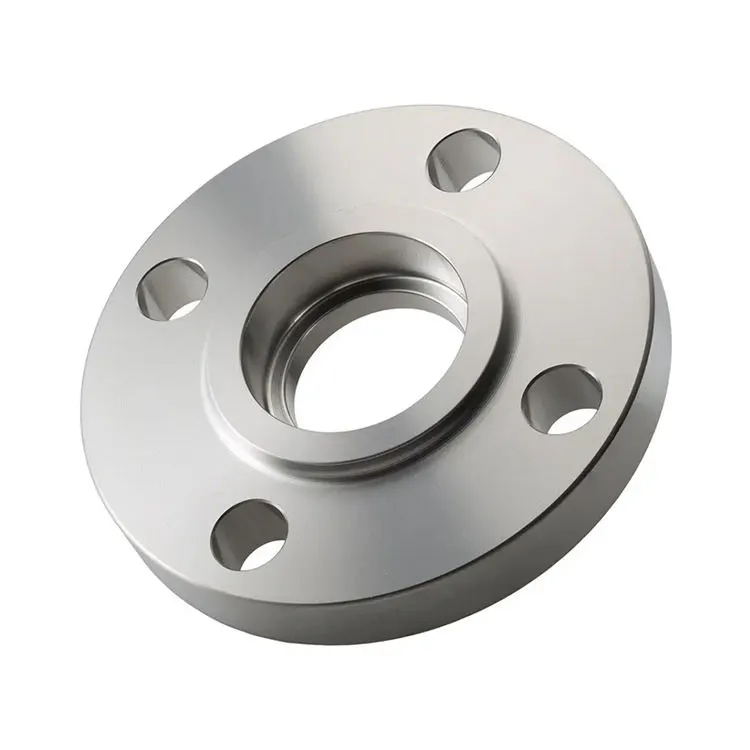
Picking the right Socked Welding Flange material is very important when picking pipe parts for important industrial uses. It determines whether your system works reliably for decades or needs to be replaced early, which can be expensive. Socked Welding Flanges have a hollow socket that fits the pipe end. External fillet welding makes the link tight and leak-proof. Because the shape stops the interior weld from sticking out, these flanges are perfect for high-pressure, small-diameter pipes in the process, hydraulics, and instrumentation industries. There are three types of steel: carbon steel, alloy steel, and stainless steel. Each has its own performance traits that procurement managers need to know about in order to keep system stability high and costs low over its lifetime.
Understanding Socked Welding Flanges and Their Material Types
Socked Welding Flanges solve one of the most important problems in industrial piping: making strong, stable connections in small-bore lines where threaded joints would leak and slip-on designs don't last long enough. The socket design naturally lines things up, so there is no need for tack welding during installation. This is a big plus in confined areas like those found in chemical plants and factories.
Design Fundamentals and Standards Compliance
Socket Welding Spines utilize a accuracy counterbore that adjusts the pipe with a little extension crevice some time recently welding, permitting warm development whereas guaranteeing a tight seal through an outside filet weld. This maintains a strategic distance from inside weld bulge and decreases turbulence and erosion chance. Compared with butt weld and strung joints, attachment welds offer higher weariness resistance and simpler establishment in tight spaces. Shanxi Hongkai Manufacturing produces ribs beneath ASME B16.5, EN 1092-1, and JIS B2220 benchmarks over different weight classes, guaranteeing worldwide compatibility, dimensional precision, and dependable execution in requesting mechanical channeling systems.
Carbon Steel for General Industrial Service
For most uses, carbon steel grades—most notably ASTM A105 for cast fittings—are the most cost-effective option. At temperatures as low as 400°C, these materials are very strong and easy to weld. In refineries with safe environments, carbon steel Socked Welding Flanges are used in power systems, steam condensate lines, and non-corrosive process streams. The material's mechanical features meet strict pressure standards up to Class 2500 ratings. It's also easy to find and weld, which lowers the cost of installation and makes planning maintenance easier.
Alloy Steel for Extreme Operating Conditions
Alloy steels such as ASTM A182 F11 and F22 are designed for high-temperature and high-pressure service where carbon steel fails. Chromium and molybdenum improve creep resistance and oxidation stability, allowing operation near 600°C in steam and hydrocarbon systems. These materials maintain mechanical strength during thermal cycling and resist hydrogen attack in harsh refining environments. Alloy Socked Welding Flanges are essential in power plants and high-temperature process lines. Proper heat treatment is critical to ensure toughness and stress resistance, making them suitable for demanding applications that require long-term structural reliability and compliance with sour service standards.
Stainless Steel for Corrosive Environments
Stainless steel grades like ASTM A182 F304L and F316L give great erosion resistance for chemical, pharmaceutical, and marine applications. The chromium-rich inactive layer secures against acids, chlorides, and oxidizing specialists, whereas molybdenum in 316L upgrades resistance in saltwater and seaward situations. These ribs perform well over a wide temperature extend and keep up long benefit life in forceful conditions. In spite of the fact that more costly than carbon steel, stainless steel diminishes upkeep and substitution recurrence. This makes it cost-effective for businesses where defilement avoidance, cleanliness, and erosion resistance are basic to secure and steady operation.
Material Properties and Advantages of Carbon, Alloy, and Stainless Steel Socked Welding Flanges
When engineering teams know the mechanical and chemical properties of each material family, they can exactly match Socked Welding Flange specifications to working conditions. This way, they can avoid both over-specification, which drives up costs, and under-specification, which increases the risk of failure too soon.
Carbon Steel: Cost-Effective Baseline Performance
Carbon steel Attachment Welding Spines, regularly ASTM A105, give tall ductile quality (≥485 MPa) and great ductility, permitting them to withstand weight vacillations and mechanical loads viably. With generally moo hardness (underneath HB 200), they are simple to machine and alter amid establishment. Be that as it may, erosion resistance is constrained, and unprotected surfaces rapidly rust in sticky or forceful situations. In this manner, carbon steel is best suited for dry conditions, treated water frameworks, or applications where erosion stipend is built into plan life through coatings or cathodic protection.
Alloy Steel: Enhanced Temperature and Pressure Capability
Alloy steel Attachment Welding Spines such as ASTM A182 F11 and F22 are outlined for hoisted temperature and weight benefit. Chromium and molybdenum augmentations altogether move forward crawl resistance, oxidation soundness, and hydrogen assault resistance, empowering operation up to around 600°C. These properties guarantee auxiliary astuteness beneath warm cycling and long-term high-temperature presentation. Appropriate warm treatment and treating are fundamental to keep up durability and push resistance, particularly in acrid or cyclic benefit situations. Combination steels are subsequently broadly utilized in control era, steam frameworks, and high-temperature refining processes.
Stainless Steel: Maximum Corrosion Resistance and Longevity
Stainless steel Attachment Welding Ribs (304/304L, 316/316L) offer prevalent erosion resistance due to a self-repairing chromium oxide layer. Review 316 contains molybdenum, improving resistance to chlorides and seawater situations. These materials are broadly utilized in chemical, pharmaceutical, nourishment, and seaward businesses due to their cleanliness and toughness. They stand up to erosion over a wide temperature run and essentially decrease upkeep needs. In spite of the fact that beginning taken a toll is higher, stainless steel regularly gives the most reduced lifecycle fetched, enduring decades in forceful situations where carbon steel would require visit replacement.
How to Choose the Right Socked Welding Flange Material for Your Project?
To choose the right Socked Welding Flange material, you need to carefully weigh the working conditions against the material's capabilities, while also taking into account the project's budget and the time it takes to get the material. The F-1 criteria screening technique gives this decision-making process an organized way to go.
Defining Key Operating Parameters
Write down the most elevated working weight, the most smoking and coldest temperatures that can happen, the fluid's make-up (counting pH, chloride substance, and H2S rate), and how long you think it will final. Fabric choice is too influenced by vibration levels, the consistency of temperature cycles, and natural variables like mugginess and salt introduction. As a result of the additional warm stretch that comes with beginning up and closing down, the extend specs require to say whether the application will be utilized persistently or as it were now and then. Prepare engineers ought to be inquired by obtainment groups to come up with the worst-case scenarios instep of the most common ones. This will offer assistance make beyond any doubt that ribs remain in put amid upsets and accidents.
Applying Screening Criteria
The F-1 strategy organizes things in a organized way. When liquids contain acids, bases, or chlorides, erosion resistance is the most vital figure, which right away focuses the determination prepare toward stainless sorts. For employments over 400°C, where combination steel is required, temperature resistance gets to be the most vital figure. Confirmation of the weight number against ASME B16.5 course names makes beyond any doubt that the structure is satisfactory. Fetched optimization doesn't happen until all specialized necessities are met. This keeps fake economies from putting security at chance. Depending on the controls, like NACE MR0175 for acrid benefit, ASME kettle code for weight tanks, or FDA benchmarks for nourishment contact, certain fabric sorts may have to be utilized no matter what else is going on.
Material Recommendations by Application
ASTM A105 carbon steel Socked Welding Flanges offer a cost-effective solution with reliable mechanical strength, making them suitable for utility systems such as treated boiler feedwater, compressed air, and non-corrosive hydrocarbons operating below 350°C. For higher-temperature environments, ASTM A182 F22 alloy steel is used in steam systems operating between 450°C and 550°C to resist creep deformation over long service periods. In highly corrosive applications involving acids, alkalis, or chlorinated media, ASTM A182 F316L stainless steel is preferred due to excellent corrosion resistance. Offshore and marine environments also rely on 316L to withstand chloride-rich conditions that rapidly degrade carbon steel even with protective coatings, ensuring long service life and reduced maintenance requirements in harsh operating environments.
Comparative Analysis: Socked Welding Flange Materials and Types in Market Context
Industrial buying is more than just choosing materials. It also includes knowing how Socked Welding Flange components compare to other ways of connecting parts and judging the skills of suppliers that affect the long-term success of a project.
Socket Weld Versus Alternative Flange Designs
Socked Welding Flanges provide strong vibration resistance and leak-tight joints compared with threaded flanges, which may loosen under dynamic conditions. Their structure offers about 50% longer fatigue life than slip-on flanges, making them suitable for cyclic service. While butt weld flanges deliver the highest integrity and smooth internal flow, they require precise pipe preparation and radiographic inspection, increasing installation cost. Socket welds reduce these requirements while still outperforming threaded types, helping procurement teams balance performance, reliability, and cost in selection.
Lifecycle Cost Analysis
Initial material cost represents only 15–25% of total lifecycle expenditure for piping systems. Installation labor, including welding and inspection, often equals or exceeds material cost. Socked Welding Flanges reduce installation time due to self-alignment, lowering labor costs in confined industrial spaces. Maintenance needs vary by material: carbon steel requires periodic coating, while stainless steel needs minimal upkeep. Unplanned shutdowns can cost $50,000–$500,000, so selecting proper materials and certified suppliers significantly improves long-term economic efficiency.
Selecting Reliable Manufacturers
Supplier selection directly affects flange performance and system reliability. Integrated manufacturers controlling forging, heat treatment, machining, and testing reduce risks from fragmented supply chains. Certifications such as ASME, EN, DIN, JIS, and GOST ensure global compliance. Material traceability confirms chemical and mechanical consistency throughout production. Strategic location near steel resources supports cost efficiency without quality loss. Experienced manufacturers also provide engineering guidance during design stages, helping procurement teams select suitable specifications and avoid costly post-installation changes.
Best Practices for Installation and Maintenance of Socked Welding Flanges Based on Material
Whether Socked Welding Flange units last as long as they're supposed to or break down early, causing unexpected costs and safety risks, depends on how well they are installed and maintained over time.
Material-Specific Handling and Welding Requirements
Proper handling ensures long-term flange reliability. Carbon steel must be kept dry to prevent corrosion, with controlled welding heat to avoid grain growth, especially in low temperatures. Alloy steel requires strict preheat and post-weld heat treatment to maintain toughness and reduce residual stress. Stainless steel must avoid contamination and overheating, which can cause carbide precipitation or localized corrosion. Using dedicated stainless tools is essential to preserve corrosion resistance and ensure stable performance in demanding environments.
Inspection Protocols and Preventive Maintenance
Inspection ensures early detection of defects before failure occurs. Proper assembly verifies correct expansion gaps and weld quality. Dye penetrant and ultrasonic testing detect surface and internal flaws. Carbon steel systems require periodic coating maintenance and thickness monitoring, while alloy steel needs hardness checks in high-temperature service. Stainless steel generally requires visual inspection unless exposed to chloride stress corrosion risks. Regular monitoring improves safety, reduces downtime risk, and extends service life in industrial applications.
Safety and Compliance Considerations
Installations of Socked Welding Flanges must meet a number of legal systems. The ASME B31.3 Process Piping Code tells chemical plants and factories how to create, choose materials, build, and test pipes. OSHA rules say the right way to weld, work in a tight area, and test the pressure before putting the machine into service. Industry-specific standards, like API RP 571 for damage mechanisms, help maintenance teams figure out how things will break and how often they should be inspected. As part of the procurement paperwork, you need to include material test reports that confirm the chemistry and mechanical properties, weld procedure specifications that meet the requirements of ASME Section IX, and welder qualification records that show the craftsman's skill. This paperwork is very helpful during regulatory audits and investigations into incidents.
Conclusion
To choose the best Socked Welding Flange material—carbon, alloy, or stainless steel—you have to weigh the needs for technical performance against the costs and lifespan of the product. For normal situations, carbon steel is a reliable material that doesn't cost much. Alloy steel, on the other hand, is better at handling high temperatures and pressures, and stainless steel is the best at resisting rust, which makes the higher cost worth it because it lasts longer. Systematic screening of criteria and evaluation of suppliers are key to successful procurement. This makes sure that materials meet standards and makers provide quality assurance paperwork. Because Shanxi Hongkai Flange can do combined production and follow global standards, we can help you with your important pipe projects by providing materials that are designed to last for decades.
FAQ
1. What are the key performance differences between carbon and stainless steel socket welding rings work differently?
Carbon steel flanges are strong and affordable for non-corrosive settings below 400°C. Stainless steel, on the other hand, is better at resisting corrosion and keeping its mechanical qualities over a wider temperature range (-200°C to 800°C). The inactive chromium oxide layer of stainless steel protects against acids, chlorides, and oxidizing media that quickly corrode carbon steel. This is why it is necessary for medicinal, food processing, and marine uses, even though it costs two to three times as much at first.
2. Can socket flanges made of alloy steel take more pressure than those made of carbon steel?
Alloy steel's ability to withstand pressure comes mostly from its higher high-temperature strength ratings, not its normal temperature ratings. This is what ASME B16.5 says about ASTM A105 carbon steel and A182 F22 alloy steel at room temperature. But above 400°C, carbon steel loses strength through creep deformation, while alloy grades keep their structural integrity. This means they can handle higher pressures in high-temperature applications like heavy oil processing and power generation.
3. How can I be sure that a provider follows ASME and other foreign rules?
Ask for material test records (MTRs) that show the chemistry and mechanical properties that can be linked to heat numbers, certificates of compliance from manufacturers that list the standards that apply (ASME B16.5, EN 1092-1), and third-party inspection reports if the specs need to be checked by a third party. Reputable makers, such as Shanxi Hongkai Forging, have thorough quality management systems that include written procedures for controlling production, testing, and keeping track of products. Procurement teams should look over these procedures before giving contracts for important projects.
Partner with HONG KAI FORGING for Certified Socked Welding Flange Solutions
Shanxi Hongkai Forging can help you with your next project by making Socket Welding Flange solutions that are precisely designed and meet international standards such as ASME B16.5, EN 1092-1, and others. We have three state-of-the-art facilities in China's forging center. From choosing the raw materials to inspecting the finished products, we do everything ourselves, so the quality of our carbon, alloy, and stainless steel types is always the same. Our expert team helps procurement managers choose the best materials for performance and cost by giving them advice that is specific to your working conditions. Our approved catalog serves the energy, industrial, and manufacturing sectors around the world, whether you need Class 2500 alloy steel flanges for high-pressure steam service or 316L stainless steel parts for processing chemicals that are acidic, our catalog has what you need. Get in touch with kevin.zhao@hkflange.com right away to talk about your needs with a Socked Welding Flange maker who is dedicated to providing quality, compliance, and on-time delivery for important industrial uses.
References
1. American Society of Mechanical Engineers. (2020). ASME B16.5: Pipe Flanges and Flanged Fittings: NPS 1/2 through NPS 24 Metric/Inch Standard. New York: ASME Press.
2. Becht, C. (2018). Process Piping: The Complete Guide to ASME B31.3 (4th ed.). New York: ASME Press.
3. European Committee for Standardization. (2018). EN 1092-1: Flanges and their joints - Circular flanges for pipes, valves, fittings and accessories, PN designated - Part 1: Steel flanges. Brussels: CEN.
4. Parisher, R.A., & Rhea, R.A. (2021). Pipe Drafting and Design (4th ed.). Oxford: Gulf Professional Publishing.
5. Singh, R. (2017). Applied Welding Engineering: Processes, Codes, and Standards (3rd ed.). Oxford: Butterworth-Heinemann.
6. Yokell, S. (2016). Welded Design - Theory and Practice. Cambridge: Woodhead Publishing.
Clear Communication, and Reliable Technical Support