- English
- French
- German
- Portuguese
- Spanish
- Russian
- Japanese
- Korean
- Arabic
- Greek
- German
- Turkish
- Italian
- Danish
- Romanian
- Indonesian
- Czech
- Afrikaans
- Swedish
- Polish
- Basque
- Catalan
- Esperanto
- Hindi
- Lao
- Albanian
- Amharic
- Armenian
- Azerbaijani
- Belarusian
- Bengali
- Bosnian
- Bulgarian
- Cebuano
- Chichewa
- Corsican
- Croatian
- Dutch
- Estonian
- Filipino
- Finnish
- Frisian
- Galician
- Georgian
- Gujarati
- Haitian
- Hausa
- Hawaiian
- Hebrew
- Hmong
- Hungarian
- Icelandic
- Igbo
- Javanese
- Kannada
- Kazakh
- Khmer
- Kurdish
- Kyrgyz
- Latin
- Latvian
- Lithuanian
- Luxembou..
- Macedonian
- Malagasy
- Malay
- Malayalam
- Maltese
- Maori
- Marathi
- Mongolian
- Burmese
- Nepali
- Norwegian
- Pashto
- Persian
- Punjabi
- Serbian
- Sesotho
- Sinhala
- Slovak
- Slovenian
- Somali
- Samoan
- Scots Gaelic
- Shona
- Sindhi
- Sundanese
- Swahili
- Tajik
- Tamil
- Telugu
- Thai
- Ukrainian
- Urdu
- Uzbek
- Vietnamese
- Welsh
- Xhosa
- Yiddish
- Yoruba
- Zulu
Best Socked Welding Flange Features for High-Pressure Piping
Socket welding flanges are the best choice for small-bore uses that need to be very reliable and not leak when engineers have to make important decisions about how to connect high-pressure pipes. These unique parts have a hollow socket that fits the pipe end, which lets external fillet welding make strong links without any internal weld protrusion. Socked welding flanges work great in settings with toxic materials, a lot of vibration, and systems that can't have any leaks. This is why they are essential for monitoring lines, hydraulic systems, and nuclear power installations.
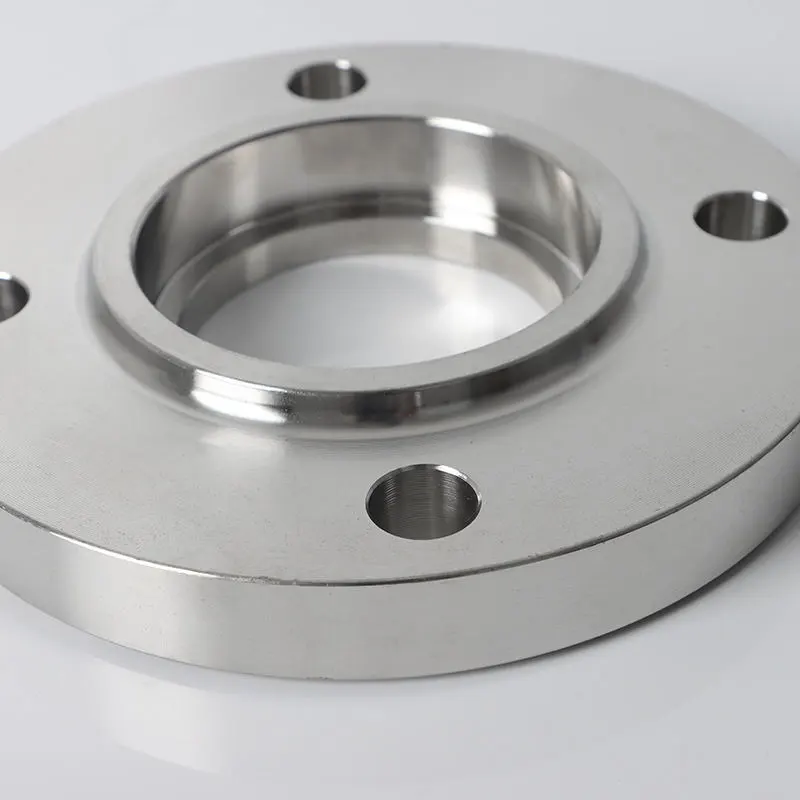
Understanding Socket Welding Flanges for High-Pressure Applications
In tough industrial settings where connection quality can't be compromised, socket welding flanges are specialized solutions made just for that. The basic design has a hollow counterbore that fits the pipe end. This makes a natural alignment guide and makes welding from the outside easier.
Technical Design Specifications and Standards Compliance
Modern socket welding flanges meet a number of international standards, which makes sure that they are compatible and meet safety standards around the world. ASME B16.5 covers sizes from NPS 1/8" to 4" and pressure ratings from Class 150 to 2500. EN 1092-1, on the other hand, covers DN6 to DN100 shapes and PN16 to PN400 pressure ratings. The JIS B2220 standards go along with these and cover pressure classes from 10K to 40K for Asian markets. As required by ASME, the socket design includes important measurement features such as a standard 1/16-inch expansion gap, precision-machined counterbores, and controlled face finishes that range from 125 to 250 RMS. You can choose from different types of materials, such as carbon steel grades like ASTM A105, stainless steel grades like A182 F304/316L, and special alloy steel mixtures made for tough working conditions.
Pressure Rating Capabilities and Material Selection
When using materials in high-pressure situations, they need to be carefully chosen so that they work well in those conditions and meet the pressure needs. Socket welding flanges made of carbon steel usually work in temperatures between -29°C and +400°C and keep their hardness below HB 200. Different types of stainless steel are better at resisting corrosion in chemical processing settings, while different types of alloy steel are better at withstanding high pressure. Precision forging is the first step in the manufacturing process. Next, heat treatment is used to get the best material qualities. After that, machining makes sure that the dimensions are correct, and full testing confirms the pressure ratings and material standards that are needed for important building projects.
Comparing Socket Welding Flanges to Other Flange Types
Having knowledge about how well socket welding flanges work compared to other flange designs helps you make smart purchasing choices based on your application needs and operating limitations.
Performance Analysis Against Slip-On and Threaded Alternatives
Socket welding flanges are better at resisting fatigue than slip-on designs; they have about 50% higher fatigue strength when loaded and unloaded many times. This benefit is especially useful in places with a lot of shaking, where threaded joints could come loose or slip-on flanges could get stress builds up. Even though threaded flanges make fitting easier, they can't be used in high-pressure situations because of the thread wear and leaking paths that are built into threaded connections. Socket welding flanges get rid of these problems by making permanent welded joins. They also keep the alignment benefits that threaded connections offer during the initial building process.
Structural Integrity and Installation Considerations
Socked welding flanges have an external fillet weld design that lets you see the whole welded joint. This makes quality control easier during installation and regular maintenance. This clearness is different from butt weld flanges, where the quality of the internal join needs to be checked with x-rays, which takes more time and costs more money. The socket design removes the need for tack welding, which is usually needed for butt weld setups. This makes installation faster and easier. Welders can quickly get the right fit, which is especially helpful in tight areas where normal welding processes are hard to do.
Procurement Considerations for Socket Welding Flanges
For socket welding flanges buying strategies to work, they need to take a close look at technical specs, provider abilities, and long-term performance needs that are in line with project goals and operational needs.
Material Certification and Quality Assurance Requirements
Professional buying teams make it a priority for sellers to keep full material tracking and certification compliance. To make sure that socket welding flanges work reliably in important situations, they need material test papers that show their chemical make-up, mechanical qualities, and heat treatment records. According to international standards, quality assurance procedures must include checking the dimensions, putting the product under pressure, and making sure the surface finish is correct. Suppliers should show what they can do by showing facilities for non-destructive testing, measurement tools that have been properly adjusted, and quality management systems that have been written down and approved to ISO 9001 or similar standards.
Supplier Evaluation and Global Sourcing Strategies
When choosing a Socked Welding Flange provider, consider their inexpensive price, production expertise, technical understanding, and delivery performance. Top firms like Shanxi Hongkai Forging can forge, heat treat, cut precisely, and test in-house. Global buying strategies work best with companies that have multiple standard certifications, such as ASME, EN, DIN, JIS, and GOST compliance. This makes sure that all of the parts work together on all of the international projects. Large-scale infrastructure projects can get more value from bulk buying and custom manufacturing, which standardizes specs and cuts down on lead times.
Installation and Maintenance of Socket Welding Flanges in High-Pressure Piping
For socked welding flanges to work safely and last as long as possible in high-pressure, demanding settings, they need to be installed correctly and maintained regularly.
Step-by-Step Instructions for Installation
Preparing the pipe for installation starts with cutting it correctly, smoothing it out, and checking its measurements to make sure they match the dimensions of the flange socket. The depth at which the pipe is inserted must account for the usual 1/16-inch growth gap and keep the pipe in the right place while it is being welded. Welding procedures need trained people who follow accepted welding procedure standards that cover things like how to preheat, choose the right electrode, and, if needed, heat treat the weld after it's been made. The external fillet weld needs to go all the way through while not adding too much heat, which could damage the qualities of the base material.
Maintenance Protocols and Inspection Requirements
As part of regular maintenance plans, routine inspection programs should include checking the integrity of the weld visually, making sure the bolts are tight, and checking the state of the gaskets. Socket welding flanges are easy to check because the welds can be seen from the outside and the joint configurations can be seen. Using ultrasonic thickness tracking and thermal images in predictive maintenance plans can help find problems before they become too big to fix. For long-term asset management choices, documentation needs to include records of inspections, upkeep activities, and any problems that are found.
Future Trends and Innovations in Socket Welding Flanges for High Pressure
As technology keeps getting better, socket welding flange designs, industrial methods, and performance tracking tools keep getting better, which makes them more reliable and efficient.
Material Science Advances and Coating Technologies
New metal compositions and surface treatment technologies make it possible for machines to do more in service settings that are getting more difficult. Plasma-sprayed ceramics and nanostructured surface treatments are two examples of advanced coating systems that make things more resistant to rust while still keeping the mechanical qualities that are needed for high-pressure uses. Additive manufacturing technologies make it possible to make complicated geometries and unique designs that improve flow while lowering weight and material use. These new ideas are especially helpful for specific applications that need setups or performance features that aren't available in normal catalog items.
Using digital tools and smart monitoring systems
IoT-enabled monitoring systems are becoming more and more integrated with piping infrastructure to allow for state review in real time and repair planning ahead of time. Smart sensors built into Socked Welding Flange joints keep an eye on things like temperature, pressure, vibration, and stress levels to spot problems before they cause the system to fail. Digital twin technologies use real-time tracking data and predictive models to make maintenance plans and strategies for replacing parts work better. These improvements help people make decisions based on data, which lowers running costs and improves system safety and dependability.
Conclusion
Socket welding flanges are important parts of infrastructure that work really well in high-pressure pipe uses that need strong, leak-proof joints. They are perfect for monitoring lines, hydraulic systems, and process pipes where operating integrity can't be compromised because of their unique design benefits, such as better fatigue resistance, ease of installation, and easy access for inspection. Socket welding flanges are still important parts of industrial structures around the world because they meet international standards, come in a variety of materials, and have been tested and proven to work in the field. Material science and monitoring tools will continue to get better thanks to new technologies. These reliable connections will keep serving important industrial processes while meeting stricter performance and safety standards.
FAQ
1. What pressure ratings are available for socket welding flanges?
As per ASME B16.5 standards, socket welding flanges can handle pressure ratings from Class 150 to Class 2500. In Europe, standards cover values from PN16 to PN400. The exact pressure they can handle varies on the material chosen, the temperature, and the size of the flange. This means they can be used for both mild and extreme high-pressure situations.
2. How do socket welding flanges compare to threaded flanges in high-pressure applications?
In high-pressure systems, socket welding flanges work better than threaded flanges because their joints are permanently welded, which eliminates the leaking paths that come with threaded connections. They last longer and don't break down as easily when exposed to temperature changes and vibrations, which can damage threaded systems.
3. What materials are commonly used for socket welding flanges?
Standard materials include carbon steel (ASTM A105), different types of stainless steel (A182 F304/316L), and different alloy steel mixes for specific uses. The choice of material is based on the temperature, pressure, rust resistance, and interaction with the process media that is being moved through the pipes.
Partner with HONG KAI FORGING for Superior Socket Welding Solutions
HONG KAI FORGING stands as your trusted socked welding flange manufacturer, delivering precision-engineered solutions that meet the most demanding high-pressure piping requirements. Our integrated manufacturing capabilities spanning forging, heat treatment, and precision machining ensure consistent quality and performance across every component we produce. With comprehensive certifications including ASME B16.5, EN 1092-1, DIN, and JIS standards, we provide global compatibility for your critical infrastructure projects. Our experienced engineering team can help you choose the best flanges, and our efficient production processes mean that we can offer reasonable prices and stick to our delivery dates. Contact kevin.zhao@hkflange.com today to discuss your specific requirements and find out how our socket welding flange solutions can help your project succeed and keep running smoothly.
References
1. American Society of Mechanical Engineers. "Pipe Flanges and Flanged Fittings: NPS 1/2 through NPS 24 Metric/Inch Standard." ASME B16.5-2020.
2. European Committee for Standardization. "Flanges and their joints - Circular flanges for pipes, valves, fittings and accessories." EN 192-1:2018.
3. Becht Engineering Company. "Fatigue Analysis of Welded Flange Connections in High-Pressure Piping Systems." Journal of Pressure Vessel Technology, Vol. 142, 2020.
3. National Association of Corrosion Engineers. "Materials Requirements for Sulfide Stress Cracking Resistant Metallic Materials." NACE MR0175/ISO 15156, 2021.
4. Petroleum Institute Standards. "Welding of Pipelines and Related Facilities." API Standard 1104, 21st Edition, 2019.
5. Japanese Industrial Standards Committee. "Steel pipe flanges." JIS B 2220:2012, Japanese Standards Association.
Clear Communication, and Reliable Technical Support