- English
- French
- German
- Portuguese
- Spanish
- Russian
- Japanese
- Korean
- Arabic
- Greek
- German
- Turkish
- Italian
- Danish
- Romanian
- Indonesian
- Czech
- Afrikaans
- Swedish
- Polish
- Basque
- Catalan
- Esperanto
- Hindi
- Lao
- Albanian
- Amharic
- Armenian
- Azerbaijani
- Belarusian
- Bengali
- Bosnian
- Bulgarian
- Cebuano
- Chichewa
- Corsican
- Croatian
- Dutch
- Estonian
- Filipino
- Finnish
- Frisian
- Galician
- Georgian
- Gujarati
- Haitian
- Hausa
- Hawaiian
- Hebrew
- Hmong
- Hungarian
- Icelandic
- Igbo
- Javanese
- Kannada
- Kazakh
- Khmer
- Kurdish
- Kyrgyz
- Latin
- Latvian
- Lithuanian
- Luxembou..
- Macedonian
- Malagasy
- Malay
- Malayalam
- Maltese
- Maori
- Marathi
- Mongolian
- Burmese
- Nepali
- Norwegian
- Pashto
- Persian
- Punjabi
- Serbian
- Sesotho
- Sinhala
- Slovak
- Slovenian
- Somali
- Samoan
- Scots Gaelic
- Shona
- Sindhi
- Sundanese
- Swahili
- Tajik
- Tamil
- Telugu
- Thai
- Ukrainian
- Urdu
- Uzbek
- Vietnamese
- Welsh
- Xhosa
- Yiddish
- Yoruba
- Zulu
Blind Flange Features Explained for Industrial Piping Systems
When you're choosing parts for important pipeline equipment, it's very important to know about pipe termination options. A Blind Flange is a solid disc part that is used to fully seal pipe ends and stop fluid leaks in industrial pipe systems. Unlike regular flanges with center bores, this special part doesn't have any openings. This makes it perfect for line ending tasks that need complete separation. When you need strong, leak-proof seals for the ends of high-pressure lines, these closing plates are very helpful. They make it easy to check and fix problems, and they work well in harsh industrial settings.
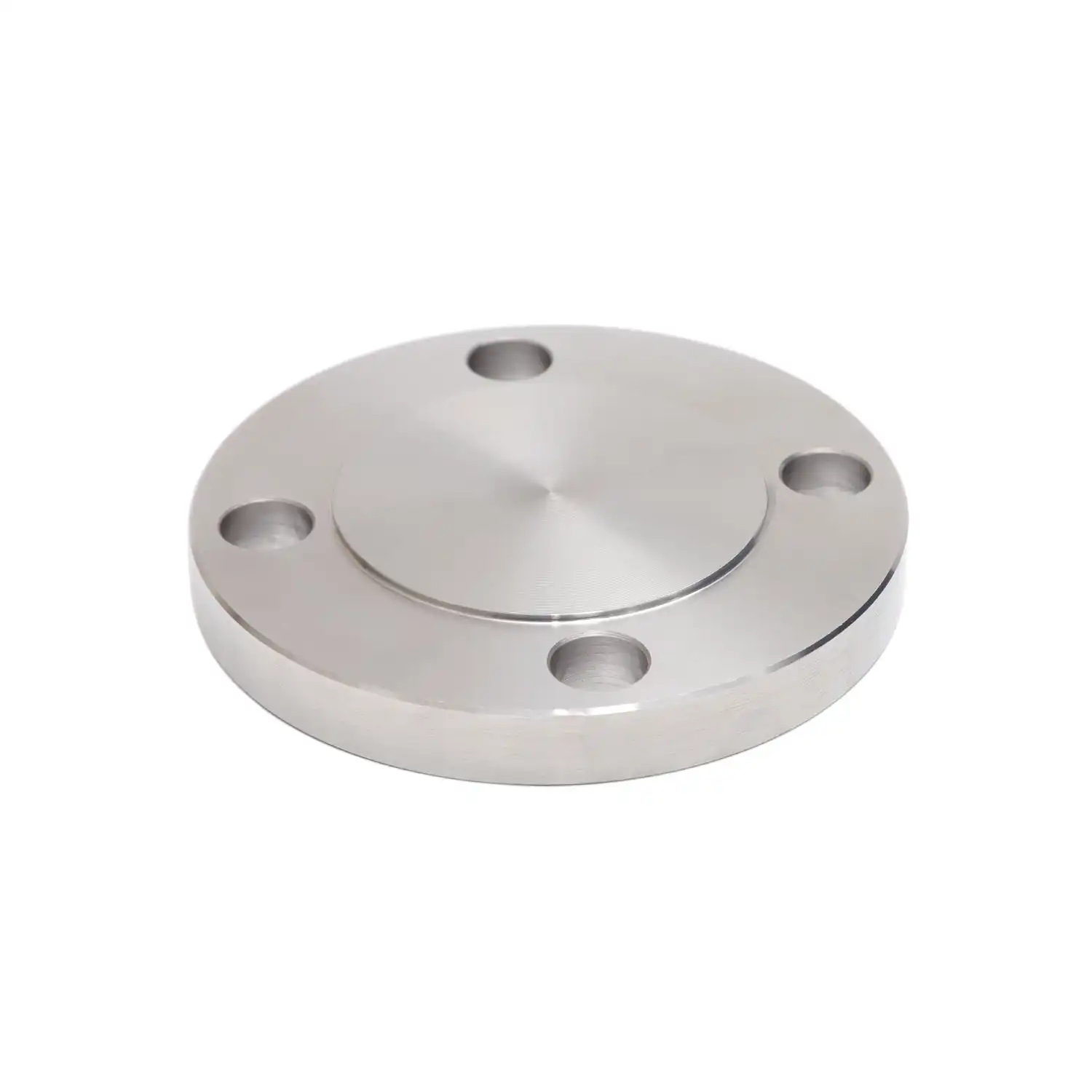
Understanding Blind Flanges: Definitions, Types, and Uses
What Makes Blind Flanges Essential for Pipeline Integrity?
When they are in use, Blind Flange units act as shields that can be taken off and can handle a lot of mechanical stress. They are most stressed when bent in the middle, but they still have a lot of seal fitting force around the edges. This engineering design makes sure that it will work reliably even in tough mechanical situations, like when pressure needs to be contained or a system needs to be shut down.Because these parts can be taken apart, they are easy to reach for repair, inspection, and future system growth. You will not have to cut or join anything when you need to make changes. To get to the inside of the pipe or to make the system bigger as needed, just take off the plug. Because of this benefit, your building will have less downtime and lower upkeep costs over its entire life.
Face Types and Their Industrial Applications
Flange confront sorts decide fixing execution beneath distinctive working conditions. Raised Confront (RF) ribs are broadly utilized since their raised fixing surface concentrates gasket weight, making them reasonable for direct temperature and weight administrations such as water treatment and chemical preparing. Level Confront (FF) plans convey jolt stack equally over the gasket, decreasing push on fragile materials like cast press, making them perfect for low-stress frameworks. Ring Sort Joint (RTJ) spines utilize a precision-machined groove with metal ring gaskets, guaranteeing high-integrity fixing in extraordinary conditions such as petrochemical plants and seaward stages. RTJ is required for Lesson 600 and over or temperatures surpassing 400°C due to prevalent resistance to distortion and leakage.
Comparing Blind Flanges with Alternative Closure Methods
Blind spines and other segregation strategies serve distinctive operational needs. Display blinds combine a strong plate and a spacer, permitting fast exchanging between open and closed states amid support. Standard Blind Flange units, by contrast, provide a fixed, robust termination for long-term pipeline isolation. Welded caps give changeless fixing but dispose of future get to. Strung caps and pipe plugs are reasonable for small-diameter, low-pressure frameworks but need strong fixing beneath requesting conditions. Compared to these, daze ribs offer a detachable however solid fixing arrangement, empowering secure pipeline separation whereas still permitting fast get to amid planned shutdowns, which is basic for maintenance-intensive facilities.
Key Technical Features and Standards of Blind Flanges
Dimensional Specifications and Pressure Ratings
Blind ribs are administered by strict worldwide guidelines to guarantee compatibility. ASME B16.5 covers sizes DN15–DN600 with weight classes 150–2500, whereas ASME B16.47 expands to DN5000 for large-diameter frameworks. EN 1092-1 bolsters DN15–DN4000 with PN6–PN160 appraisals. JIS B2220, Clamor, and GOST guidelines guarantee territorial pertinence over Asia and Eurasia. Thickness increments with weight lesson due to higher bowing stretch on strong plates, requiring exact arrangement of jolt designs and spine coordinating to guarantee appropriate fixing integrity.
Material Selection for Diverse Operating Environments
Material choice straightforwardly impacts execution and benefit life. Carbon steel (ASTM A105) is conservative for common utilize in non-corrosive situations such as water and discuss frameworks. Stainless steels (304, 316L) give prevalent erosion resistance, particularly in chloride-rich or clean situations, with 316L advertising upgraded setting resistance. Combination steels like chrome-moly are utilized in high-temperature control and refining applications due to crawl resistance. Duplex and super duplex steels combine quality and erosion resistance for seaward oil and gas. Nickel combinations such as Inconel and Hastelloy are saved for extraordinary chemical and warm conditions.
Compliance Standards Ensuring Safety and Interoperability
Global standards define safety, material, and dimensional requirements for blind flanges. ASME governs North American systems, EN 1092-1 is standard in Europe, while JIS, DIN, GOST, and GB serve Asian and Eurasian markets. These standards regulate pressure testing, chemical composition, mechanical properties, and inspection requirements. Material Test Reports (MTRs) ensure full traceability of each heat batch, supporting critical industries like nuclear, pharmaceutical, and food processing. Compliance documentation ensures legal conformity and engineering reliability across international projects.
Comparing Blind Flanges: Making the Right Choice for Your Application
Blind Flanges Versus Other Flange Connection Types
Weld Neck flanges are preferred for high-pressure systems due to their tapered hub, which distributes stress efficiently and improves structural integrity, while their through-bore design suits connections rather than pipeline termination. Slip-on flanges offer easier installation and lower initial cost but provide reduced strength, making them suitable mainly for low-pressure or non-critical applications. Threaded flanges avoid welding and are useful where hot work is restricted, but vibration and thermal cycling increase leakage risk. Lap joint flanges allow rotation for alignment and reduce material cost by using stub ends, while Blind Flanges provide solid end closure capable of withstanding bending loads and high internal pressure, making them ideal for pipeline termination.
Material Trade-offs Between Cost and Performance
Carbon steel blind flanges offer significant cost savings, typically 30–60% cheaper than stainless steel, but require protective coatings in corrosive environments to maintain durability. Stainless steel provides superior corrosion resistance and stable performance across a wider temperature range, reducing long-term maintenance and lifecycle costs. Alloy steels balance cost and high-temperature strength, making them suitable for demanding industrial applications. Material selection must consider not only fluid compatibility but also environmental exposure, insulation conditions, and thermal cycling effects. In many cases, long-term operational costs such as downtime and maintenance due to corrosion outweigh initial purchase savings, making lifecycle cost evaluation essential in procurement decisions.
Pressure Class Selection and Its Cost Implications
Higher pressure classes significantly increase material thickness, bolt size, and manufacturing cost. Class 300 typically costs 40–60% more than Class 150, while Class 600 may double Class 300 pricing. Misclassification leads to either unnecessary cost escalation or safety risks due to under-specification. Proper selection requires analysis of pressure spikes, thermal expansion, and future system upgrades. Matching operating conditions with correct pressure ratings ensures both economic efficiency and structural safety across the entire pipeline system.
Procurement Insights: How to Source and Buy Blind Flanges for Industrial Use?
Identifying Reliable Manufacturing Partners
To ensure procurement success, buyers should partner with established manufacturers offering consistent quality, technical expertise, and reliable service. Integrated forging companies with in-house processes like heat treatment, machining, and inspection outperform trading intermediaries. Industrial clusters, such as Dingxiang in Shanxi Province, provide skilled labor and stable supply chains. HONG KAI FORGING operates vertically integrated workshops covering forging to final inspection, ensuring strict quality control. Compliance with ASME, EN, JIS, DIN, and GOST standards demonstrates global capability, enabling seamless support for international engineering projects worldwide industrial applications success growth.
Critical Ordering Considerations for Industrial Buyers
Lead times vary based on size, material, pressure class, and order quantity. Standard carbon steel or stainless steel blind flanges typically ship within four to six weeks, while nonstandard materials or dimensions may require ten to fourteen weeks or more. Proper planning prevents project delays during critical construction phases. Documentation such as Material Test Reports, inspection records, and hydrostatic certificates ensures compliance with industry regulations. Bulk purchasing can reduce costs by 15–25 percent, but inventory risks and storage considerations must be balanced against procurement savings long term efficiency.
Leveraging Technical Support for Optimal Selection
Experienced providers help buyers in selecting suitable fabric grades, weight evaluations, and spine confront sorts, making a difference adjust taken a toll, security, and execution necessities. Designing collaboration permits customization such as tapped gaps, surface wrapping up, and nonstandard measurements whereas keeping up auxiliary judgment. In-house designing groups can perform push investigation and give affirmed plan drawings. After-sales bolster, counting establishment direction and investigating, decreases operational dangers and moves forward unwavering quality. Solid provider organizations make long-term esteem past obtainment costs, guaranteeing optimized execution all through the gear lifecycle and moved forward mechanical framework proficiency outcomes.
Installation and Maintenance Guide for Blind Flanges
Proper Installation Procedures for Leak-Free Performance
Proper Blind Flange installation begins with cleaning and inspecting the sealing surfaces to remove rust, scale, and debris that could affect gasket performance.Any deep scratches or damage beyond acceptable limits should be repaired or replaced. Selecting the correct gasket based on pressure, temperature, and chemical compatibility is essential, with options ranging from compressed non-asbestos materials to spiral-wound or RTJ metal gaskets. Bolts must be tightened in a controlled star pattern using calibrated torque tools, ensuring even compression, correct alignment, and reliable sealing under operating conditions.
Preventing Common Installation Problems
Installation issues frequently emerge from misaligned jolt gaps or destitute pipe bolster, which can lead to uneven gasket stacking and spills. Appropriate arrangement amid get together makes a difference keep up rib parallelism inside passable resistances, diminishing push on jolts. Warm cycling can change jolt loads, requiring retorquing to keep up fixing astuteness. Fabric jumble between jolts and spines may quicken galvanic erosion, particularly in marine situations, so congruous materials and defensive coatings are basic. Cautious plan and establishment hones essentially decrease long-term spillage dangers and move forward by and large framework unwavering quality.
Inspection Protocols and Maintenance Best Practices
Routine visual inspections help identify corrosion, coating damage, or early leakage signs during normal operation. Annual detailed inspections should assess bolt condition, flange face integrity, and sealing performance, while ultrasonic testing detects internal wall thinning before failure occurs. Small leaks may be identified through bubble or electronic detection methods, and early retorquing can often resolve minor issues. However, recurring leaks indicate deeper structural problems. Replacement decisions depend on corrosion severity, cracking, and remaining service life, with proactive maintenance ensuring safe and continuous system operation.
Conclusion
Procurement pros and plant engineers can make choices that improve safety and cost-effectiveness in industrial piping systems by knowing about Blind Flange components and how to use them correctly. These important parts make sure that the pipeline ends securely by using solid discs that can withstand internal pressure and still allow for easy repair and system changes. When choosing a material from carbon steel, stainless steel, or an alloy, you have to weigh the need for corrosion protection against the cost. Pressure class standards make sure there are enough safety gaps without over-designing. Meeting international standards like ASME B16.5, ASME B16.47, EN 1092-1, and JIS B2220 makes sure that parts can be switched out and that performance stays the same across global supply chains. Partnering with well-known makers that offer integrated production capabilities, thorough quality paperwork, and quick expert help creates procurement benefits that go far beyond the initial cost of the purchase.
FAQ
1. Why Do Blind Flanges Require Greater Thickness Than Slip-On Flanges?
The solid disc shape has to be able to withstand the full force of the system's pressure working on its flat surface, which puts a lot of twisting stress in the middle. This type of loading is very different from bored flanges, which move pressure forces through the pipe wall. The ASME B16.5 engineering formulas take these bending moments into account by calling for a thicker Blind Flange material that doesn't break under rated pressure. This keeps the structure of the part intact throughout its service life.
2. Can Instrumentation Connections Be Added to Standard Blind Flanges?
In industrial settings, it is common to drill and tap holes for things like pressure gauges, temperature sensors, and drain valves. Most of the time, these changes use off-center NPT threaded joints to keep the effect on structural strength to a minimum. But penetrations change how stress is distributed and lower the effective pressure grade, so they need to be evaluated by engineers according to ASME B31.3 rules. When modified parts are placed and sized correctly, they keep enough safety margins for the situations they are meant to work in without compromising the purity of the system.
3. What Distinguishes Blind Flanges From Spectacle Blind Configurations?
When placed at the end of pipe runs, standard closing flanges offer either a semi-permanent or permanent way to end a pipeline. Spectacle Blind configurations are made up of two standard flanges and two figure-eight-shaped plates. Each plate has a solid blanking plate and an open ring that can be turned to change the flow or isolation position. This design acts as an obvious isolation device during repair tasks, letting you know for sure that the system is isolated. Which design works best for certain applications in your facility's pipe systems depends on operational needs and safety rules.
Partner With HONG KAI FORGING for Your Pipeline Component Needs
HONG KAI FORGING makes Blind Flange solutions that meet strict international standards and are used in a wide range of demanding industrial uses around the world. Our integrated production skills include forging, heat treatment, precision machining, and a thorough quality testing process. This makes sure that the parts we make meet the strict performance requirements of big industrial, petrochemical, and power generation projects. We make sizes ranging from DN15 to DN4000 and pressure levels from PN6 to PN160. The materials we use include carbon steel, stainless steel grades 304 and 316L, and special alloys made for harsh work conditions. As a reliable company that makes flanges for markets around the world, we offer full documentation packages that include Material Test Reports, dimensional inspection records, and pressure test certifications that meet legal standards. Our technical team can help you choose the right material, figure out the correct pressure class, and make any other changes that are needed to make the part work best for your particular purpose. Get in touch with kevin.zhao@hkflange.com to talk about your project needs and find out how our production knowledge, dedication to quality, and focus on the customer can help you throughout the entire purchase and operation process.
References
1. American Society of Mechanical Engineers. (2020). Pipe Flanges and Flanged Fittings: NPS 1/2 Through NPS 24 Metric/Inch Standard. ASME B16.5-2020.
2. European Committee for Standardization. (2018). Flanges and Their Joints - Circular Flanges for Pipes, Valves, Fittings and Accessories, PN Designated - Part 1: Steel Flanges. EN 1092-1:2018.
3. Becht Engineering Company. (2019). Guidelines for Pressure Boundary Bolted Flange Joint Assembly. ASME PCC-1-2019.
4. Megyesy, Eugene F. (2021). Pressure Vessel Handbook: 17th Edition. Pressure Vessel Publishing Inc.
5. Japanese Standards Association. (2016). Steel Pipe Flanges. JIS B2220:2016.
6. Nayyar, Mohinder L. (2019). Piping Handbook: 8th Edition. McGraw-Hill Education.
Clear Communication, and Reliable Technical Support