- English
- French
- German
- Portuguese
- Spanish
- Russian
- Japanese
- Korean
- Arabic
- Greek
- German
- Turkish
- Italian
- Danish
- Romanian
- Indonesian
- Czech
- Afrikaans
- Swedish
- Polish
- Basque
- Catalan
- Esperanto
- Hindi
- Lao
- Albanian
- Amharic
- Armenian
- Azerbaijani
- Belarusian
- Bengali
- Bosnian
- Bulgarian
- Cebuano
- Chichewa
- Corsican
- Croatian
- Dutch
- Estonian
- Filipino
- Finnish
- Frisian
- Galician
- Georgian
- Gujarati
- Haitian
- Hausa
- Hawaiian
- Hebrew
- Hmong
- Hungarian
- Icelandic
- Igbo
- Javanese
- Kannada
- Kazakh
- Khmer
- Kurdish
- Kyrgyz
- Latin
- Latvian
- Lithuanian
- Luxembou..
- Macedonian
- Malagasy
- Malay
- Malayalam
- Maltese
- Maori
- Marathi
- Mongolian
- Burmese
- Nepali
- Norwegian
- Pashto
- Persian
- Punjabi
- Serbian
- Sesotho
- Sinhala
- Slovak
- Slovenian
- Somali
- Samoan
- Scots Gaelic
- Shona
- Sindhi
- Sundanese
- Swahili
- Tajik
- Tamil
- Telugu
- Thai
- Ukrainian
- Urdu
- Uzbek
- Vietnamese
- Welsh
- Xhosa
- Yiddish
- Yoruba
- Zulu
Top OEM Manufacturers for High-Quality Lap Joint Flange
When looking for high-quality pipe parts, finding dependable OEM makers of Lap Joint Flanges is a key factor in the project's success. These special two-piece kits, which include a Stub End and a loose Backing Flange, give you the most options in harsh industrial settings where cost-effectiveness and ease of upkeep directly affect how long the system will last. Leading makers use precise casting, compliance with international standards, and a wide range of materials to make flanges that solve alignment problems and lower costs over the life of the product. This guide walks you through important selection factors that will help procurement professionals find parts that balance technical performance with supply chain reliability in the heavy manufacturing, water treatment, and petroleum industries.
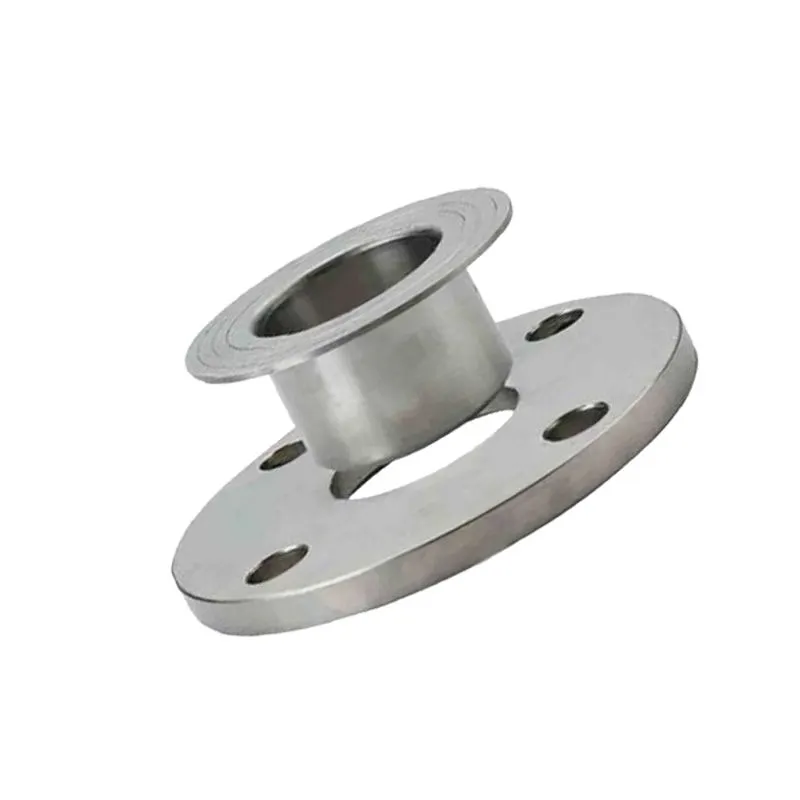
What Is a Lap Joint Flange? Understanding Its Definition and Key Features
A Lap Joint Flange is an engineered answer to two recurring problems in the industrial world: controlling material costs in harsh media conditions and making sure that bolt holes line up correctly in tight retrofitting situations. This assembly is different from welded flange types because it splits into a Stub End that is butt-welded directly to your plumbing system and a loose Backing Flange that can turn on its own without putting any stress on the pipe. This basic design lets you make adjustments in all 360° during installation, so you don't have to deal with the hassle of misaligned bolt patterns that come with set flange installs.
Core Components and Material Intelligence
The Stub End comes into close touch with process fluids, so choosing the right material is very important for making sure it is chemically compatible. For neutral media, manufacturers usually offer types of carbon steel, stainless steel 304, 316, and 316L for mild rust protection, and special alloys like Inconel or Hastelloy for harsh acid or chloride exposure. The Lap Joint Flange, on the other hand, never comes into contact with the fluid being moved, can be made of inexpensive carbon steel, even if the fluid is acidic. When compared to solid exotic metal flanges in corrosive situations, this material separation saves a lot of money on buying budgets, by 40 to 60 percent.
Standards Compliance and Dimensional Ranges
Flanges made by good OEM makers meet standards like ASME B16.5, ASME B16.47, EN 1092-1, DIN, JIS B2220, and GOST, so they can be used anywhere in the world. Pressure grades range from PN6 to PN160 (Class 150# to 2500#), and sizes range from DN15 to DN5000, so they can be used for everything from instrumentation tubes to large-diameter water transmission mains. The flat face design presses the gasket against the Stub End shoulder instead of the flange ring. This lets the unit be taken apart quickly without hurting the sealing surfaces, which is very helpful for systems that need to be inspected or cleaned often.
Comparing Lap Joint Flanges to Other Flange Types: Making Informed Decisions
Comparing Lap Joint Flanges with other flange types helps engineers and procurement teams choose the right solution for different piping systems. The Lap Joint Flange is mainly used in applications that require frequent dismantling, easy alignment, and cost efficiency. It works together with a stub end, allowing the flange to rotate freely, which simplifies installation and reduces alignment issues.
- Compared with Weld Neck Flanges, Lap Joint Flanges are easier to install and replace, while Weld Neck types are better suited for high-pressure and high-temperature systems due to their strong welded structure. However, Weld Neck Flanges are more expensive and require skilled welding.
- Slip-On Flanges are cheaper and easier to install, but they require welding on both sides and are less convenient for maintenance. In contrast, Lap Joint Flanges allow reuse of the flange, making them more suitable for systems that need regular inspection or part replacement.
- Socket Weld Flanges are commonly used for small-diameter pipes and provide good sealing performance, but they are limited in size and may face corrosion issues at the joint. Lap Joint Flanges offer better flexibility in such maintenance-heavy environments.
- Threaded Flanges do not require welding and are useful for low-pressure systems, but they may loosen under vibration and are not ideal for high-temperature conditions. Blind Flanges, on the other hand, are used to close pipeline ends and serve a completely different function.
Overall, Lap Joint Flanges are most suitable for systems that prioritize maintenance convenience, corrosion resistance, and operational flexibility rather than extreme pressure resistance.
Top OEM Manufacturers for High-Quality Lap Joint Flanges: What to Look For
Reputable makers show their dedication by providing real quality signs that go beyond what they say in their ads. ISO 9001 certification sets the standard for quality management systems, and API 6A approval verifies that pressure tools can be used in oil and gas operations. Material test records (MTRs) from third-party labs that list the chemical make-up and mechanical qualities of things give the traceability that risk management departments are looking for more and more in important building projects.
Production Capabilities and Testing Rigor
Closed-die forging, CNC machining, heat treatment ovens, and non-destructive testing labs are all part of the facilities that advanced makers keep together for the Lap Joint Flange. This vertical merger gets rid of the delays and inconsistent quality that come with outsourcing that happen in supply lines that are broken up. Hydrostatic pressure testing makes sure the structure is solid, and positive material identification (PMI) with X-ray fluorescence analyzers makes sure the alloy grades match the specs. This stops the catastrophic failures that can happen because of grade substitution fraud, which sometimes happens in discount sourcing channels.
Regional Manufacturing Strengths
European manufacturers put a lot of emphasis on tight tolerances and following EN 1092-1 exactly. They do this because they work in fields where accurate measurements directly affect automatic assembly processes. North American providers put a high priority on following ASME B16.5 and getting API certifications, which are important for the country's energy infrastructure. They often provide a lot of paperwork to avoid legal issues in places where lawsuits are common. Asian manufacturers, especially Chinese forging clusters, can offer competitive bulk prices without sacrificing quality as long as suppliers are properly checked. This makes them a good choice for large purchases where the delivered cost per unit has a big effect on the project's viability.
Procurement Guide: How to Buy Lap Joint Flanges from OEMs Efficiently
Accurately defining requirements is the first step in strategic buying. Write down the pressure class, temperature range, face finish (flat face is normal for Lap Joint Flange types), and any numbers that apply. When choosing materials, you should pay extra attention to the grades of the Stub End and Backing Flange to get the best deal on price. Ask for dimensional models to make sure that the bore diameter matches the schedule of your pipes. Mismatches stop the Stub Ends from fitting properly and weaken the joint.
By making production more efficient, buying in bulk lowers unit costs, such as for a Lap Joint Flange. Usually, there are number breaks at 50, 200, and 500 pieces. But you should weigh the costs of keeping supplies against the benefits of lower prices, especially for project-specific sizes that won't be used for anything else. Custom fabrication for non-standard measurements adds two to four weeks to standard production runs of four to six weeks. This means that early buying is very important for keeping the project on schedule. Make sure you are clear about the delivery requirements. For example, FOB price puts the shipping responsibility and risk on the buyer, while CIF terms include freight and insurance but may limit the transport choice.
Verifying the supplier keeps quality problems from happening that could put plant safety and project timelines at risk. Ask for references from similar applications in the same field, look at trade group complaint records, and make sure that big contracts include the right to inspect the factory. Payment terms that are common in the industry—usually a 30% deposit with the balance due after inspection or shipping documents—balance supplier security with cash flow management. Letters of credit through well-known banks offer extra security for foreign deals worth more than $50,000.
Installation, Maintenance, and Performance Optimization of Lap Joint Flanges
Preparing the Stub End is the first step in a proper installation. Visual review and, for important services, a radiographic or ultrasonic exam should be used to make sure the buttweld fits code standards. Get rid of any scale, rust, or old gasket material that might be on the gasket areas by cleaning them well. Before soldering the Stub End, place the Backing Flange over it. If this is done wrong, it needs to be cut out and reworked.
Apply bolt lube to the threads and bearing surfaces of the Lap Joint Flange, and then use measured torque wrenches to tighten in a star pattern. Do not use impact tools, which could cause the bolts to be over-compressed. The recommended torque values depend on the width of the bolt, the material, and the pressure class of the flange. Instead of guessing, check the manufacturer's instructions. The choice of gasket affects how well it seals. For most uses, spiral-wound gaskets with graphite or PTFE filler work best, while expanded PTFE gaskets can handle rough surfaces in lower-pressure applications. Because the faces are not designed to fit, ring-type joint (RTJ) covers rarely fit with Lap Joint Flanges.
Routine checks should be done every six months to look for obvious leaks, corrosion on uncovered flange surfaces, and loss of bolt tension. The rotatable Backing Flange makes it easier to re-torque without shutting down the system. Just remove the bolts, rotate the flange to new bolt holes if you see uneven wear, and tighten them again. This feature makes the service life longer in places that are prone to shaking, like pumping stations or compressor platforms. For Stub Ends that have erosion or rust, only the welded part needs to be replaced. The Backing Flanges can be used again, which saves money on extra parts inventory compared to solid flange systems that need the whole unit to be replaced.
Conclusion
To choose the best OEM makers for Lap Joint Flanges, you have to find a balance between technical requirements and the supplier's skills that go beyond product catalogs. Quality makers show how valuable they are by following strict testing procedures, meeting international standards, keeping track of materials, and integrating production so that quality is maintained across all order amounts. The one-of-a-kind two-piece design meets specific industry needs, such as lowering costs in corrosive environments, making upkeep easier, and allowing for flexible installation. These reasons make the design superior to simpler flange types in certain situations. It's important to be clear about what you need, check out suppliers carefully, and know how material choice, pressure levels, and measurement accuracy affect the long-term performance of the system and the total cost of ownership.
FAQ
1. Can lap joint flanges handle high-pressure applications?
For modest pressure services up to Class 600 (PN100), these flanges work well. However, weld neck flanges are stronger for pressures above 1500 psi. The form of the loose backing makes it less resistant to fatigue than complete hub constructions, so it is very important to test the application.
2. How do OEM manufacturers ensure quality consistency?
Reputable makers use multiple stages of inspection, including checking the dimensions of arriving materials, checking them while the product is being made, doing final hydrostatic testing, and doing PMI analysis before shipping. Third-party approval from groups like Lloyd's Register or TÜV gives independent proof, and test records are sent with every shipment so they can be tracked.
3. Do custom dimensions significantly delay delivery?
Forging dies or tooling modifications are needed for sizes that aren't standard, which usually adds 2 to 4 weeks to normal wait times. When project plans get tight, planning purchases around maker stock sizes (most often DN50, DN80, DN100, and DN150) speeds up delivery.
Partner with HONG KAI FORGING for Reliable Flange Solutions
Shanxi Hongkai Forging has everything that procurement managers need in a reliable Lap Joint Flange provider. Our complete production plant is in the center of forging in China, specifically in Dingxiang County, Shanxi Province. It makes DN15–DN4000 flanges that meet ASME B16.5, EN 1092-1, DIN, JIS B2220, and GOST standards. You can choose from carbon steel and exotic alloys as materials. Direct factory pricing gets rid of the markups that distributors add on top of the price. On top of that, every order goes through strict quality control checks like hydraulic testing, PMI verification, and measurement inspection. Our expert team helps with choosing the right material, making sure the pressure number is correct, and making suggestions based on the application that improve performance and cut costs. You can talk about your project needs, get material test reports, or set up plant audit visits by emailing kevin.zhao@hkflange.com. Visit hkflange.com to see our full line of products and learn how our decades of experience in forging can help you get parts that meet your tightest deadlines and strictest standards.
References
1. American Society of Mechanical Engineers. ASME B16.5: Pipe Flanges and Flanged Fittings NPS 1/2 Through NPS 24 Metric/Inch Standard. New York: ASME Press, 2020.
2. European Committee for Standardization. EN 1092-1: Flanges and Their Joints - Circular Flanges for Pipes, Valves, Fittings and Accessories, PN Designated - Part 1: Steel Flanges. Brussels: CEN Publications, 2018.
3. Becht, Charles IV. Process Piping: The Complete Guide to ASME B31.3. New York: ASME Press, 2019.
4. Escoe, Keith. Piping and Pipeline Assessment Guide: Volume 1. Oxford: Gulf Professional Publishing, 2016.
5. Parisher, Roy A. and Rhea, Robert A. Pipe Drafting and Design, Third Edition. Waltham: Gulf Professional Publishing, 2012.
6. Smith, Peter R. The Fundamentals of Piping Design: Drafting and Design Methods for Process Applications. Houston: Gulf Publishing Company, 2007.
Clear Communication, and Reliable Technical Support