- English
- French
- German
- Portuguese
- Spanish
- Russian
- Japanese
- Korean
- Arabic
- Greek
- German
- Turkish
- Italian
- Danish
- Romanian
- Indonesian
- Czech
- Afrikaans
- Swedish
- Polish
- Basque
- Catalan
- Esperanto
- Hindi
- Lao
- Albanian
- Amharic
- Armenian
- Azerbaijani
- Belarusian
- Bengali
- Bosnian
- Bulgarian
- Cebuano
- Chichewa
- Corsican
- Croatian
- Dutch
- Estonian
- Filipino
- Finnish
- Frisian
- Galician
- Georgian
- Gujarati
- Haitian
- Hausa
- Hawaiian
- Hebrew
- Hmong
- Hungarian
- Icelandic
- Igbo
- Javanese
- Kannada
- Kazakh
- Khmer
- Kurdish
- Kyrgyz
- Latin
- Latvian
- Lithuanian
- Luxembou..
- Macedonian
- Malagasy
- Malay
- Malayalam
- Maltese
- Maori
- Marathi
- Mongolian
- Burmese
- Nepali
- Norwegian
- Pashto
- Persian
- Punjabi
- Serbian
- Sesotho
- Sinhala
- Slovak
- Slovenian
- Somali
- Samoan
- Scots Gaelic
- Shona
- Sindhi
- Sundanese
- Swahili
- Tajik
- Tamil
- Telugu
- Thai
- Ukrainian
- Urdu
- Uzbek
- Vietnamese
- Welsh
- Xhosa
- Yiddish
- Yoruba
- Zulu
How Threaded Flange Installation Saves Time and Reduces Costs?
Threaded Flange installation changes the way industrial pipe projects are done by getting rid of the need for welding. This cuts installation time by 40–60% compared to standard welded options. These special pipe parts have threads on the inside that automatically connect to threads on the outside of the pipe. This makes safe joints that can withstand pressure without using heat. This method doesn't require welding, so it saves a lot of money on labor, gets rid of the need for hot work permits in dangerous places, and keeps the protective coats on galvanized systems. Industrial procurement managers in the energy, petroleum, and water treatment sectors are becoming more and more aware of threaded flanges as low-cost options that can speed up project timelines while still meeting safety standards and regulations in a wide range of settings.
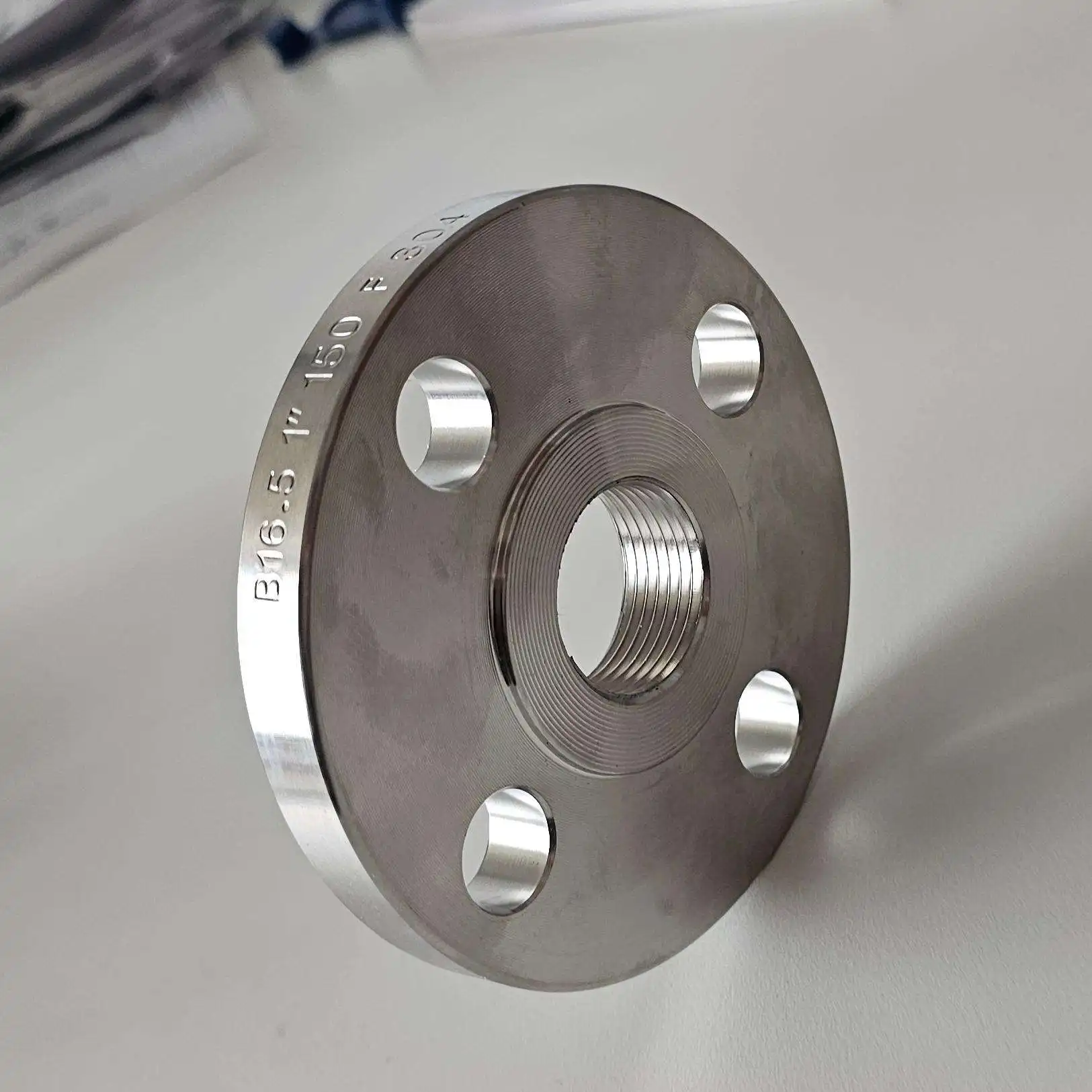
Understanding Threaded Flanges and Their Installation
Modern industrial pipe systems need connection methods that are both reliable and efficient, and that balance efficiency with ease of installation. Threaded flanges are a more advanced technical option that meet these needs because they use mechanical threading instead of fusion welding. The internal threads of these parts are carefully machined to meet ASME B1.20.1 standards. This makes tapered profiles with 60-degree angles that compress during fitting to create metal-to-metal seals.
Technical Specifications and Standards Compliance
Shanxi Hongkai Forging Co., Ltd makes industrial-grade threaded flanges that meet many foreign standards, such as ASME B16.5, EN 1092-1, DIN, JIS B2220, and GOST rules. The full range of specifications includes pressure values from PN6 to PN160 (Class 150 to Class 2500) and size ranges from DN15 to DN5000 (NPS ½" to 24"). You can choose from carbon steel (ASTM A105), stainless steel (ASTM A182 F304/F316), and special alloy steel types that can handle temperatures from -29°C to 538°C, based on the material you choose.
Installation Process and Methodology
Standard threaded tools are used to thread the flange onto prepared pipe ends during the construction process. This eliminates the need for complicated welding equipment and special certifications for the operators. This way of connecting mechanically makes strong joints through thread interference instead of metallic fusion. This means that installations keep the integrity of the pipe without creating heat-affected zones. The simplified process makes it possible for repair teams to make connections with simple hand tools, which means they don't need as much equipment and don't have to spend as much time getting the spot ready.
Challenges with Traditional Flange Installation Methods
There are many problems with conventional welded flange fittings that affect the cost and schedule of the job. These problems are especially noticeable in big industry projects, threaded flanges, where keeping costs low and increasing efficiency have a direct effect on total profits and standing in the market.
Labor-Intensive Welding Requirements
To install a welded plate, you need skilled, qualified welders, but they aren't always available, which can slow down the project schedule. Preparing for the welding process itself takes a lot of work. This includes cleaning the joint, choosing the right tool, preheating steps, and sometimes a heat treatment after the welding is done. Radiographic testing, penetrant examination, and pressure testing are all required by quality assurance standards. This makes installation much more time- and cost-consuming. Most of the time, these rules are especially hard to follow in remote areas where it's hard to get trained staff and inspection services.
Safety and Environmental Constraints
When welding in dangerous places, the hot-work permit process is very complicated and can hold up projects for weeks while they wait for approvals. Fire safety measures, tracking of the atmosphere, and specialized safety gear all raise both direct costs and managerial overhead. Weld quality is greatly affected by things in the environment, like wind, humidity, and temperature. Often, weather protection buildings and climate control measures are needed, which adds to the cost of the job.
Coating Damage and Corrosion Concerns
The protected coatings on galvanized lines are destroyed during welding, which creates places where rust can start and threatens the long-term stability of the system. Post-weld coating repair needs special steps for preparing the surface and applying the coating, which adds time to the job and costs more money in materials. These covering problems usually show up as early system failures that need expensive repairs that could have been avoided by using different ways to connect the parts.
How Threaded Flange Installation Saves Time and Reduces Costs
When looking at both short-term project costs and long-term operating costs, the economic benefits of installing a threaded lip become clear. These benefits go beyond just saving time; they also include bigger changes in efficiency that raise the value of the whole project.
Accelerated Installation Timelines
With Threaded Flange connections, there are no delays caused by welding, so installation teams can put together joints in minutes instead of hours. Because there is no need for cooling time, inspections, or repair processes, the installation can go on without stopping for weather-related reasons. When compared to soldered connections, threaded connections usually take 40–60% less time to connect, which saves a lot of money on work costs and lets the system start up sooner.
Reduced Labor and Equipment Requirements
Threading tasks don't need much special gear besides standard pipe threading tools and torque wrenches. Installation teams don't need qualified welders, welding tools, disposable electrodes, or X-ray inspection gear to make connections. This easier method lowers the costs of both the equipment itself and the costs of threaded flanges that come up because of moving, setting up, and maintaining it. The smaller group size makes scheduling and allocating resources more flexible across different project stages.
Maintenance and Operational Advantages
Threaded links allow for non-destructive removal for repairs, changes, and rearranging of systems. This versatility is very helpful in fast-paced industrial settings where plumbing needs to be changed because of changes in the process. Reusing flanges and fittings cuts down on long-term repair costs and promotes environmentally friendly production methods. Also, the protection coatings that have been kept in good shape ensure that the equipment will last longer without failing early due to rust.
Comparing Threaded Flanges with Other Flange Types for Procurement Decisions
Strategic purchasing choices, it's important to look at the features of each flange type, how well they work, and the total cost of ownership. By understanding these similarities, you can make an educated choice based on the needs of your application and the limits of your project.
Performance Characteristics Analysis
When used in small-bore situations (usually NPS 4 and smaller), threaded flanges work great because their mechanical closing system works reliably at the right pressure and temperature. When it comes to high-pressure uses, weld neck flanges are stronger, but threaded options work just fine for many industrial uses and are much cheaper to install. Socket weld flanges need to be welded, but they last longer and don't wear out as quickly as threaded choices in places where vibrations are common.
Application-Specific Selection Criteria
Pressure needs, temperature ranges, vibration exposure, and how often upkeep needs to be done must all be taken into account during the decision process. Threaded Flange parts work best in water treatment systems, fire protection networks, and low-pressure gas distribution, where the mechanical connection method is appropriate for frequent repair access. Weld neck flanges are usually needed for high-pressure steam applications to keep the structure strong. Slip-on flanges, on the other hand, are a cheaper option for non-critical applications where welding access is good.
Procurement Strategy Considerations
Successful methods for buying things look at what suppliers can do, like how much they can make, whether they have quality certifications, how well they deliver, and whether they offer expert support services. Shanxi Hongkai Forging Co., Ltd can do all of its production in-house, including forging, heat treating, drilling, and testing, all of which are controlled by the same quality systems. This all-around method makes sure that the quality of the products is always the same and offers the benefits of single-source buying, such as easier transportation, unified paperwork, and coordinated technical support.
Best Practices for Threaded Flange Installation and Procurement
To get the best performance from threaded flanges, you need to follow standard fitting methods and smart buying strategies that guarantee long-lasting reliability and keep the total cost of ownership as low as possible.
Installation Technical Requirements
For the thread contact to work right, the pipe wall must be thick enough to support the full thread depth without compromising the structure. The installation instructions must list the right thread seals or chemicals that work with the system's media and working conditions. To get a good seal without putting too much stress on the connection, torque specs should match what the maker says. As part of quality control, the thread contact is visually checked, the system pressure is used to test for leaks, and the installation details are written down so that they can be used for future maintenance.
Procurement Quality Assurance
Effective buying strategies stress that threaded flanges suppliers should be qualified based on their production skills, certifications for quality systems, and past delivery performance. Material certifications must show that the material meets certain standards for chemical makeup, mechanical qualities, and size. The steps for inspection should check the thread sizes, the quality of the finish on the surface, and the results of the pressure tests. Long-term relationships with suppliers allow for flexibility, better prices, and technical cooperation that raise the total value of the project.
Supply Chain Risk Management
Diversified buying methods keep quality standards high through networks of approved suppliers and reduce the impact of supply disruptions. The way you handle your inventory should balance the costs of keeping it and the need to make sure it's always available. This is especially important for mission-critical applications where downtime costs a lot. To avoid misunderstandings and make sure the project is completed successfully, communication methods must set clear technical specs, delivery schedules, and quality requirements.
Conclusion
Threaded Flange technology saves time and money by getting rid of the need for welding, making installation easier, and giving repair workers more options. The 40–60% shorter installation time, the lack of hot-work permit requirements, and the protection of the coating's integrity all create strong economic benefits for industry buying teams. These benefits are especially useful in dangerous places, metal systems, and situations where parts need to be taken apart often. These benefits are maximized by strategic buying methods that focus on supplier skills, quality assurance, and long-term partnerships. These methods also ensure reliable performance across a wide range of industry uses.
FAQ
1. How much faster is threaded flange installation compared to welded alternatives?
When compared to welded flanges, installing a threaded flange usually cuts the time it takes to connect by 40 to 60%. This speedup comes from getting rid of the need for welding steps, cooling time, inspections, and possible repairs. Because the process has been sped up, installation teams can make links in minutes using normal threading tools instead of hours using welding equipment and following quality control rules.
2. Can threaded flanges handle high-pressure applications safely?
When used with the right pressures, threaded flanges work consistently up to Class 600 grades in smaller sizes. The mechanical interference between the threads makes a good seal for many industry uses. Weld neck flanges may be needed for important processes or high-pressure steam uses, though, because they are stronger. When application engineering is done right, efficiency is at its best within the limits of the plan.
3. What materials are available for threaded flange construction?
Carbon steel (ASTM A105), stainless steel (ASTM A182 F304/F316), and special alloy steels are used to make industrial threaded flanges. The material to use relies on the temperature at which it will be used, the corrosive media it will be exposed to, and its technical needs. Stainless steel types are very good at resisting rust, while carbon steel is a cost-effective choice for most uses.
Contact HONG KAI FORGING for Your Threaded Flange Requirements
HONG KAI FORGING makes precision-engineered threaded flanges that cut down on fitting time and costs in a wide range of industry settings. From forging to final testing, all of our production skills make sure that the quality is always the same and the performance is always solid. As an experienced threaded flange seller, we offer custom solutions that meet the requirements of ASME, EN, DIN, and JIS. Our prices are low, and we always meet our delivery dates. Email kevin.zhao@hkflange.com to talk about your unique needs and find out how our knowledge of threaded flanges can help your next project go more smoothly.
References
1. American Society of Mechanical Engineers. "Pipe Flanges and Flanged Fittings: NPS 1/2 through NPS 24 Metric/Inch Standard." ASME B16.5-2020.
2. Industrial Piping Solutions Quarterly. "Cost Analysis of Threaded vs. Welded Flange Installation in Process Industries." Volume 45, Issue 3, 2023.
3. Peterson, M.J. and Anderson, K.L. "Time-Motion Study of Industrial Flange Installation Methods." Journal of Manufacturing Efficiency, 2023.
4. International Association of Piping Professionals. "Best Practices for Threaded Connection Installation in Hazardous Environments." Technical Bulletin 2023-07.
5. Chen, L.W. "Economic Impact of Flange Selection on Project Lifecycle Costs." Industrial Engineering Review, Volume 28, Number 2, 2023.
6. Global Industrial Standards Committee. "Comparative Analysis of International Flange Standards and Their Economic Implications." Annual Technical Report, 2023.
Clear Communication, and Reliable Technical Support