- English
- French
- German
- Portuguese
- Spanish
- Russian
- Japanese
- Korean
- Arabic
- Greek
- German
- Turkish
- Italian
- Danish
- Romanian
- Indonesian
- Czech
- Afrikaans
- Swedish
- Polish
- Basque
- Catalan
- Esperanto
- Hindi
- Lao
- Albanian
- Amharic
- Armenian
- Azerbaijani
- Belarusian
- Bengali
- Bosnian
- Bulgarian
- Cebuano
- Chichewa
- Corsican
- Croatian
- Dutch
- Estonian
- Filipino
- Finnish
- Frisian
- Galician
- Georgian
- Gujarati
- Haitian
- Hausa
- Hawaiian
- Hebrew
- Hmong
- Hungarian
- Icelandic
- Igbo
- Javanese
- Kannada
- Kazakh
- Khmer
- Kurdish
- Kyrgyz
- Latin
- Latvian
- Lithuanian
- Luxembou..
- Macedonian
- Malagasy
- Malay
- Malayalam
- Maltese
- Maori
- Marathi
- Mongolian
- Burmese
- Nepali
- Norwegian
- Pashto
- Persian
- Punjabi
- Serbian
- Sesotho
- Sinhala
- Slovak
- Slovenian
- Somali
- Samoan
- Scots Gaelic
- Shona
- Sindhi
- Sundanese
- Swahili
- Tajik
- Tamil
- Telugu
- Thai
- Ukrainian
- Urdu
- Uzbek
- Vietnamese
- Welsh
- Xhosa
- Yiddish
- Yoruba
- Zulu
OEM Threaded Flange Solutions for Customized Pipeline Projects
OEM threaded flange solutions for personalized pipeline projects are an important part of modern industrial infrastructure because they allow mechanical links without the need for welding. These special flanges have threads on the inside that fit perfectly with pipe threads on the outside. This makes joints that are safe and won't leak for low to moderate pressure uses. Unlike welded connections, threaded flange connections allow for more fitting options, fewer safety risks in explosive settings, and the protection of protective pipe coats. OEM makers are relied on by industrial procurement teams to provide custom solutions that meet the needs of particular projects in the oil and gas, chemical processing, and water treatment industries.
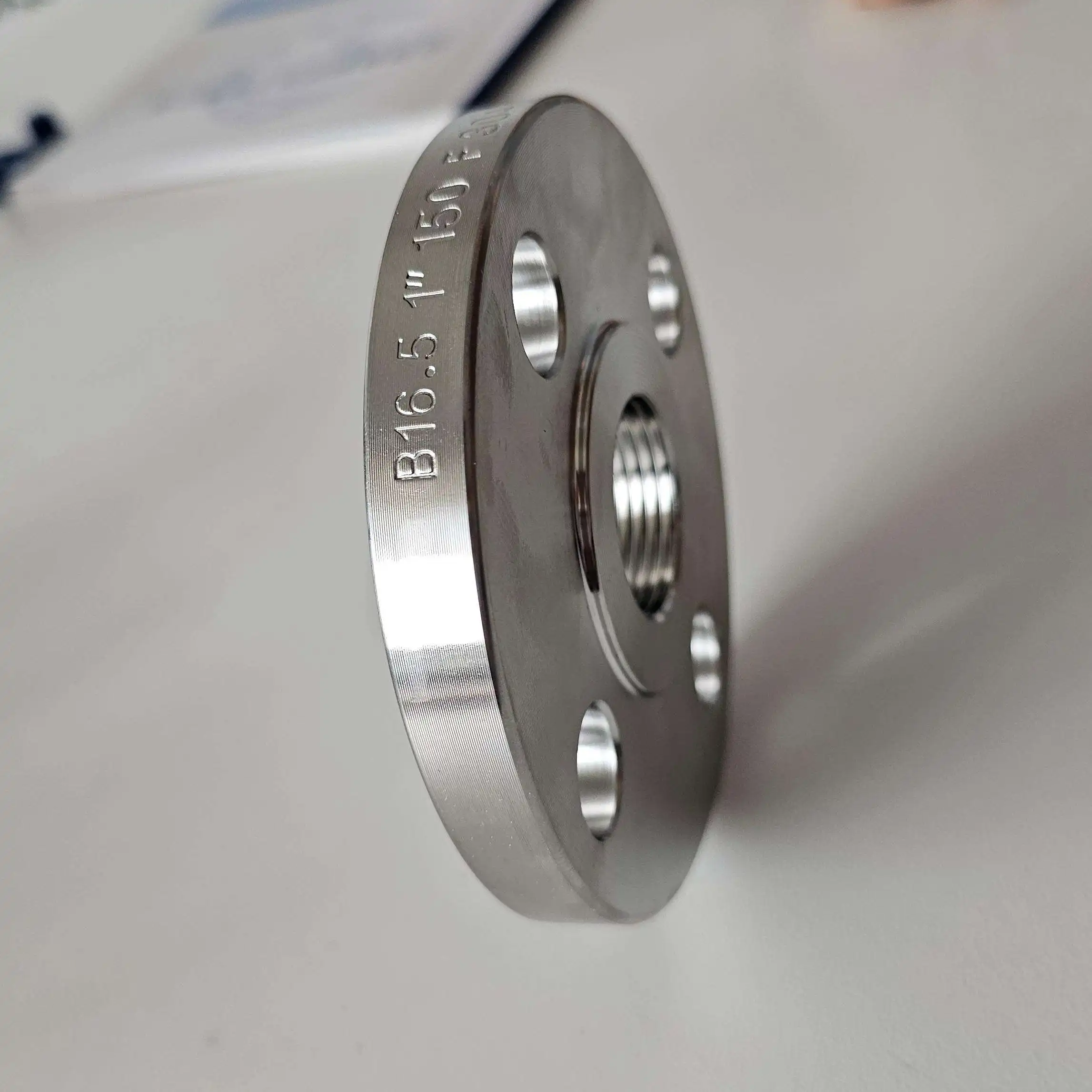
Understanding Threaded Flanges in Pipeline Projects
Because the threads on the inside of the flange and the threads on the outside of the pipe interact with each other mechanically, threaded flange systems don't need to be fused together. As required by ASME B1.20.1, the tapered thread shape has a 60-degree angle that makes metal-to-metal seals when properly adjusted. This way of joining pipes mechanically gets rid of heat-affected areas that could weaken pipes in important situations. These parts solve basic problems in the business where welding poses too many risks. Threaded flange connections get rid of sources of fire during installation in dangerous areas that contain flammable or explosive gases. This spark-free installation feature is helpful for chemical plants, mills, and food handling facilities because it gets rid of the need for complicated hot-work permits.
Material Specifications and Standards Compliance
Several foreign standards, such as ASME B16.5, EN 1092-1, DIN, JIS B2220, and GOST, are followed when making modern threaded flanges. The pressure ranges from PN6 to PN160, and the labels range from Class 150 to Class 2500. Size ranges can handle uses from DN15 to DN5000, but for the most reliable seal, it is usually best to limit use above NPS 4. One type of material that can be used is carbon steel that meets ASTM A105 standards for general service uses. The types ASTM A182 F304 and F316 of stainless steel don't rust in harsh chemical conditions. Different types of alloy steel can be used in high-temperature environments and retain their shape even when temperatures change.
Installation Efficiency and Time Savings
Industrial data shows that assembly times are 40–60% shorter than with welded joint options. This speed comes from getting rid of X-ray checks, cooling times, and processes for getting the weld ready. Maintenance teams don't need special welding tools or qualified welders to make links because they can use normal threading tools. The ability to disassemble threaded flange without damaging the parts helps with system changes and equipment repair. This flexibility is helpful for temporary setups and test plant layouts because it lets them be changed quickly without having to cut or grind parts that are linked.
Comparing Threaded Flanges with Other Flange Types – Making the Right Choice
To choose the right flange types, you need to know how the different connection ways affect performance. There are times when threaded flange systems work best and times when other types of flanges work better.
Performance Characteristics Analysis
Weld neck flanges are stronger and less likely to leak in high-pressure situations that go above 600 psig. Their full penetration welds make links that are uniform and can handle rough working conditions. However, the need for welding makes placement more difficult and limits its use in dangerous environments. Installation is easy with slip-on flanges because they have external border welds that make them strong enough. Socket-weld flanges make internal flow lines smooth, but they need to be welded by skilled professionals. Both types need hot-work permits to be used in explosive environments, which means they can't be used in busy processing plants.
Application-Specific Selection Criteria
When choosing gasket types, procurement managers need to think about how the equipment will be used. Corrosive settings like threaded connections made of stainless steel because they avoid heat-affected areas that are likely to start rusting. To keep the protective zinc coats on galvanized pipe systems, threaded joints are needed instead of welding. Threaded joints, along with seal welding when allowed, work best in places where vibration is a problem. This mixed method combines mechanical strength with better leak resistance in changing service conditions that happen a lot in hydraulic systems and links to spinning equipment.
OEM Solutions for Threaded Flanges – Customization and Procurement
OEM makers offer customization options that are necessary for complicated infrastructure projects with specific needs. Specialized manufacturing methods can make things that fit specific measurements, material grades, and certification needs. This adaptability is very important for fields that have to meet strict quality standards and deal with a wide range of natural problems.
Material Customization and Certification
For high corrosion protection, stainless steel types other than F304/F316 can be requested. Duplex and super-duplex metals are stronger and don't react with chlorides as well in marine settings. Hastelloy, Inconel, and other exotic metals can be used in harsh chemical processing applications. Material test results, dimensional inspection records, and pressure testing proof are all types of paperwork that are needed for certification. Quality management systems that meet ISO 9001 standards ensure that threaded flanges and production cycles are uniform and that parts can be tracked back to their source.
Procurement Efficiency Optimization
Volume savings and staggered shipping plans make it easier to keep track of project costs and storage needs. Keeping track of lead times is important for planning projects because standard goods are usually ready in 4 to 6 weeks, but custom specs can take up to 12 weeks to finish. Costs for base materials, cutting, testing, and licensing paperwork are all included in clear pricing. This thorough breakdown makes it possible to accurately estimate how much a job will cost and divide the budget among different types of purchases.
Installation, Maintenance, and Best Practices for Threaded Flanges
Threaded flange joints work best and last the longest when they are installed correctly. The minimum thread contact depth must be met while avoiding over-tightening, which can damage the threads or cause stress concentrations.
Installation Procedures and Quality Control
As part of thread preparation, the thread is cleaned and checked for damage or contamination that could weaken the bond. When using pipe thread glue, make sure to follow the manufacturer's instructions for the right working temperatures and service conditions. To make sure that all threads are engaged evenly, torque should be applied in measured tightening steps. When pneumatic or hydraulic tightening equipment is not available, the hand-tight plus stated wrench turns way gives consistent results. Before the system is pressurized, quality control checks make sure that the contact depth and orientation are correct.
Preventive Maintenance Strategies
Visual checks for rust, thread damage, or coating wear should be part of regular inspection plans. Finding leaks by using the right methods for the type of fluid being held helps find problems early on, before they damage the system. Scheduled repair times rely on how harshly the system is used. For example, systems that handle aggressive chemicals need to be inspected more often than systems that handle clean water. Corrosion tracking tools keep track of the rate of degradation to find the best time for replacement and cut down on unplanned shutdowns.
Making an Informed Purchase – Selecting the Right Threaded Flange Supplier
Supplier choice has a direct effect on the success of a project through the quality of the products, the reliability of delivery, and the ability to provide expert assistance. Manufacturing skills, quality control systems, and how quickly customers are helped should all be part of the evaluation factors.
Supplier Qualification Criteria
Assessments of manufacturing facilities check the facility's ability to make things, its quality control methods, and the state of its testing equipment's accuracy. ISO certification is a basic way to make sure of quality, while industry-specific certifications show that you know a lot about important uses. Referrals from customers who have used similar products can give you an idea of how well a seller does in similar working situations. People who want to form a long-term relationship threaded flange should think abouttheir technical help options, how they would handle an emergency, and their efforts to keep getting better.
Procurement Process Optimization
In the papers asking for quotes, you should list all of your technical needs, such as the materials you want, their sizes, certificates, and when you need them delivered. When project deadlines and price limits are made clear, suppliers can come up with the best answers within those limits. The terms of the contract should include guarantees about quality, penalties for late deliveries, and the availability of expert help. The total cost of a project is affected by the payment terms and currency used. This is especially true for foreign purchases with longer delivery times.
Conclusion
To choose the right threaded flange solutions, you have to balance technical needs with project limits like price, time, and working conditions. OEM makers offer customization options that are necessary to meet the needs of particular applications while still following international standards. When you install and maintain something correctly, you can make it last longer and be more reliable. Choosing a supplier based on a thorough set of evaluation criteria guarantees the success of the project through high-quality goods and quick expert support.
FAQ
1. What pressure ratings are available for threaded flange connections?
You can get threaded flange products with pressure values from Class 150 to Class 2500, which are equivalent to PN6 to PN160 in European standards. But best practices in the industry say that threaded connections should be limited to Class 600 or lower for the best safety and seal durability.
2. Can threaded flanges be used in high-temperature applications?
Temperature powers rely on the type of material used and the pressure grade. Temperatures of up to 400°F are common for carbon steel grades, while temperatures of up to 800°F are common for stainless steel grades. Specific temperature limits should be checked against the pressure tank rules that are in effect.
3. What thread types are standard for industrial threaded flanges?
NPT (National Pipe Thread) conforming to ASME B1.20.1 specifications represents the standard thread type for industrial applications. The tapered thread design creates interference fits that improve seals without needing extra gasket materials in many situations.
Contact HONG KAI FORGING for Premium Threaded Flange Manufacturing Solutions
HONG KAI FORGING offers precision-engineered threaded flange options and has been making things for decades in the industrial center of Shanxi Province. As part of our combined production, we can forge, heat treat, machine, and test goods thoroughly to make sure they meet ASME, EN, DIN, and JIS standards. Get in touch with kevin.zhao@hkflange.com to talk about your specific pipeline needs and find out why top industrial companies trust our threaded flange seller services for important infrastructure projects around the world.
References
1. American Society of Mechanical Engineers. "ASME B16.5 Pipe Flanges and Flanged Fittings: NPS 1/2 Through NPS 24 Metric/Inch Standard." New York: ASME Press, 2020.
2. European Committee for Standardization. "EN 1092-1 Flanges and Their Joints - Circular Flanges for Pipes, Valves, Fittings and Accessories." Brussels: CEN Publishing, 2018.
3. Bickford, John H. "An Introduction to the Design and Behavior of Bolted Joints, Fourth Edition." Boca Raton: CRC Press, 2018.
4. Nayyar, Mohinder L. "Piping Handbook, Eighth Edition." New York: McGraw-Hill Professional, 2019.
5. American Petroleum Institute. "API Standard 6A: Specification for Wellhead and Christmas Tree Equipment." Washington DC: API Publications, 2019.
6. Escoe, Keith A. "Piping and Pipeline Assessment Guide." Burlington: Gulf Professional Publishing, 2017.
Clear Communication, and Reliable Technical Support