- English
- French
- German
- Portuguese
- Spanish
- Russian
- Japanese
- Korean
- Arabic
- Greek
- German
- Turkish
- Italian
- Danish
- Romanian
- Indonesian
- Czech
- Afrikaans
- Swedish
- Polish
- Basque
- Catalan
- Esperanto
- Hindi
- Lao
- Albanian
- Amharic
- Armenian
- Azerbaijani
- Belarusian
- Bengali
- Bosnian
- Bulgarian
- Cebuano
- Chichewa
- Corsican
- Croatian
- Dutch
- Estonian
- Filipino
- Finnish
- Frisian
- Galician
- Georgian
- Gujarati
- Haitian
- Hausa
- Hawaiian
- Hebrew
- Hmong
- Hungarian
- Icelandic
- Igbo
- Javanese
- Kannada
- Kazakh
- Khmer
- Kurdish
- Kyrgyz
- Latin
- Latvian
- Lithuanian
- Luxembou..
- Macedonian
- Malagasy
- Malay
- Malayalam
- Maltese
- Maori
- Marathi
- Mongolian
- Burmese
- Nepali
- Norwegian
- Pashto
- Persian
- Punjabi
- Serbian
- Sesotho
- Sinhala
- Slovak
- Slovenian
- Somali
- Samoan
- Scots Gaelic
- Shona
- Sindhi
- Sundanese
- Swahili
- Tajik
- Tamil
- Telugu
- Thai
- Ukrainian
- Urdu
- Uzbek
- Vietnamese
- Welsh
- Xhosa
- Yiddish
- Yoruba
- Zulu
How to Choose the Best Threaded Flange for Your Project Needs
To choose the right Threaded Flange, you must know your system's pressure, pipe size, and operation. Threaded Flanges match pipe threads. The lines are protected and simple to join without bonding. This makes it ideal for low-pressure equipment that must be disassembled often. The products satisfy ANSI/ASME B16.5, EN 1092-1, DIN, and GOST. Sizes DN15 to DN5000 and pressure classes PN6 to PN160 are available. Carbon steel, stainless steel, and alloy steel are options. Tanks, low-pressure gas systems, and light industrial tubes employ them.
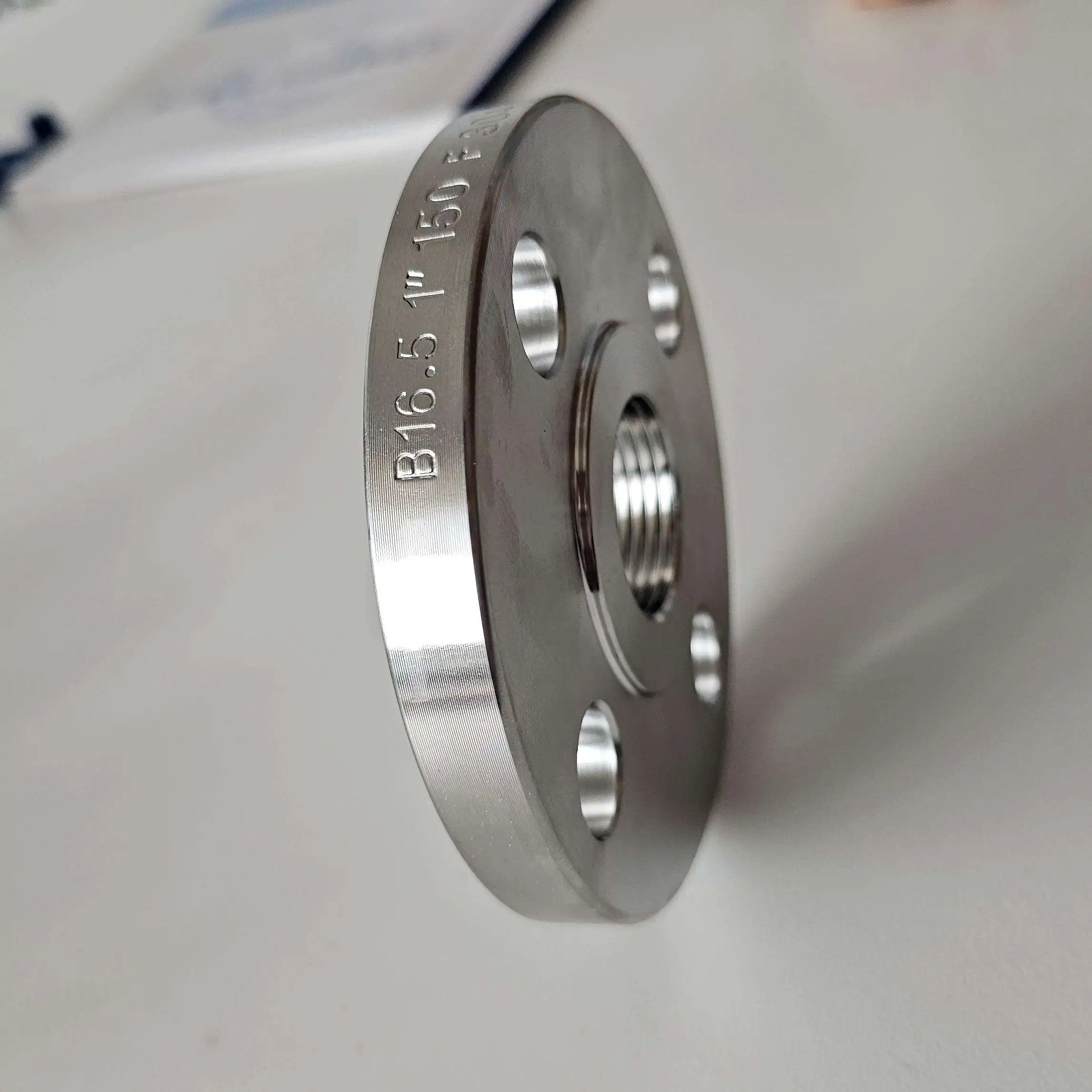
Understanding Threaded Flanges and Their Key Features
What Makes Threaded Flanges Different
Instead of fusion welding, threaded flanges are formed using mechanical interference. When a pipe's internal curved thread (typically NPT per ASME B1.20.1) meets its outer thread, metal touches metal. This design eliminates heat-damaging areas. This requires using these parts in areas where welding might damage coatings. A reliable seal is achieved with the 60-degree thread angle and smoothed crests and valleys when torqued.
Core Design Advantages
Installation efficiency stands out, which is one of the best things about speed. It will take 40 to 60% less time to install than parts that are welded together. You can't get X-rays, cool down times, or permits to work hot in dangerous places if you can't weld. It's helpful that your repair teams can take links apart without breaking them. This lets them service equipment and make changes to systems without having to cut or grind. Being able to change this way is very helpful in test plants and short-term installations where the layout changes a lot. Coatings also last longer, which is a big plus. A Threaded Flange makes threaded joints always resistant to rust, unlike galvanized steel lines that can lose their zinc covering when welded. This part is important for fire safety systems in business buildings because it keeps them in line with NFPA standards over time and stops the nozzles from getting clogged up and hardening too quickly.
Standards and Specifications Overview
International compliance ensures items may be utilised in worldwide initiatives. From Class 150 to Class 2500, ASME B16.5 covers NPS ½" through 24". EN 1092-1 includes DN10–DN100 and PN6–PN160 grades. However, JIS B2220 meets Japanese market demands with classes from 10K to 20K. ASTM guidelines create product standards. diverse alloy steels serve diverse purposes. A105 is carbon steel, A182 F304/F316 is stainless steel. The medium determines temperatures from -29°C to 538°C. Faces may be flat or high.
Critical Criteria for Choosing the Right Threaded Flange
Dimensional Compatibility Assessment
You must measure the pipe to determine the proper size. Switching between NPT and BSPT threads causes leakage. Check pressure levels since tiny flanges might break badly. Class 150 flanges can bear temperature-dependent pressures safely. At normal temperature, it can handle 285 psi. Increasing temperature lowers this value. Your system's peak operating pressure should be substantially below the flange's capacity for safety. Space and flow might determine your size range. NPS ½" to 2" flanges are often utilised for small-bore jobs. Threaded fittings function well due to lower screw forces. Sizes up to DN5000 are available, however welded options are preferable than NPS 4" ones since the threads are harder to join and need more effort.
Comparing Flange Types for Your Application
Finding out when Threaded Flanges are better than other choices can help you make a better system:
1. Weld neck flanges are stronger for high-temperature and high-pressure situations, but they need to be welded by skilled professionals and often need to be treated with heat afterward. Slip-on flanges are easier to align during installation, but they still need to be welded. Socket weld flanges work well for small-bore, high-pressure systems, but they leave gaps that can let corrosive fluids in. Lap joint flanges are cheaper, but they have stub ends that can leak. Blind flanges seal pipe ends, but they are used for something else.
2. Threaded connections can't be welded under low to medium pressure, you need to keep the galvanized coating in good shape, or you need to put them together quickly without any special tools. Refineries use them a lot for instrument air lines and extra pipes in unstable areas. Municipal water systems depend on them for galvanized distribution networks. Chemical plants that work with corrosive materials can avoid heat-affected zones that are where corrosion starts.
Application-Driven Selection Framework
Industry sectors present unique requirements. For instance, oil and gas companies need to make sure that explosions don't happen in restricted areas, so they use threaded connections to get rid of any sources of ignition during installation. Water treatment plants need to keep their protective coatings in good shape and make sure that their distribution systems don't leak. HVAC systems like threaded connections because they are easy to change and maintain. Chemical processing plants need materials that can handle process fluids, so they use stainless steel Threaded Flanges for harsh environments. Environmental factors influence material selection. For example, installations near the coast are more likely to rust from salt spray, so it's better to use stainless steel grades. Carbon steel may work fine in climate-controlled indoor environments if the right coatings are used. However, sudden changes in temperature can weaken threaded connections if the right thread sealants are not used and the connections are not tightened regularly.
Procurement Considerations: How to Source Quality Threaded Flanges
Evaluating Supplier Credentials
Reliable sourcing begins with supplier verification. To make sure you're getting good quality, you should check out the supplier. Quality certifications, like ISO 9001, show that a company is good at managing quality, while industry-specific certifications, like API 6A or PED compliance, show that the company knows a lot about the subject. Material test reports (MTRs) should be sent with every shipment to show the chemical make-up and mechanical properties. This way, the shipment can be traced back to the raw material heat numbers. Manufacturing specialization matters significantly. Making things in specialized factories is very important. Having forging, heat treatment, machining, and testing done all in one place is better for quality control than putting parts together from different suppliers. Shanxi Province in China is known as the "Hometown of Forging" because it has a lot of experts, a lot of resources, and a well-established infrastructure that supports heavy industrial manufacturing.
Cost Factors and Budget Planning
Material selection directly impacts pricing. It costs more and takes longer to get specialty alloys for harsh conditions. If you need non-standard sizes, special facing, or custom testing protocols, the price goes up and the lead time goes up. For standard uses, carbon steel Threaded Flanges (ASTM A105) are the cheapest option. Stainless steel grades (F304/F316) are about three to four times more expensive, but they resist corrosion better. Purchase volume influences unit pricing substantially. Different things you buy can have different prices for each item. If you buy in bulk, you can save money on things like raw materials and the tools that are used to make things. To get the biggest discounts on volume while still keeping inventory costs low, project-based procurement teams should combine requirements from different systems.
Sourcing Strategy for Timely Delivery
Balancing local inventory availability against direct manufacturer sourcing requires strategic thinking. You have to be smart about how you choose between local inventory and buying directly from manufacturers. Distributors keep common sizes in stock so they can quickly fill orders for repairs that need to be done right away or small amounts that need to be placed. On the other hand, working with manufacturers directly can save you money on planned projects but takes longer (4–8 weeks for standard products and 8–12 weeks for custom specifications). Verification protocols protect against counterfeit products. Requesting certified material test reports, dimensional inspection records, and hydrostatic test documentation helps keep fake products out. When the product is received, it is physically inspected to make sure it has the right markings, a good surface finish, and a thread gauge. This stops the installation of parts that aren't up to par.
Installation and Maintenance Best Practices
Step-by-Step Installation Guide
Proper installation begins with thorough preparation. There should be no dirt, oil, or oxidation on the pipe or flange threads. You should also use the right thread sealant, such as PTFE tape for water and air systems, thread compound for gas systems, or specialized sealants for chemical service. When installing the tape, wrap it clockwise around the pipe to keep it from coming undone. Before you use tools, turn the flange by hand three full turns to make sure it spins smoothly. To protect the flange face, use wrenches that are the right size for the hex or strap wrenches. Tighten slowly, checking the alignment every so often. For full engagement, the flange face should be within 1-2 threads of the pipe end, but this may depend on the project.
Common Installation Mistakes to Avoid
Cross-threading causes immediate damage and creates leak paths. Installing a Threaded Flange quickly without cleaning the threads properly results in threads that don't engage fully. Using the wrong type of sealant, especially ones that aren't compatible with process fluids, can lead to chemical breakdown and seal failure. Putting too much torque on a material beyond its yield strength breaks it permanently. Forgetting to check that the thread type compatibility between the pipe and flange is checked wastes time and materials.
Maintenance and Inspection Protocols
Regular inspection intervals depend on service conditions. Checking the thread once a month is enough in stable, non-corrosive environments. Checking it every week is needed in places where there is high vibration or corrosive fluids. Look for signs of leakage, corrosion at the thread interface, or damage from impact. In thermal cycling applications, the thread may need to be retightened every so often to account for thread relaxation. Corrosion monitoring focuses on thread integrity. A big part of checking for corrosion is making sure the threads stay strong. If you see surface rust on carbon steel flanges, you need to fix it right away before the thread depth drops below safe levels of engagement. Stainless steel parts can get crevice corrosion in chloride environments, which means they need to be upgraded to higher-alloy grades. Galvanized coatings should not lose a lot of zinc in systems that are working right.
Making the Final Decision: Matching Flange Selection to Your Project Needs
Defining Your Project Requirements
Successful specification starts with documenting system parameters. Writing down the system parameters is the first thing that you need to do when writing a good specification. The minimum pressure class requirement is based on the maximum operating pressure. The temperature ranges determine the choice of material—carbon steel is best for uses below 400°C, while stainless grades can handle temperatures up to and above 538°C. The corrosivity, viscosity, and particle content of the fluid determine both the material choice and the face finish requirements. Safety regulations vary by jurisdiction and industry sector. In the US, process piping is regulated by ASME B31.3, while in Europe it is regulated by EN 13480. When picking a supplier, it's important to know what kind of compliance documentation they need, since not all manufacturers keep their certifications up to date for every regional standard.
Standard Versus Custom Solutions
Standard flanges meeting ASME B16.5 or EN 1092-1 specifications suit most projects. If you need standard flanges that meet ASME B16.5 or EN 1092-1 specifications, they are easy to find, don't cost too much, and have a history of being reliable. However, you will need custom solutions like Threaded Flange when standard dimensions don't fit existing equipment, extreme operating conditions exceed standard ratings, or specific project needs mean that designs need to be changed. Shanxi Hongkai Forging possesses integrated capabilities spanning forging, heat treatment, machining, physical and chemical testing, surface treatment, and packaging. Located in Dingxiang County, which is the hub of China's forging industry and has a lot of coal and power resources as well as good logistics infrastructure, the factory follows American ASME B16.5, European EN 1092-1, German DIN, Japanese JIS, Russian GOST, and Chinese national standards for production. It can handle sizes from DN15 to DN4000.
Selection Checklist for Procurement Teams
Confirm these elements before finalizing your order:
- Pressure rating there is a safe amount of space between the pressure number and the highest working pressure.
- Thread specification there is a perfect match between the thread standard and the pipe fitting (NPT, BSPT, etc.).
- Material grade the grade of the material works with the chemicals and temperatures of process fluids.
- Face type your seal and lip should match the type of face (flat face or raised face).
- Dimensional standards the size guidelines are in line with the rules for the area and the needs of the project.
- Supplier certification proof that the provider meets the high standards of the project.
- Delivery timeline the delivery plan fits the project schedule and gives extra time in case something goes wrong.
- Unit pricing when money is tight, unit price helps keep labor standards high.
Conclusion
You can find the best Threaded Flange by balancing technical needs, safety rules, and the practicalities of procurement. Understanding dimensional compatibility, material properties, and application-specific needs can help you make smart decisions that save you money. Correct installation methods and regular maintenance schedules can also make the system more reliable and extend its service life. Working with experienced manufacturers who can show they follow standards, have integrated production capabilities, and have a history of exporting will help your project benefit from global best practices while also meeting regional regulatory requirements. Be clear about the parameters of the project and make sure your procurement team knows what they're looking for.
FAQ
1. What pressure ratings are available for threaded flanges?
Threaded Flanges are categorized by the pressure they can hold. They range from PN6 to PN160 (in European units) and from Class 150 to Class 2500 (in ASME units). At room temperature, Class 150 flanges can handle up to 285 psi of pressure, and Class 2500 flanges can handle up to 6,170 psi of pressure. As the temperature rises, the pressure rating decreases, as shown in standard charts.
2. Can threaded flanges be used in high-temperature applications?
Temperature range depends on the material. Threaded Flanges made of ASTM A105 carbon steel can safely handle temperatures up to about 400°C. Grades F304 and F316 stainless steel can safely handle temperatures up to 538°C and higher. For high temperature service, thread engagement stability and sealant compatibility must be checked, since thermal expansion changes how tight the threads are.
3. How do I prevent leaks in threaded flange connections?
Leak prevention requires proper sealant selection, clean threads well before putting them together, making sure they are fully engaged, and tightening them with the right amount of torque. PTFE tape works well for water and air applications, while anaerobic thread compounds work better for gas and chemical applications. Make sure they are fully engaged, leaving about one to two threads exposed, and then tighten them again after the first heat-up cycle.
Partner with HONG KAI FORGING for Reliable Threaded Flange Solutions
Procurement teams seeking a dependable Threaded Flange manufacturer benefit from partnering with Shanxi Hongkai Forging Co., Ltd. Our integrated production facility in Dingxiang County delivers precision-forged flanges complying with ASME B16.5, EN 1092-1, DIN, JIS, GOST, and Chinese national standards. We manufacture carbon steel, stainless steel, and alloy steel flanges from DN15 to DN4000, supporting global industrial projects with certified material quality, comprehensive testing documentation, and reliable delivery schedules. Our decades of forging expertise—combined with complete in-house capabilities spanning heat treatment, precision machining, and quality verification—ensure consistent performance for your critical infrastructure applications. Contact kevin.zhao@hkflange.com to discuss your specific Threaded Flange requirements and receive detailed technical specifications tailored to your project needs.
References
1. American Society of Mechanical Engineers. (2021). ASME B16.5: Pipe Flanges and Flanged Fittings. New York: ASME International.
2. European Committee for Standardization. (2018). EN 1092-1: Flanges and Their Joints – Circular Flanges for Pipes, Valves, Fittings and Accessories, PN Designated. Brussels: CEN.
3. American Petroleum Institute. (2019). API Standard 6A: Wellhead and Tree Equipment. Washington, D.C.: API Publishing Services.
4. German Institute for Standardization. (2020). DIN 2501: Flanges – Part 1: General Survey. Berlin: Beuth Verlag.
5. Japanese Standards Association. (2017). JIS B2220: Steel Pipe Flanges. Tokyo: Japanese Standards Association.
6. National Fire Protection Association. (2022). NFPA 13: Standard for the Installation of Sprinkler Systems. Quincy, Massachusetts: NFPA Publications.
Clear Communication, and Reliable Technical Support