- English
- French
- German
- Portuguese
- Spanish
- Russian
- Japanese
- Korean
- Arabic
- Greek
- German
- Turkish
- Italian
- Danish
- Romanian
- Indonesian
- Czech
- Afrikaans
- Swedish
- Polish
- Basque
- Catalan
- Esperanto
- Hindi
- Lao
- Albanian
- Amharic
- Armenian
- Azerbaijani
- Belarusian
- Bengali
- Bosnian
- Bulgarian
- Cebuano
- Chichewa
- Corsican
- Croatian
- Dutch
- Estonian
- Filipino
- Finnish
- Frisian
- Galician
- Georgian
- Gujarati
- Haitian
- Hausa
- Hawaiian
- Hebrew
- Hmong
- Hungarian
- Icelandic
- Igbo
- Javanese
- Kannada
- Kazakh
- Khmer
- Kurdish
- Kyrgyz
- Latin
- Latvian
- Lithuanian
- Luxembou..
- Macedonian
- Malagasy
- Malay
- Malayalam
- Maltese
- Maori
- Marathi
- Mongolian
- Burmese
- Nepali
- Norwegian
- Pashto
- Persian
- Punjabi
- Serbian
- Sesotho
- Sinhala
- Slovak
- Slovenian
- Somali
- Samoan
- Scots Gaelic
- Shona
- Sindhi
- Sundanese
- Swahili
- Tajik
- Tamil
- Telugu
- Thai
- Ukrainian
- Urdu
- Uzbek
- Vietnamese
- Welsh
- Xhosa
- Yiddish
- Yoruba
- Zulu
Top Blind Flange Applications in Oil, Gas, and Chemical Plants
Pipe termination alternatives remain crucial for industrial site safety. Solid disc portions in pipe networks prevent fluid leaks and enable repairs. Blind Flanges are employed for 10 activities in chemical industries, gas processing plants and oil refineries that affect worker safety and system stability. Knowing these applications helps buying managers pick carbon steel structures for general usage or specially alloy materials for corrosive situations. Thus, they can ensure that goods fulfil ASME B16.5, EN 1092-1, and other industrial requirements and maintain pressure ratings between PN6 and PN160 throughout size ranges from DN15 to DN5000.
Understanding Blind Flanges: Types, Materials, and Standards
Core Design Variations and Their Functions
The basic form comprises flat, raised, ring-shaped joint sealing regions. Flat face designs distribute gasket pressure uniformly over the surface, making them suitable for lower-pressure full-face gaskets. For light pressure, as in chemical processing lines, raised face designs concentrate seating stress on a smaller diameter. The seal becomes more reliable. Machined holes in ring-type joints accommodate metal ring seals. This improves sealing for high-pressure petroleum service exceeding Class 600 ratings. Plant activities use diverse fluids, temperatures, and system pressures, therefore each surface has varied operational demands.
Material Selection Criteria for Harsh Environments
Carbon steels are cost-effective for broad hydrocarbon use under mild temperatures and little corrosive attack. Blind Flange and carbon steel make alignment and removal simple for regular maintenance. 304 and 316L stainless steels withstand chloride stress corrosion and acidic media in chemical plants better. Strong and rust-resistant duplex and super duplex materials. They are beneficial on offshore platforms and in sour gas usage where hydrogen sulphide makes the environment hostile. Due to their exorbitant cost, nickel metals can withstand high temperatures and severe corrosion but are only employed in critical areas. To choose materials that endure and are affordable, consider process chemistry, operating temperatures, and pressure cycle patterns.
International Standards Governing Manufacturing Quality
Flanges up to NPS 24 must meet ASME B16.5 pressure classes 150–2500. Class 75 to 900 requirements apply to larger diameters up to NPS 60 per ASME B16.47. EU facilities employ EN 1092-1 standards, which specify pressure levels from PN6 to PN160 and their material kinds numerically. Japanese manufacturers employ JIS B2220 standards for setup, whereas Russian industries must follow GOST for equipment installation. These standards restrict size, form, material characteristics, temperature, pressure, and testing for manufacturers. Knowing the essential standards lets you make sure your components function with your equipment and fulfil global rules.
Top Applications of Blind Flanges in Oil, Gas, and Chemical Plants
Pipeline Isolation During Maintenance
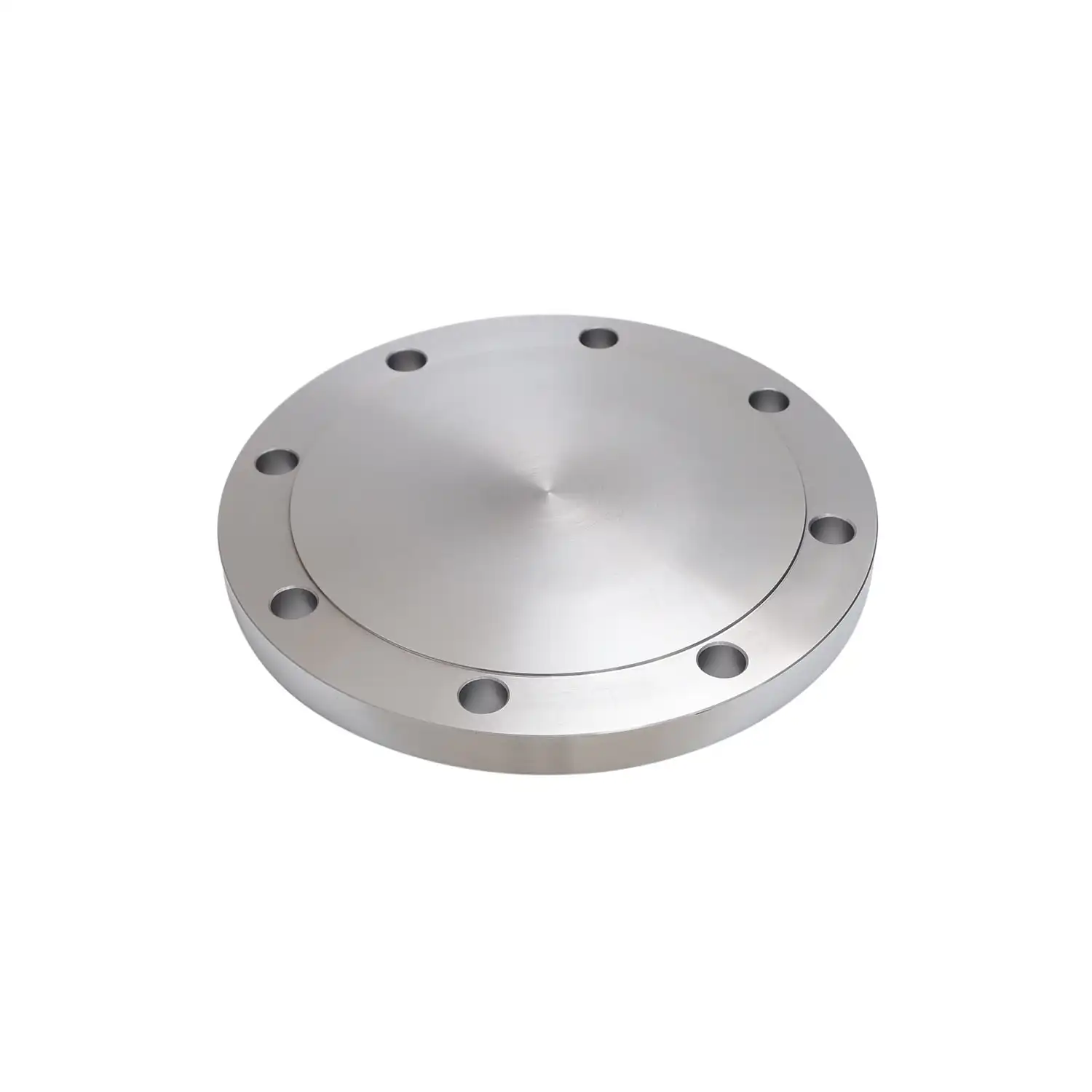
Blind Flange components are widely used to isolate pipeline sections during maintenance, inspection, or repair work in oil and gas facilities. Their solid sealing structure prevents fluid leakage and ensures worker safety. Shanxi HongKai Forging Co., Ltd. manufactures high-pressure Blind Flange products compliant with ASME and EN standards for demanding industrial environments.
Pressure Vessel and Reactor Sealing
Chemical plants frequently use Blind Flange solutions to seal pressure vessels, reactors, and storage tanks. These components provide reliable closure under high-temperature and high-pressure conditions while allowing easy future access for cleaning or equipment modification. Carbon steel, stainless steel, and alloy steel materials support various chemical compatibility requirements.
Pipeline End Closure in Petrochemical Systems
In petrochemical processing systems, Blind Flange products are installed at pipeline ends to block unused outlets or prepare systems for future expansion. Their detachable design simplifies operational adjustments without permanent welding. Shanxi HongKai Forging Co., Ltd. offers sizes from DN15 to DN5000 for different industrial pipeline configurations.
Steam and High-Pressure Line Isolation
Power generation and refinery facilities rely on Blind Flange components to isolate steam lines and high-pressure transmission systems. RTJ and RF facing options enhance sealing performance under thermal cycling conditions. With advanced forging, machining, and heat treatment capabilities, Shanxi HongKai Forging ensures stable product reliability for critical applications.
Water Treatment and Chemical Transfer Systems
Blind Flange products are also important in industrial water treatment and chemical transfer pipelines. They provide leak-proof sealing for corrosive media and facilitate system upgrades or temporary shutdowns. Compliance with DIN, JIS, GOST, and EN standards allows Shanxi HongKai Forging products to meet international engineering project requirements.
Comparing Blind Flanges with Other Flange Types: Making the Right Choice
Structural and Functional Distinctions
Weld neck flange hubs gradually connect to pipe walls. Cycling wear is reduced by spreading stress over more areas. Slip-on versions cover pipe ends before fillet welding, simplifying fitting and functioning well at low pressures. Instead of welding, threaded connections are useful when hot work isn't feasible. Due to pressure constraints and leak paths, they only work for low-pressure services. Scabbard ends and slack backing flanges position dismantled systems in lap joint assemblies. Using corrosion-resistant tubing with carbon steel flanges saves money. Termination components, without center bores, impede flow instead of forming routes. This fundamental distinction limits their usage to endpoint shutting and not inline links. The solid structure distributes pressure forces throughout the disc surface, causing twisting strains that other systems avoid by distributing loads via connected pipes. Knowing these technological distinctions prevents you from buying a product that might harm the system.
Pressure Capacity and Material Considerations
For the same pressure classes, closure plates have much stricter wall thickness standards than bored options like the Blind Flange. ASME estimates show that Class 600 termination discs need to be a lot thicker than their weld neck counterparts. This is because flat plates are under the most stress in the middle, which is also where bending moments are highest. This difference in thickness makes more material and the result heavier, which affects both the cost of buying the materials and the amount of work needed to install them. For all types of flanges, the choice of material is wide and includes carbon steel, stainless steel, and special metals. But for termination uses, expensive materials are usually necessary because they play a big role in safety and are exposed to the full system pressures without any security further down the line. Chemical plants that work with corrosive media usually choose stainless or duplex grades for closure points, even when carbon steel is fine for straight connections. This is because they know that failure at the termination point has worse effects than gasket leaks in running sections.
Installation Complexity and Long-Term Cost Implications
For welded flange types, you need skilled welders, x-rays, and heat treatment steps, which add time to the installation process and raise the cost of work. Most termination plates can be attached directly to existing flanges without welding. This makes installation easier and lets changes be made in the field without needing a hot work permit. This installation benefit cuts down on building costs and makes it possible to make changes to the system in the future. Over the working lifetimes, the fact that they are removable saves money when growth projects need to open lines that were closed before. Cutting and rewelding welded caps uses a lot of materials and work and makes a lot of waste. Bolted seals are easy to reuse or replace because they just unbolt. This lowers the cost of modifications. When planning phased growth, facilities take these benefits into account when setting up the original piping designs.
Installation, Inspection, and Maintenance Best Practices for Blind Flanges
Critical Installation Procedures and Safety Protocols
Clean the contact faces to eliminate scale, rust, and old gasket material that might leak. Flange sides must be checked for deeper scratches, gouges, and rust pits than MSS SP-6 permits. Machine or replace damaged areas before assembly. Service conditions determine gasket choice. Compressed fibre shapes are better for lower temperatures and pressures than spiral-wound variants. Place the seal properly in the flange face edge to prevent bolt force from removing it. Star or cross bolt tightening uniformly compresses gaskets rather than focussing stress. Replace manual torque wrenches with hydraulic tensioners for precision preload adjustment in large-diameter or high-pressure conditions. Installation instructions emphasise bolts, not torque. Stress-torque relationships change with thread friction. To verify gasket compression, bolt length or flange gap shrinkage around the circle are measured.
Non-Destructive Testing and Inspection Methodologies
Visual inspections of a Blind Flange find flaws, rust patterns, and mechanical damage on the surface. Subsequently, ultrasound testing determines the depth and scope of the damage. Magnetic particle inspection finds cracks that break through the surface of ferromagnetic materials, while liquid penetrant methods find flaws in metals that are not magnetic. Dimensional verification makes sure that the bolt hole spacing, flange width, and thickness all meet the standards, which stops installation mistakes. After the fitting is done, the seal's integrity is checked by pressure tests. Pneumatic tests that use nitrogen or compressed air to find leaks fast, but they also create stored energy dangers that need to be carefully controlled and people must be kept away from them. Hydrostatic testing gets rid of the risks of stored energy and confirms for sure that there are leaks, but problems with water removal and rust need to be looked at. Test times and pressure holds are set according to the code, and weeping at gasket surfaces is seen visually during hold periods.
Proactive Maintenance Strategies Preventing Unexpected Failures
Corrosion surveillance systems measure material loss using ultrasonic thickness inspections at grid points. Trending readings indicate an escalating attack that must be addressed before puncture. To ensure proper polarisation, subterranean or submerged cathodic protection systems must be monitored regularly. Check protective layers for deterioration or separation that exposes base metal to dangerous environments. A bolt integrity examination requires checking and tightening weak connections caused by temperature cycles or vibration during scheduled shutdowns. Bolt material may reveal sulphide stress fractures in sour service or stress corrosion in salt environments before they break. The gasket requires replacement due to chemical or compression set damage (state review). Systems that track installation dates, material grades, and check results help determine whether to replace something before its lifespan expires.
Procuring Blind Flanges for Oil, Gas, and Chemical Plants: What You Need to Know
Evaluating Manufacturer Capabilities and Certifications
Integrated manufacturing sites monitor forging, heat treatment, machining, and testing to maintain quality. Shanxi HongKai Forging can examine raw materials and completed products, demonstrating this process. This tracks everything throughout manufacturing. Full-service manufacturers simplify the supply chain while ensuring product success. ISO 9001 and other quality management standards demonstrate organised process management and continuous improvement. Pressure equipment directives like PED 2014/68/EU require European parts to be tested for compliance. Material tests from recognised laboratories ensure chemical and mechanical compliance. When procurement agreements need more control than a manufacturer can supply, third-party inspection services provide independent verification.
Pricing Dynamics and Lead Time Considerations
The prices of raw materials for Blind Flange change with the world steel market, which causes price changes during procurement rounds. Forward purchasing contracts lock in prices for long periods of time, giving you budget security while agreeing to volume obligations. Spot sales give you freedom, but they also expose you to price changes. Knowing how the market is doing lets you come up with negotiation strategies that get you good prices when supplies are high. Wholesalers may dispatch standard items immediately, which speeds both project completion and unforeseen repairs. When unique standards need unusual materials, measurements, or testing, lead times might be weeks to months. This depends on the manufacturer's capacity and material availability. Faster production costs more, but the project needs it. Realistic scheduling that accounts for lead times helps prevent expensive delays caused by late parts.
Customization Options Addressing Unique Requirements
Standard shop products work in most instances, but particular service demands need adjustments. Drilled and tapped holes allow instrumentation or chemical input connections without field machining. Special materials are utilised in poisonous environments or at temperatures beyond typical alloys' tolerance. Non-standard measures are used to fit parts in pre-standard systems. The procurement specifications state the requirements. These include applicable standards, material grades, pressure ratings, testing, and anticipated documentation. Unclarified specifications might cause readings that don't function for the intended usage, affecting performance or requiring returns and replacements. Technical evaluations by engineering, purchasing, and suppliers resolve questions before manufacturing. This prevents costly misunderstandings.
Conclusion
Finally, Blind Flange components are essential for permanent pipeline termination, maintenance access, pressure testing, and emergency isolation in petroleum operations. Their solid construction completely blocks flow, ensuring operational safety and system integrity under demanding conditions. Pressure ratings, material compatibility, and service requirements must all be carefully evaluated to make the correct selection. Proper installation and maintenance practices also play a critical role in determining whether Blind Flange products achieve long service life or experience premature wear. Successful procurement depends on choosing manufacturers with strict quality control systems, relevant certifications, and responsive technical support. When procurement teams fully understand these key factors, they can select suitable Blind Flange solutions while avoiding sourcing mistakes that reduce reliability or unnecessarily increase lifecycle costs.
FAQ
1. What pressure ratings apply when selecting termination flanges?
Pressure classes must equal or exceed the system's peak working pressures and safety margins. ASME B16.5 classes 150–2500 can bear pressures from 285 psig to 6,170 psig at normal temperature. EN 1092-1 grades indicate bar minimum pressures from PN6 to PN160. Temperature impacts must be downrated when service circumstances worsen. Specific pressure-temperature formulae in applicable standards aid selection.
2. How do material grades affect corrosion resistance?
Carbon steel is strong enough for dry hydrocarbon service, but it breaks down quickly in acidic conditions, chlorides, or hydrogen sulfide. Stainless steel 316L is better at resisting many chemicals, especially liquids that contain chloride. Duplex types are strong and have a high resistance to stress corrosion cracks. Nickel metals can handle harsh environments like high temperatures and strong acids. Matching the choice of material to the chemistry of the process keeps failure from happening too soon.
3. What inspection frequency maintains reliable performance?
Visual inspections during factory visits identify leaks and corrosion. Gaskets, fasteners, and material thickness are checked during yearly maintenance shutdowns. Risk assessments should be used to determine how frequently to evaluate critical service applications based on failure impacts and degradation rates. Recording inspection findings allows you apply trend analysis to determine replacement needs.
Partner with HONG KAI FORGING for Reliable Blind Flange Solutions
People in charge of buying things who need reliable Blind Flange sellers can work together with well-known companies that have a history of success in industry projects around the world. For decades, HONG KAI FORGING has been making pipeline parts using their forging skills. They work out of buildings in Shanxi Province that can do everything from processing materials to checking them for quality. Our products come in diameters from DN15 to DN5000 and pressure values from PN6 to PN160. They are made to meet ASME B16.5, ASME B16.47, EN 1092-1, JIS B2220, DIN, and GOST standards. Carbon steel, stainless steel types 304 and 316L, duplex alloys, and special materials designed to meet specific business needs are all materials that can be used. Through recorded testing and certification, strict quality assurance processes make sure that every part meets the standards. Email our technical team at kevin.zhao@hkflange.com to talk about your project needs and get full quotes that are made to fit your buying needs. As a Blind Flange maker with years of experience working on oil, gas, and chemical plant projects all over the world, we know how important your uses are and are ready to help you succeed.
References
1. American Society of Mechanical Engineers. (2020). ASME B16.5: Pipe Flanges and Flanged Fittings NPS 1/2 Through NPS 24 Metric/Inch Standard. New York: ASME Press.
2. European Committee for Standardization. (2018). EN 1092-1: Flanges and Their Joints - Circular Flanges for Pipes, Valves, Fittings and Accessories, PN Designated - Part 1: Steel Flanges. Brussels: CEN Publications.
3. Bickford, John H. (2016). Gaskets and Gasketed Joints, Second Edition. Boca Raton: CRC Press.
4. Welding Research Council. (2019). WRC Bulletin 537: Revised Flange Bolt-Up Procedures to Prevent Cracking of High-Strength Bolts. New York: Welding Research Council.
5. National Association of Corrosion Engineers. (2021). NACE SP0106: Control of Internal Corrosion in Steel Pipelines and Piping Systems. Houston: NACE International.
6. American Petroleum Institute. (2017). API 6A: Wellhead and Christmas Tree Equipment, Twentieth Edition. Washington, D.C.: API Publishing Services.
Clear Communication, and Reliable Technical Support