- English
- French
- German
- Portuguese
- Spanish
- Russian
- Japanese
- Korean
- Arabic
- Greek
- German
- Turkish
- Italian
- Danish
- Romanian
- Indonesian
- Czech
- Afrikaans
- Swedish
- Polish
- Basque
- Catalan
- Esperanto
- Hindi
- Lao
- Albanian
- Amharic
- Armenian
- Azerbaijani
- Belarusian
- Bengali
- Bosnian
- Bulgarian
- Cebuano
- Chichewa
- Corsican
- Croatian
- Dutch
- Estonian
- Filipino
- Finnish
- Frisian
- Galician
- Georgian
- Gujarati
- Haitian
- Hausa
- Hawaiian
- Hebrew
- Hmong
- Hungarian
- Icelandic
- Igbo
- Javanese
- Kannada
- Kazakh
- Khmer
- Kurdish
- Kyrgyz
- Latin
- Latvian
- Lithuanian
- Luxembou..
- Macedonian
- Malagasy
- Malay
- Malayalam
- Maltese
- Maori
- Marathi
- Mongolian
- Burmese
- Nepali
- Norwegian
- Pashto
- Persian
- Punjabi
- Serbian
- Sesotho
- Sinhala
- Slovak
- Slovenian
- Somali
- Samoan
- Scots Gaelic
- Shona
- Sindhi
- Sundanese
- Swahili
- Tajik
- Tamil
- Telugu
- Thai
- Ukrainian
- Urdu
- Uzbek
- Vietnamese
- Welsh
- Xhosa
- Yiddish
- Yoruba
- Zulu
OEM Welding Neck Flange Guide: Standards & Specifications
Picking the correct joint for important industry uses needs accuracy, conformity, and dependability. Because its hub is tapered and makes butt-welding straight to pipe sections easier, is the best choice for high-pressure and high-temperature plumbing systems. This way of engineering distributes stress better, lowers the risk of leaks, and guarantees long-term structural stability in harsh settings. Project engineers and procurement managers in the oil and gas, petrochemical, power generation, and chemical processing sectors need to know about the standards, specifications, and buying factors for these parts in order to keep pipelines safe and running efficiently.
Understanding Welding Neck Flanges: Definitions and Applications
What Makes Welding Neck Flanges Unique?
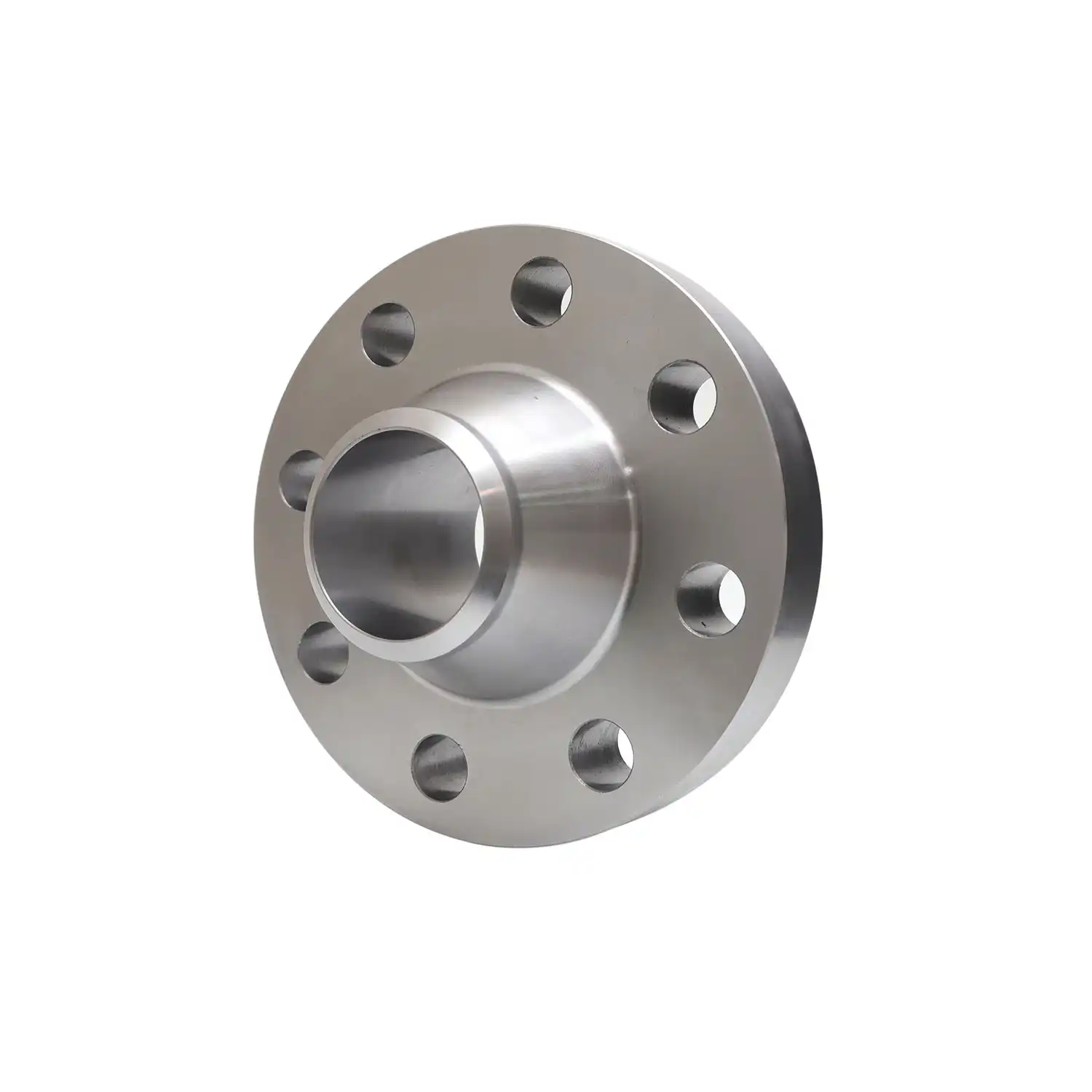
The long, tapered hub that makes a smooth transfer from the flange face to the pipe wall is what makes a Welding Neck Flange unique. This design spreads stress evenly across the joint, taking the focus off of the flange base and making it much more resistant to fatigue under heavy bending moments and cycle loads. The inside width of the joining pipe is carefully machined to match the hole. This makes a smooth flow path that removes turbulence and lowers the chance of erosion and rust. This butt-weld connection method makes the strongest joint possible in flange technology. This makes it necessary in situations where system failure could have terrible effects or be harmful to the environment.
Primary Industrial Applications
Tapered hub flanges are important parts of the world's industrial infrastructure, even in the toughest circumstances. In oil and gas sites that are out at sea, these parts can handle pressures inside that are higher than 5,000 PSI and can also handle wave loading and mechanical forces from the outside. Power plants use them for steam lines that work above 500°C because the curved hub can handle thermal expansion without affecting the seal's integrity when temperatures change quickly. Chemical factories use these flanges to move dangerous and volatile fluids. The butt-welded connection lowers the risk of fugitive emissions, and the continuous flow path keeps erosion and corrosion to a minimum. When it comes to subsea systems, the design's durability is especially useful because it can last for a long time in saltwater settings where repair access is limited.
Welding Neck Flange Standards and Dimensions
Global Standards Compliance Framework
Following widely recognized standards makes sure that all procurement methods are legal, of high quality, and able to be used with other products—especially for critical components like Welding Neck Flange. ASME B16.5 sets the dimensions for flanges from NPS ½" to 24" and their pressure classes, which range from 150 to 2500. This makes it easier to find and install the same products all over the world. For bigger diameter uses, ASME B16.47 Series A and B cover NPS sizes from 26" to 60", and they can handle pressure levels from 150 to 900. On the European market, EN 1092-1 is used, which covers sizes from DN10 to DN2000 and pressures from PN6 to PN400. Japanese industry follows the rules in JIS B2220 for pressure values between 10K and 40K, for sizes DN10 to DN1000. API 605 gives more information on how to use large-diameter, high-pressure systems, which are popular in oil production plants.
Critical Dimensional Parameters
Some of the most important specs that buying teams have to check are the nominal pipe size, the pressure class rating, the facing type, and the bore width meeting the pipe plan. The hub length and curve angle have a direct effect on how stress is distributed and how easy it is to weld during fitting. Most of the time, raised face configurations work best, but flat face and ring-type joint variants are better for sealing needs in harsh working situations. For sealing surfaces, surface finish standards usually fall between 125 and 250 microinches Ra. This makes sure that the gasket works with the surface and that the cover doesn't leak. For normal sizes, dimensional tolerances usually keep accuracy within ±1mm. However, facilities like Shanxi HongKai Forging can achieve smaller tolerances when project requirements call for higher accuracy.
Material Selection and Performance Impact
The makeup of a material directly impacts its temperature resistance, mechanical strength, and ability to fight rust. For general service uses that need mild temperature and pressure, carbon steel types like ASTM A105 are a cost-effective choice. Stainless steel types like ASTM A182 F304 and F316L are better at resisting corrosion, which is important for chemical handling and marine settings, but they cost more to make. As the temperature rises, alloy steels like ASTM A182 F11 and F22 become stronger and less likely to creep. This makes them ideal for high-temperature steam service and petroleum processing units. When choosing a material, the initial investment must be weighed against the costs over its lifetime. This is done by looking at things like how often it needs to be maintained, how long it is expected to last, and the total cost of ownership over the working period.
Welding Neck Flange Vs Other Flange Types: Comparative Insights
Strength and Pressure Capability Comparison
When compared to other flange designs, the tapered hub configuration always performs better in tough situations. The overlapping form of slip-on flanges makes them easier to install, but their fillet weld connection points make them much less resistant to pressure and wear. While blind flanges are necessary for system termination and servicing access, they can't match the flow properties of designs with through-bores. Threaded flanges can be installed without the need for welding tools, but their mechanical link limits the pressure that can be applied and creates possible leak paths when the temperature changes. Lap joint flanges with stub ends make it easier to connect and take apart parts, but they are more complicated and cost more than straight butt-weld setups. When the pressure is above 600, the structural stability of the butt-weld joint is much better than other connection methods, making the strength advantage of Welding Neck Flange designs even more clear.
Installation Complexity and Long-Term Economics
Although qualified welding techniques and radiographic inspection skills are needed for the initial installation, the long-term cost savings make the initial investment worth it for important service uses. Being able to do 100% radiography testing confirms the quality of the weld throughout the whole joint, giving proof and confidence that can't be found with fillet-welded options. Maintenance needs are greatly reduced because the joints are designed to last a long time and not break down easily. In high-pressure systems, the costs of downtime caused by premature flange failure usually far outweigh the extra money spent on better connection technology. When making a choice about which flange to buy, the total cost of ownership should be calculated. This includes the work needed for installation, the need for inspections, the expected service life, and the possible effects of a system failing.
OEM Welding Neck Flange Manufacturing and Quality Assurance
Integrated Production Capabilities
The best way to make things starts with controlled forging methods that set the grain structure and mechanical qualities of the material that are needed for pressure-retaining parts. Forging, heat treatment, precision machining, and full quality testing are all part of Shanxi HongKai Forging's combined production powers. This makes sure that every production batch is the same. During heat treatment, internal stresses are leveled out and the qualities of the material are optimized so that they meet certain hardness and toughness standards. With computer-controlled machining machines, gasket makers can get the exact size tolerances and surface finishes they need for their products to fit well. This vertically integrated method gets rid of the quality issues that come up when different companies work on different parts of the production process. It also gives buying teams a single point of responsibility for making sure the product meets standards.
Quality Control and Certification Protocols
Before parts are sent to project sites, they are carefully inspected to make sure they are the right size, made of the right materials, and have good mechanical qualities. Positive material identification testing proves that the alloy's makeup fits the requirements of the purchase order and the material certifications. Verification of dimensions using precise measuring tools makes sure that the product meets all standards and customer plans. Ultrasonic examination, magnetic particle inspection, and dye penetrant testing are all non-destructive testing methods that find cracks inside or on the surface of an object that could affect its performance. Hydrostatic testing makes sure that the stability of something that keeps air in under controlled conditions that are like real-world conditions. Each shipment comes with documentation packages that contain test reports on the materials, records of inspections for dimensions, and information on how to track them. This information is needed by quality control systems and to meet regulatory standards.
Maintenance Best Practices for Extended Service Life
The basis for effective long-term performance is set by following the right installation steps. The steps for welding must be done according to specific rules that match the qualities of the base material and make sure that the joints go all the way through. Depending on the grade of the material and the standards of the code, a post-weld heat treatment may be needed to remove any remaining stresses. Choosing the right gasket for the job stops leaks and keeps the flange faces from getting damaged during assembly. Following the correct bolt tightening steps and pressure values outlined in engineering standards will make sure that the load and stress on the gasket are spread out evenly. Periodic inspection programs that check the state of gaskets, the tension of the bolts, and the integrity of the flange face find damage before it happens. This keeps operations running as smoothly as possible and avoids unexpected shutdowns that mess up production plans.
Procurement Guide: Buying OEM Welding Neck Flanges
Supplier Evaluation Criteria
To choose a good flange maker, you need to carefully look at their technical skills, quality control systems, and business dependability—especially when sourcing high-performance components like Welding Neck Flange. Certification to the ISO 9001 quality management standards shows that a company is dedicated to consistently high-quality products and methods for constant growth. Costly delays in building plans can be avoided by making sure there is enough production capacity to meet project delivery dates without sacrificing quality through rushed production. Having technical knowledge to help with engineering during the development of specifications and to answer questions from installers during installation adds a lot of value on top of providing the parts. Expertise in exporting and good transportation skills make sure that goods get to foreign project sites on time and with the right paperwork to get through customs and keep track of the materials.
Understanding Pricing Structures and Value Factors
Quotes for OEM flange purchase are affected by more than just the price per piece. Choosing the right material type has a direct effect on the cost of the raw materials. For example, specialty alloys cost more than normal carbon steel. Size and pressure class affect how hard it is to forge and how long it takes to machine. Costs go up or down depending on the size and weight of the part. Order numbers allow for more efficient production and better material purchasing, which lowers the cost per unit for large orders. Costs go up depending on the specifics of the project when certification standards like third-party inspection, special testing, or documentation files are needed. The necessity of the delivery affects the production schedule and may result in extra fees for shorter wait times. When these factors are broken down into separate prices, buying teams can find the best specs and order timing to meet cost goals while still maintaining quality standards.
Strategic Sourcing Considerations
Global buying strategies make sure that quality control, cost competitiveness, and supply chain risk management are all taken into account. Shanxi Province in China has become a major center for forging. It is known as the "Hometown of Forging" because it has been developing industrial and professional specialization for decades. Facilities like HONG KAI FORGING use the region's infrastructure, such as its large energy resources, skilled labor pools, and well-established supply networks, to offer affordable prices without lowering quality standards. When you deal directly with a maker, you avoid the markups that distributors add, and you can communicate better during technical talks and order processing. Being able to import and ship goods and having experience with foreign logistics make the buying process easier and make it easier for project teams to handle paperwork. When you build long-term relationships with dependable providers, you can work together to make things better all the time and give them special treatment during times of high market demand when production capacity is limited.
Conclusion
When buying OEM flanges, it's important to have a deep understanding of the technical specs, production quality, and provider capabilities. When safety and dependability are very important, Welding Neck Flange components are the best choice for high-pressure, high-temperature pipe systems. Following international standards makes sure that all global projects can work together and follow the rules. The quality of the materials used, the correctness of the measurements, and the craftsmanship have a direct effect on the long-term performance and the total cost of ownership. Strategic supplier relationships with vertically integrated makers offer reasonable pricing, quality assurance, and technical support that improve the results of projects and the overall success of the business.
FAQ
1. What pressure ratings do welding neck flanges support?
Under ASME B16.5 standards, these flanges can handle pressure classes from 150 to 2500 for sizes up to 24 inches. ASME B16.47 standards cover bigger widths at classes 150 to 900. The European standards EN 1092-1 cover grades from PN6 to PN400. The curved hub design and butt-weld connection give the structure the strength it needs for these high-pressure uses, and they work much better than other types of flanges in these situations.
2. Can I customize welding neck flanges for specific project requirements?
Manufacturers who offer a wide range of machining services can meet particular needs, such as non-standard measurements, special materials, custom face designs, and testing needs that are specific to the project. Customization is possible if there are enough orders, enough wait time, and enough technical know-how. Getting providers involved early in the planning process lets you get custom solutions that are both cost-effective and meet the exact needs of the project without having to go into too much detail.
3. Why is professional installation critical for these flanges?
For the butt-weld link to work as planned, it needs to be welded using the right techniques, heated according to the right rules, and x-rayed. If the installation isn't done right, the joint's integrity is compromised, possible leak paths are made, and the system could fail catastrophically in use. Professional installation by licensed welders following approved methods makes sure that the engineering benefits of the flange design are translated into effective field performance for the entire life of the system.
Partner with HONG KAI FORGING for Your Welding Neck Flange Requirements
If procurement managers and project engineers are looking for a reliable Welding Neck Flange supplier, HONG KAI FORGING has everything they need. Our facility in Shanxi Province has three specialized workshops with modern production equipment and decades of forging experience. These workshops do everything from the initial forging to the final inspection and packaging. We strictly follow ASME B16.5, EN 1092-1, DIN, and other foreign standards. At the same time, we offer reasonable pricing structures that help you stick to your project budgets. We make products in carbon steel, stainless steel, and alloy steel that are made to your exact specs. Our sizes range from DN15 to DN4000, and their pressure ratings go up to Class 2500. During the whole buying process, technical support teams help you choose the right materials, check the dimensions, and figure out how to use them. Email kevin.zhao@hkflange.com to talk about your unique needs and get thorough quotes that show how we can help you with your important piping jobs.
References
1. American Society of Mechanical Engineers. (2020). ASME B16.5: Pipe Flanges and Flanged Fittings – NPS 1/2 Through NPS 24 Metric/Inch Standard. ASME Press.
2. European Committee for Standardization. (2018). EN 1092-1: Flanges and Their Joints – Circular Flanges for Pipes, Valves, Fittings and Accessories, PN Designated – Part 1: Steel Flanges. CEN Publications.
3. Bickford, John H. (2008). Gaskets and Gasketed Joints. CRC Press, Taylor & Francis Group.
4. Singh, K. P., & Soler, A. I. (2015). Mechanical Design of Heat Exchangers and Pressure Vessel Components. Springer International Publishing.
5. American Petroleum Institute. (2019). API Standard 605: Large Diameter Carbon Steel Flanges. API Publishing Services.
6. Ellenberger, J. Paul. (2013). Piping and Pipeline Calculations Manual: Construction, Design, Fabrication and Examination. Butterworth-Heinemann.
Clear Communication, and Reliable Technical Support