- English
- French
- German
- Portuguese
- Spanish
- Russian
- Japanese
- Korean
- Arabic
- Greek
- German
- Turkish
- Italian
- Danish
- Romanian
- Indonesian
- Czech
- Afrikaans
- Swedish
- Polish
- Basque
- Catalan
- Esperanto
- Hindi
- Lao
- Albanian
- Amharic
- Armenian
- Azerbaijani
- Belarusian
- Bengali
- Bosnian
- Bulgarian
- Cebuano
- Chichewa
- Corsican
- Croatian
- Dutch
- Estonian
- Filipino
- Finnish
- Frisian
- Galician
- Georgian
- Gujarati
- Haitian
- Hausa
- Hawaiian
- Hebrew
- Hmong
- Hungarian
- Icelandic
- Igbo
- Javanese
- Kannada
- Kazakh
- Khmer
- Kurdish
- Kyrgyz
- Latin
- Latvian
- Lithuanian
- Luxembou..
- Macedonian
- Malagasy
- Malay
- Malayalam
- Maltese
- Maori
- Marathi
- Mongolian
- Burmese
- Nepali
- Norwegian
- Pashto
- Persian
- Punjabi
- Serbian
- Sesotho
- Sinhala
- Slovak
- Slovenian
- Somali
- Samoan
- Scots Gaelic
- Shona
- Sindhi
- Sundanese
- Swahili
- Tajik
- Tamil
- Telugu
- Thai
- Ukrainian
- Urdu
- Uzbek
- Vietnamese
- Welsh
- Xhosa
- Yiddish
- Yoruba
- Zulu
Threaded Flange Benefits for Easy Disassembly and System Changes
Threaded Flange connections are the best way to make industrial pipe systems flexible without sacrificing their integrity. A Threaded Flange has threads on the inside that match up with threads on the outside of a pipe. This makes a safe mechanical joint without welding. This design gives procurement managers and engineers a big edge in situations where they need to do regular maintenance, change the system, or put something in a dangerous place where hot work isn't safe enough. Being able to quickly put together and take apart pipe networks directly leads to less downtime and lower running costs across many industries.
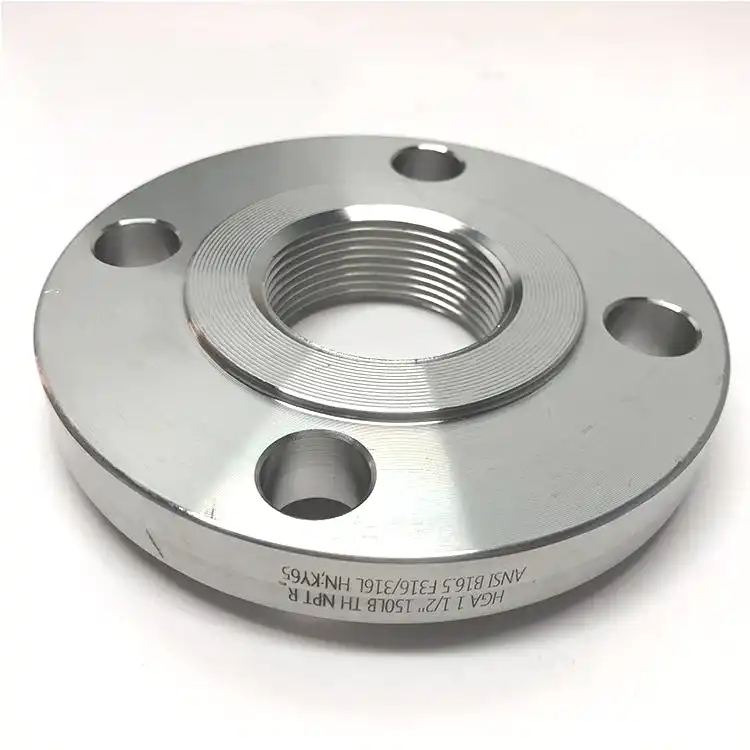
Understanding Threaded Flanges and Their Core Advantages
There is always pressure on industrial piping networks to find a balance between efficiency and flexibility. As system needs change and repair plans get tighter, the way pipes are connected becomes more and more important to the operation's success.
Why Threaded Connections Matter in Modern Piping
Threaded Flanges are a big change from parts that are permanently welded to mechanical links that keep the system flexible. These parts are made to meet widely known standards like ASME B16.5, EN 1092-1, DIN, JIS B2220, and GOST. They use tapered threads, usually NPT according to ASME B1.20.1, to make reliable seals by interfering with metals instead of fusion welding. This way of joining things mechanically gets rid of heat-affected zones that can ruin the qualities of materials in important situations. Reversibility is at the heart of the value offer. Threaded Flange joints can be taken apart and put back together with standard wrenches, while soldered connections need to be cut and ground apart to be removed. This feature is very useful in pilot plants, test loops, and temporary sites where the configuration changes a lot during the commissioning process.
Operational Efficiency Through Modular Design
Installation speed makes a real difference in how long a job takes to finish. Field experience shows that Threaded Flange connections cut the time needed to put something together by 40 to 60 percent compared to bonded ones. Lack of welding tools, cooling periods, x-ray inspection, and post-weld heat treatment speeds up project finish and lowers labor costs. This flexible method works just as well for maintenance tasks. When valves need to be serviced, instruments need to be calibrated, or system parts need to be replaced, techs can separate areas without affecting the pipes next to them. This focused maintenance feature cuts down on production stops as much as possible in businesses that use continuous processes, where unexpected shutdowns cost a lot of money.
Technical Insights: Design, Materials, and Installation
Knowing the technical details of Threaded Flange connections helps you make smart purchasing choices that match the chosen parts to the real working conditions.
Thread Types and Pressure Class Compatibility
In North America, NPT threads are most common. They have a 60-degree thread angle and a 1:16 taper rate, which makes an interference fit as the link gets tighter. In places that follow ISO norms, BSPT threads do similar things. Pressure levels range from Class 150 to Class 2500 according to ASME B16.5 and from PN6 to PN160 in Europe according to EN 1092-1. Sizes available range from DN15 to DN5000, but most practical uses are below NPS 4, which is where threading is still physically possible. Threaded Flange joints can only handle a certain amount of pressure because the wall thickness is thinner at the thread roots. The 150 and 300 class grades are good for most low to moderate pressure uses in plumbing, water treatment, and small industrial gas systems. Higher grades are needed for certain hydraulic systems and instrument links because small diameters keep stress from building up on the threaded engagement.
Material Selection for Durability and Corrosion Resistance
There are affordable carbon steel choices, such as ASTM A105, that can be used in non-corrosive settings with temperatures ranging from -29°C to 427°C. Stainless steel types, especially ASTM A182 F304 and F316, can handle temperatures up to 538°C and don't rust in chemical processing, marine uses, or food-grade systems. Different types of alloy steel are used in harsh environments that need stronger mechanical qualities or specific chemical protection. Quality-assured goods like Threaded Flanges come with material traceability paperwork, which gives procurement teams mill test results and heat numbers that meet the quality assurance standards of the project. This paperwork is very important for governmental audits and the basis for programs that plan for preventative upkeep.
Installation Best Practices for Leak-Free Performance
The first step in a proper fitting is to check the threads to make sure they are clean, undamaged, and free of any burrs or other dirt. Using the right thread sealant, like PTFE tape or pipe dope that is compatible with the media being sent, makes sure the seal stays strong without being too tight, which could crack the flange body. Specifications for torque depend on the size and pressure class, but in general, you should hand-tighten and then use a wrench to make turns that are estimated to fully engage the threads without going over the material's yield strength. Different types of gaskets and closing needs can be met by configurations with raised faces and flat faces. Before the system is turned on, hydrostatic pressure testing makes sure that the joints are solid. This gives you peace of mind that the links will work well for as long as they are used.
Comparing Threaded Flanges with Other Flange Types
In order to choose the best flange type, you need to know how the different connection methods affect performance.
Installation Complexity and Structural Performance
Weld neck flanges offer better structural stability because their curved hub designs spread stress evenly into the pipes next to them. This shape works for higher pressures and dynamic loads, but it needs trained welders, x-ray inspection, and maybe even heat treatment after the welding process. Welded parts are solid, which makes it harder to make changes in the future. Slip-on flanges make installation easier and take less welding skill than weld neck versions, but they still need to be welded together, which means you need a hot work permit and to follow inspection rules. Lap joint flanges have short ends and backing flanges attached to them. This lets the flange rotate so that the bolt holes are lined up correctly while keeping expensive alloys away from direct process contact.
Total Cost of Ownership Analysis
Threaded Flanges usually have the same or slightly higher initial component costs as slip-on versions, but they are still less expensive than weld neck versions. The big difference in costs shows up during installation and upkeep over the course of the product's life. Getting rid of the need for welding workers, inspection fees, and hot work planning cuts installation costs by 30 to 50 percent in most cases. Even more, the costs of maintenance favor Threaded Flange links. It could take 8 to 12 hours to replace a single valve that needs the soldered lip to be taken off. This includes cutting, grinding, welding, and inspecting. With simple tools, the same job can be done in one to two hours with Threaded Flanges. When you multiply this level of efficiency by decades of system operation, you get huge saves that are much bigger than the differences in the original purchase prices.
Procurement Considerations for Threaded Flanges
Negotiating prices is only one part of successful procurement. Other parts include quality oversight, a reliable supply chain, and expert help throughout the lifecycle of a project.
Supplier Credentials and Manufacturing Standards
Manufacturers with a good reputation keep certificates that show they follow international quality management systems. As part of a single quality control system, production centers should be able to forge, heat treat, precise machine, and test their products. This vertical integration makes sure that the dimensions are always the same and that the mechanical features meet or go beyond what is written in the specs. Quality-assured goods usually come with documentation packages that have material certificates, dimensional inspection reports, and pressure test records. These papers give buying teams clear proof that they are following the project requirements and legal requirements. When suppliers spend money on full testing equipment that can do spectrographic analysis, mechanical testing, and non-destructive examination, it shows that they care more about product quality than just meeting minimum standards.
Delivery Reliability and After-Sales Support
Project schedules depend on knowing when parts will be available at times that are consistent with building goals. Schedule risk is kept to a minimum when suppliers keep enough stock of standard sizes and offer acceptable lead times for custom designs. Project managers can change their plans before problems happen when there is clear information about the state of production and early warning of possible delays. Respondent technical support answers questions about installation in the field, worries about material suitability with Threaded Flange, and gives application-specific advice. This turns suppliers into partners instead of sellers. This connection is especially helpful during the commissioning phase, when problems can come up out of the blue and need quick technical advice.
Customization and Bulk Ordering Advantages
Standard catalog items can be used for many things, but for more complicated jobs, they may need different sizes, different materials, or different pressure-temperature values. Manufacturers who have their own engineering departments can make custom solutions that meet exact requirements without having to wait too long for them to be made. When you buy in bulk, you can take advantage of economies of scale by optimizing production runs, lowering the cost of handling each unit, and setting prices that are fair. Requesting samples lowers the risk by letting you check the size and physical condition of the item before agreeing to the full order quantity. This is especially smart when adding new sources or asking for non-standard setups, as dimensional errors can have a big impact on how well the assembly goes.
Practical Case Studies and Industry Use Scenarios
Real-life examples show how Threaded Flange links can be used to solve specific practical problems in a wide range of industries.
Water Treatment Infrastructure Modernization
Corrosion caused problems in old galvanized delivery networks that served private areas for a local water authority. Welded replacement methods removed protected zinc coatings, making new places where rust could start, which decreased the service life. Changing from welded to Threaded Flange connections kept the galvanization intact during repairs and cut installation time by 55% compared to welded options. The ability to disassemble without damaging it made future upkeep easier. This increased the system's lifespan and lowered its total cost of ownership.
Chemical Processing Plant Safety Enhancement
Instrument air line changes had to be made in classified dangerous areas of a petrochemical plant that processed volatile organic chemicals. In the past, welding procedures required complicated hot work permits, constant tracking of the atmosphere, and production stops during installation. By specifying Threaded Flange connections, all sources of fire were taken away, which allowed repair to happen during normal operations without putting safety at risk. Installation time was cut by 60%, and the plant escaped losing more than $300,000 in production that would have happened when the system had to be shut down.
Modular Pilot Plant Flexibility
A pharmaceutical company uses pilot-scale tools to try different ways to make new drugs while the products are being developed. As process factors change through iterative optimization, system setups change all the time. Threaded Flanges are used all over the test plant so that it can be quickly reconfigured without having to permanently change expensive specialized equipment. Engineers think that this level of flexibility cuts the time it takes to build each product by three to four months. This directly leads to competitive market benefits and faster revenue growth. HONG KAI FORGING has provided industry clients on all continents with precision-made parts that meet strict quality standards. As a way to narrow down the choices of suppliers, purchasing managers always look for reliable shipping schedules, detailed documentation, and quick expert help. From forging raw materials to final testing, the company's combined production skills make sure that the quality is always the same, and that it works well in a wide range of difficult situations.
Conclusion
Threaded Flange connections are better for industrial pipe systems that need to be easy to maintain, quick to install, and able to work in dangerous places. The mechanical joining method gets rid of the problems that come with welding while keeping the purity of the material and the protection coatings that are important for long-term performance. Total ownership economics studies strongly support Threaded Flange solutions in the right pressure ranges, especially when upkeep costs over the life of the product are properly taken into account. To be successful at procurement, you need to choose qualified providers who offer certified products, thorough paperwork, and reliable delivery that fits with project schedules. When engineering teams know about technical specs, best installation practices, and the limits of an application, they can safely choose Threaded Flange components when operating needs match their natural abilities.
Frequently Asked Questions
1. Can threaded connections handle high-pressure applications safely?
When used in normal industrial settings, Threaded Flanges generally work within their rated pressure classes, which are usually Class 150–600. When properly placed NPT threads interact mechanically, they make seals that work well for pressures up to 2500 PSI in smaller diameters where stress concentrations are still doable. Weld neck flanges are usually better for higher pressure systems than Class 600 because they better distribute stress through continuous hub designs. When choosing link types for important services, application-specific engineering review should look at things like working pressure, temperature, cyclic loads, and vibration.
2. What are typical delivery timelines for bulk threaded flange orders?
Standard size ranges that meet ASME B16.5 and EN 1092-1 standards usually ship within 3–4 weeks from well-known makers who keep stock. Custom setups that need special materials, non-standard sizes, or different pressure ratings may make wait times 6 to 8 weeks longer, based on when the parts are made and how long it takes to get the materials. When you place an order for more than 500 units, you can get dedicated production runs that make the manufacturing process more efficient while keeping delivery promises in line with building goals.
Partner with HONG KAI FORGING for Your Threaded Flange Requirements
HONG KAI FORGING has been making high-quality products for decades and has a wide range of skills, including forging, heat treatment, precision cutting, and strict quality testing. Our combined facilities are in Dingxiang County, which is known as the forging hub of Shanxi Province. They make Threaded Flange parts that meet ASME, EN, DIN, JIS, and GOST standards for industry markets around the world. Our goods are used in industry, water treatment, chemical processing, oil and gas, and other fields in North America, Europe, and Asia. They have been shown to work well in tough situations. The procurement teams appreciate our material certifications, accurate measurements, and dependable supply plans that help projects succeed from the planning stages to the final commissioning. Email our technical team at kevin.zhao@hkflange.com to talk about your unique needs, ask for product samples, or get full quotes from a reliable Threaded Flange manufacturer that cares about quality and customer happiness. You can look through our full product list at hkflange.com and learn how our engineering skills can help with your building projects.
References
1. American Society of Mechanical Engineers. "Pipe Flanges and Flanged Fittings: NPS 1/2 Through NPS 24 Metric/Inch Standard." ASME B16.5-2020.
2. European Committee for Standardization. "Flanges and Their Joints - Circular Flanges for Pipes, Valves, Fittings and Accessories, PN Designated - Part 1: Steel Flanges." EN 1092-1:2018.
3. Becht Engineering. "Comparative Analysis of Flange Connection Methods in Process Piping Systems." Journal of Pressure Vessel Technology, Volume 142, 2020.
4. National Association of Corrosion Engineers. "Material Selection and Corrosion Control for Threaded Connections in Industrial Piping." NACE International Publication, 2019.
5. Hydraulic Institute. "Installation and Maintenance Best Practices for Mechanical Pipe Connections in Industrial Fluid Systems." Hydraulic Institute Standards, 2021.
6. Industrial Piping Solutions Consortium. "Total Cost of Ownership Modeling for Flange Selection in Chemical Processing Applications." Process Engineering Technical Report Series, 2022.
Clear Communication, and Reliable Technical Support