- English
- French
- German
- Portuguese
- Spanish
- Russian
- Japanese
- Korean
- Arabic
- Greek
- German
- Turkish
- Italian
- Danish
- Romanian
- Indonesian
- Czech
- Afrikaans
- Swedish
- Polish
- Basque
- Catalan
- Esperanto
- Hindi
- Lao
- Albanian
- Amharic
- Armenian
- Azerbaijani
- Belarusian
- Bengali
- Bosnian
- Bulgarian
- Cebuano
- Chichewa
- Corsican
- Croatian
- Dutch
- Estonian
- Filipino
- Finnish
- Frisian
- Galician
- Georgian
- Gujarati
- Haitian
- Hausa
- Hawaiian
- Hebrew
- Hmong
- Hungarian
- Icelandic
- Igbo
- Javanese
- Kannada
- Kazakh
- Khmer
- Kurdish
- Kyrgyz
- Latin
- Latvian
- Lithuanian
- Luxembou..
- Macedonian
- Malagasy
- Malay
- Malayalam
- Maltese
- Maori
- Marathi
- Mongolian
- Burmese
- Nepali
- Norwegian
- Pashto
- Persian
- Punjabi
- Serbian
- Sesotho
- Sinhala
- Slovak
- Slovenian
- Somali
- Samoan
- Scots Gaelic
- Shona
- Sindhi
- Sundanese
- Swahili
- Tajik
- Tamil
- Telugu
- Thai
- Ukrainian
- Urdu
- Uzbek
- Vietnamese
- Welsh
- Xhosa
- Yiddish
- Yoruba
- Zulu
What Is a Blind Flange and How Does It Seal Pipe Ends Professionally
A Blind Flange is a solid disc part that doesn't have a center hole. Its only job is to completely seal pipe ends or vessel gaps. Unlike normal flanges, which let flow through, this specially made piece completely blocks flow and stops fluid from leaking. These solid plates are made to meet foreign standards like ASME B16.5, ASME B16.47, EN 1092-1, and JIS B2220. They close well at pressures from PN6 to PN160 and in sizes from DN15 to DN5000. These parts are used by people in the petrochemical, water treatment, and power generation industries to temporarily disconnect pipes during repair or permanently connect pipes in important building projects.
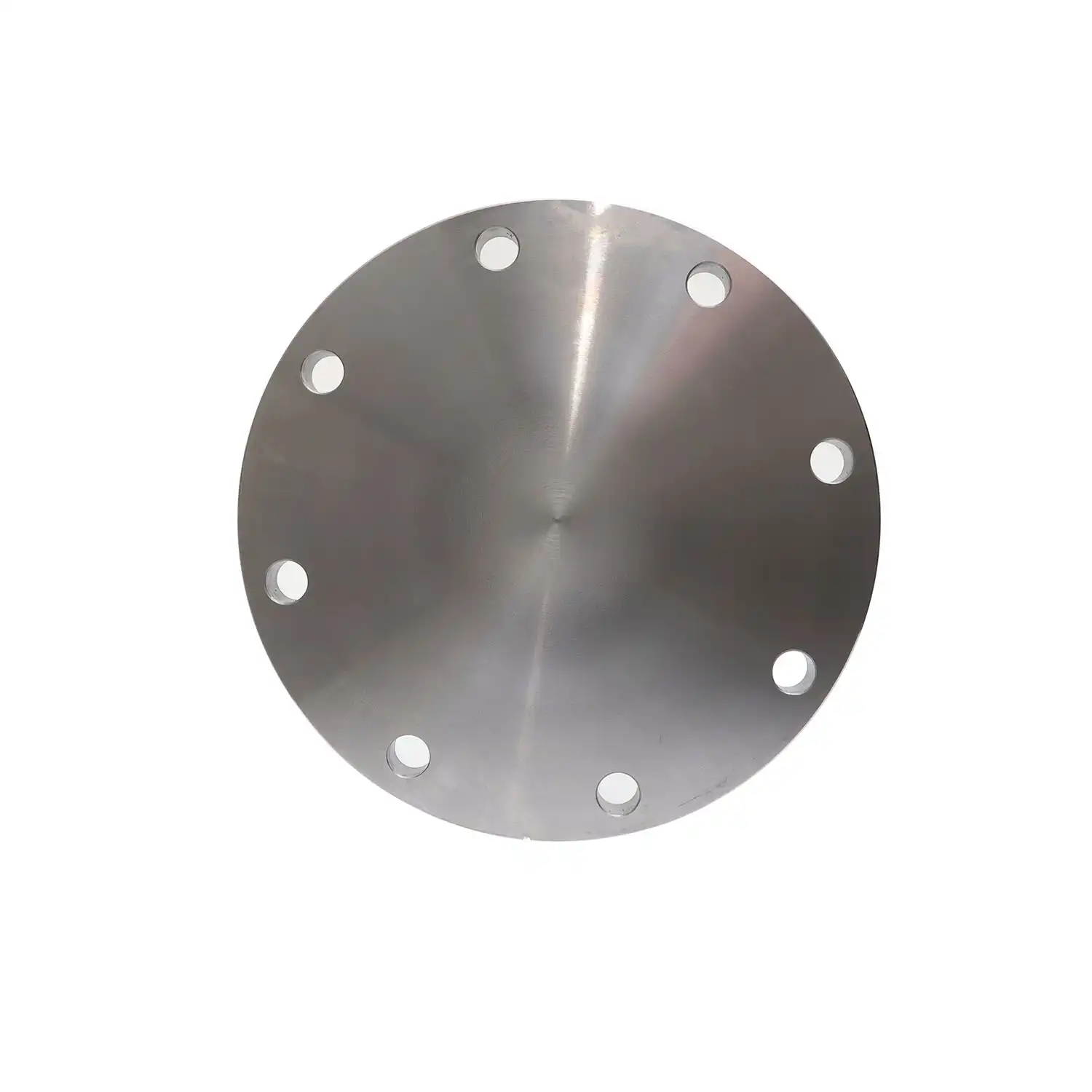
Understanding Blind Flanges: Definition and Core Functions
Primary Functions in Industrial Systems
These end parts are used for more than one thing in pipe networks. During planned maintenance shutdowns, they separate certain parts so that they can be safely inspected and cleaned without letting the pressure out of the whole system. For hydrostatic testing to work, these rigid plates have to be able to handle the full internal pressure while checking the stability of the system. Because they are removable, they will be useful for future growth projects because they will save money on cutting and rewelding costs when pipeline lines need to be extended.
Material Selection Criteria
Materials determine Blind Flange's long-term process fluid efficiency and stability. Cheap carbon steel works effectively in many industrial contexts. They resist rusting poorly. 304 and 316L stainless steels excel in corrosive chemical processes and marine systems. Refineries and thermal power plants use alloy steel compositions that can withstand high temperatures. Duplex stainless steel is stronger and better at resisting chloride stress corrosion for offshore platforms and marine application.
International Standards and Pressure Ratings
Following well-known manufacturing standards guarantees accurate measurements and good mechanical performance. For sizes up to DN600, ASME B16.5 sets the rules for designs from Class 150 to Class 2500. For larger widths from DN650 to DN5000, ASME B16.47 sets the rules for designs from Class 150 to Class 900. In Europe, systems follow EN 1092-1 guidelines for PN6 to PN160 pressure classes, and in Japan, industrial projects use JIS B2220 for 10K to 40K grades. Each standard has specific requirements for thickness, the order of bolt holes, and the shape of the facing. These all have an effect on how well the seal seats and stops leaks.
How Does a Blind Flange Seal Pipe Ends Professionally?
Engineering Design Elements
To keep the thickness estimate from deforming under internal pressure, strict mechanical rules are used. When the system pressure hits the flat surface, it creates big moments of bending that would make thinner plates bend or break. To find the right thickness, engineers use methods from ASME standards that take into account the pressure class, the material qualities, and the diameter. Plates that can handle higher pressures need to be proportionally larger. This is why Class 1500 and Class 2500 versions seem to be much more durable than Class 150 versions. Some makers add hub strengthening to the back of high-pressure units to make them more rigid without adding too much weight.
Gasket Selection and Surface Finish
To make links that don't leak, the types of Blind Flange faces and seal materials must be perfectly matched. In general, gaskets below 400°C can be spiral wound or flat sheet when the face is raised. Precision-machined holes in Ring Type Joint faces hold metal ring gaskets that deform under bolt load to make high-integrity seals in harsh circumstances. The machined finish design, which is usually made up of spiral or concentric serrations, creates tiny valleys that help seals conform while stopping them from moving during heat cycles. Procurement professionals should make sure that measures of the surface finish meet MSS SP-6 standards, since broken serrations make sealing less effective no matter how good the gasket is.
Installation Best Practices
When designed parts are put together correctly, they become effective sealed systems. Bolt tightening is done in a star design, with several passes that make the process more steady than torquing each bolt to full specification all at once. This method evenly compresses the seal, stopping over-compression in one area that would otherwise lead to failure. To get the right torque values, you need to meet the bolt material grades, flange pressure class, and gasket maker suggestions. It is more accurate to use measured torque wrenches instead of impact tools, which is especially important when working with materials that are prone to stress corrosion cracking. Some common fitting mistakes are using the same compressed gaskets more than once, using different types of bolts in the same connection, and not cleaning the flange sides properly before putting them together.
Comparing Blind Flanges with Other Flange Types: Making the Right Choice
Structural Comparison with Connection Flanges
Weld neck flanges have hubs that are curved and fit smoothly into pipe walls. This makes them good for high-pressure dynamic systems because they spread load out well. Because they only have one fillet weld, slip-on versions are weaker because they are harder to line up during assembly. Threaded types don't need to be welded for small-bore low-pressure lines that are often taken apart. Lap joint designs let the flange rotate after the stub ends are welded, which makes it easier to line up the bolt holes. The solid disc form, on the other hand, is only used for closure and not connection, so it has to handle very different mechanical loads. Because of this basic difference, the width standards are very different for blind and through-bore versions of the same pressure class.
Material Performance Considerations
Carbon steels function well for general industries when fluid temperature is below 425°C. They are useful for large operations with many pipes since they are affordable. Stainless steel costs more but lasts longer in corrosive environments, so it's changed less frequently. Lifecycle cost study favours steel materials, despite their higher initial cost. This is particularly true when calculating downtime costs from early issues. Some acids can't destroy chromium, molybdenum, and nickel alloys. This requires precise material chemistry and process conditions matching. Procurement managers should request chemical and mechanical test reports, especially for the Blind Flange, to ensure the materials fulfil project requirements.
Standard Selection and Gasket Compatibility
The ASME B16.5 measurements make sure that they can be used in both North American and foreign projects that use imperial measures. Compliance with EN 1092-1 is good for European sites that need metric measurements and a different way of writing pressures. Even though these standards do similar things, they use different bolt hole numbers, face sizes, and thickness estimates to keep them from mixing. Choosing the right gasket depends on the type of face. For example, a raised face, a flat face, or a Ring Type Joint needs a different gasket shape. Mixing combinations that don't work together leads to leaks right away, no matter how well the fitting was done. Buyers of parts from other countries should be very clear about both the normal size and the type of face they want so they don't make mistakes that cost a lot of money.
Procurement Guide for Blind Flanges: How to Source and Buy Efficiently
Identifying Qualified Suppliers
Reliable makers show that they can do a wide range of tasks, including casting, heat treating, cutting, and checking the quality. Integrated production centers keep their tolerances tighter than businesses that use a lot of different suppliers. Buyers should make sure that possible providers have the right licenses, such as ISO 9001 for quality management and, if necessary, API, CE, or PED approvals for pressure equipment. Ask for proof of systems that can connect the heat numbers of finished goods to the heat numbers of raw materials. This will allow for an analysis if problems happen in the field. This integrated method is shown by Shanxi HongKai Forging, which has three separate workplaces in Dingxiang County, China, that handle every step of the manufacturing process, from forging to final packaging.
Specification Development and Quote Requests
Misunderstandings that cause supplies to be late or materials that don't meet standards can be avoided by giving clear specs. Technical buyers should list the standard reference, minimum size, pressure number, material grade, face type, and any other needs, like measurement taps or materials that aren't standard, for the Blind Flange. Suppliers can offer volume-based price structures when they include expected yearly quantities. When asking for prices, make sure the breakdown shows the different costs of materials, production, testing, and shipping. This openness makes it easier to compare bids from different companies and finds ways to save money by making changes to the specifications that don't affect performance.
Evaluating Cost Factors
Prices are affected by more than just the cost of materials. Unit prices go up by the same amount as the diameter because bigger sizes need more raw materials and more time to be machined. Higher pressure classes need forgings that are thicker and have tighter control over tolerances, which makes the manufacturing process more complicated. Exotic metals are much more expensive than carbon steel; for some types, the price difference can be over 300%. Order numbers have a big effect on per-unit costs. Usually, better pricing is achieved by combining needs into fewer, bigger buy orders rather than many small releases. Buyers who are in charge of projects that will last more than one year should look into blanket orders with planned releases. This will help them get better prices and keep their inventory flexible.
Conclusion
In conclusion, when industry buyers understand the technical characteristics, sealing functions, and procurement considerations of Blind Flange components, they can make informed decisions that improve system reliability and control project costs. Blind Flange products are essential in petrochemical, power generation, and water treatment facilities because they provide leak-proof pipeline termination while allowing convenient access for future system modifications. Selecting suitable materials and complying with international manufacturing standards ensures long-term performance under demanding operating conditions. By adopting strategic procurement methods focused on supplier capability evaluation, detailed specification development, and comprehensive quality documentation, buyers can reduce sourcing risks and achieve competitive pricing for both small-scale and large-volume Blind Flange orders.
FAQ
1. What distinguishes a blind flange from a standard flange?
Standard flanges have center bores that let fluid flow between pipes that are joined, but these solid versions don't have any holes at all and only serve to stop flow and seal pipe ends or vessel openings completely.
2. Can these components handle high-pressure applications safely?
Their shape makes them perfect for high-pressure work as long as they are made to the right thickness standards. ASME standards figure out the needed thickness based on the pressure number. Class 1500 and Class 2500 versions can handle pressures higher than 2500 psi by making the material thicker.
3. When should RTJ facing be specified instead of raised face?
Ring Type Joint configurations work well in situations with pressures higher than Class 600 or temperatures higher than 400°C. Oval or triangular ring gaskets make a metal-to-metal seal that stays strong even when the temperature changes, which would cause soft gaskets to fail.
Partner with HONG KAI FORGING for Reliable Blind Flange Supply
HONG KAI FORGING has been making things for decades and can help procurement workers who need reliable pipe termination options. Our combined production center in Shanxi Province does all of its testing, forging, heat treatment, and precision machining under one roof. This makes sure that the quality is the same at every stage of production. We make parts that meet ASME B16.5, ASME B16.47, EN 1092-1, JIS B2220, DIN, and GOST standards. The pressure ratings range from PN6 to PN160, and the sizes range from DN15 to DN5000. The materials used are carbon steel, stainless steel, and special alloys. As an established Blind Flange manufacturer serving European and American markets, we provide complete material traceability, certified test paperwork, and quick expert help throughout the entire lifecycle of your project. Contact our engineering team at kevin.zhao@hkflange.com or visit hkflange.com to discuss your specific requirements and receive detailed quotations tailored to your procurement parameters.
References
1. ASME B16.5-2020, Pipe Flanges and Flanged Fittings: NPS 1/2 through NPS 24 Metric/Inch Standard, American Society of Mechanical Engineers, New York.
2. ASME B16.47-2017, Large Diameter Steel Flanges: NPS 26 Through NPS 60 Metric/Inch Standard, American Society of Mechanical Engineers, New York.
3. EN 1092-1:2018, Flanges and Their Joints - Circular Flanges for Pipes, Valves, Fittings and Accessories, PN Designated - Part 1: Steel Flanges, European Committee for Standardization, Brussels.
4. Bickford, John H., and Nassar, Sayed, Handbook of Bolts and Bolted Joints, Marcel Dekker Inc., New York, 1998.
5. Nayyar, Mohinder L., Piping Handbook, Seventh Edition, McGraw-Hill Professional, New York, 1999.
6. Waters, E.O., et al., Formulas for Stress and Strain, Fifth Edition, McGraw-Hill Book Company, New York, 1987.
Clear Communication, and Reliable Technical Support