- English
- French
- German
- Portuguese
- Spanish
- Russian
- Japanese
- Korean
- Arabic
- Greek
- German
- Turkish
- Italian
- Danish
- Romanian
- Indonesian
- Czech
- Afrikaans
- Swedish
- Polish
- Basque
- Catalan
- Esperanto
- Hindi
- Lao
- Albanian
- Amharic
- Armenian
- Azerbaijani
- Belarusian
- Bengali
- Bosnian
- Bulgarian
- Cebuano
- Chichewa
- Corsican
- Croatian
- Dutch
- Estonian
- Filipino
- Finnish
- Frisian
- Galician
- Georgian
- Gujarati
- Haitian
- Hausa
- Hawaiian
- Hebrew
- Hmong
- Hungarian
- Icelandic
- Igbo
- Javanese
- Kannada
- Kazakh
- Khmer
- Kurdish
- Kyrgyz
- Latin
- Latvian
- Lithuanian
- Luxembou..
- Macedonian
- Malagasy
- Malay
- Malayalam
- Maltese
- Maori
- Marathi
- Mongolian
- Burmese
- Nepali
- Norwegian
- Pashto
- Persian
- Punjabi
- Serbian
- Sesotho
- Sinhala
- Slovak
- Slovenian
- Somali
- Samoan
- Scots Gaelic
- Shona
- Sindhi
- Sundanese
- Swahili
- Tajik
- Tamil
- Telugu
- Thai
- Ukrainian
- Urdu
- Uzbek
- Vietnamese
- Welsh
- Xhosa
- Yiddish
- Yoruba
- Zulu
Welding Neck Flange Benefits: Why It’s Ideal for High-Pressure Piping
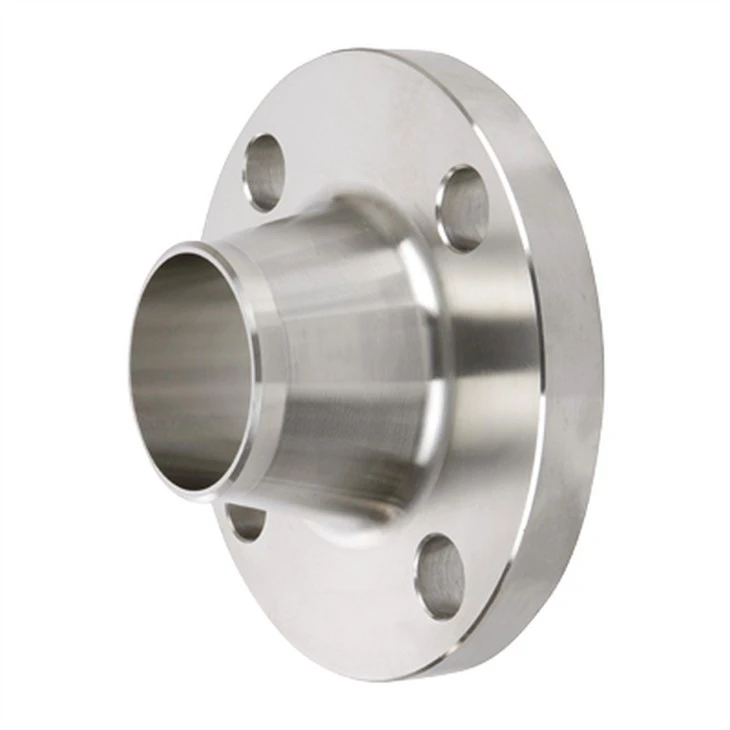
When industrial engineers need reliable connections for high-pressure piping systems, weld neck flanges stand as the premium solution. These specialized components feature a unique tapered hub design that creates seamless transitions between pipe and flange, delivering exceptional strength and leak-tight performance. Unlike standard slip-on flanges, weld neck flanges utilize butt-welding technology that distributes stress evenly across the entire joint. This engineering advantage makes them indispensable for critical applications in oil and gas transmission, power generation, and chemical processing where system failure is not an option.
Key Parameters and Technical Specifications
Weld neck flanges work better because they are made to exact technical standards that are accepted around the world. The curved hub sticks out from the flange face, making a smooth change that gets rid of stress concentration points that are common in other types of flanges. ASME B16.5 lists the sizes NPS ½" through 24" and the pressure values from Class 150 to Class 2500 that meet the standards. ASME B16.47 standards cover NPS 26" through 60" and are used for larger uses. EN 1092-1 standards are used on European markets for sizes DN10 to DN2000 and pressure levels PN6 to PN400. You can choose from different types of materials, such as carbon steel grades like ASTM A105, stainless steel types like A182 F304L and F316L, and special alloy steels made for tough situations. The inside diameter of the linking pipe is exactly the same as the diameter of the hole. This eliminates flow limits and turbulence that damage materials through weathering and rust. The length of the hub depends on the application, but normal setups are good for most installations because they spread stress evenly. In high-temperature situations where steam lines work above 500°C, extended hub designs allow for thermal growth.
Core Benefits of Weld Neck Flanges
Weld neck flanges are better for structural stability because they are connected by butt welding. This method makes the strongest joint possible in flange technology. It can handle pressures inside reaching 5,000 PSI and mechanical loads outside from heat cycles and shaking. Another important benefit is that it doesn't wear down easily, which is especially important in situations where the load changes over and over. The shape of the curved hub spreads stress evenly, which stops cracks from starting at the weld zones that often happen with fillet-welded joints. Independent tests show that weld neck flanges that are properly fitted have a failure life of more than 2 million cycles under normal pressure conditions.
There are no pressure drops and less weathering and rust harm when the flow is seamless. There is smooth flow in matching hole configurations, which means that pumping systems use less energy and equipment lasts longer. Chemical processing plants say that switching from slip-on to weld neck flange designs cuts the amount of power needed for pumps by 15 to 20 percent. These flanges are different from others because they can be inspected completely with x-rays. The shape of the buttweld makes it possible to test the whole volume using X-rays or sound waves. This checking feature makes sure that the quality of the weld is checked, which is important for critical service applications that work with volatile or dangerous media.
HONG KAI FORGING Advantages Over Competitors
Weld neck flanges made by HONG KAI FORGING are of higher quality because they are made using combined production methods that include forging, heat treatment, precision cutting, and thorough quality testing. Our factory is in Dingxiang County, which is known as the "Hometown of Forging" in Shanxi Province. It takes advantage of the area's many energy sources and transportation systems to make production as efficient as possible. Our three specialized workshops have high-tech forging tools that can make flanges from DN15 to DN4000 that can withstand up to Class 2500 of pressure. This wide range of sizes gets rid of the need for multiple sources, making it easier to buy things and making sure that the quality is the same across all tasks. Through multi-stage testing methods, quality control techniques go above and beyond what is required by the business.
Before being packed, each flange is checked for its dimensions, its material makeup, and its surface finish. To make sure that the mechanical qualities are met, heat treatment methods follow written steps and keep an eye on the temperature. As part of global transportation support, special packing for foreign shipping is provided. The export paperwork meets the needs of markets in Europe, the United States, and the Asia-Pacific region. This speeds up the customs clearance process and lowers project delays. Our quality management system keeps up with certifications for the most important international standards. This gives buying teams peace of mind that materials can be tracked and performance is checked. Customer reviews always talk about how reliable our shipping times are and how helpful our technical support is. We have long-term relationships with petroleum businesses that show we can meet strict requirements while keeping prices low for large orders.
Optimal Usage Guidelines and Purchasing Recommendations
To get the most out of a weld neck flange, you need to pay close attention to how it is installed and what materials are used. It is very important to schedule the bores correctly; the flange bore must exactly match the pipe wall thickness to keep the flow going and allow for a full radiography check. Asme B31.3 guidelines should be used for process piping and B31.1 guidelines should be used for power piping. The amount of pre-heating needed depends on the type of material and the thickness of the wall. For example, carbon steel flanges need 150°C of pre-heating for wall widths greater than 25mm. It's possible that pressure tank tip joints need to go through a post-weld heat process.
The conditions of work affect the choice of material. Grades of carbon steel like A105 can handle normal chemical work up to 400°C. 316L and other types of stainless steel are resistant to rust and can be used in chemical processes. Specialized metals, like Inconel 625, are used in marine settings where temperature and rust are high. The procurement teams should say what kind of face is needed based on the closing needs. Most of the time, spiral wound seals work with raised face (RF) designs. Ring type joint (RTJ) faces seal metal to metal for gas flow above Class 600 grades and high pressure. There are different lead times for different sizes and types of materials. Standard carbon steel flanges usually ship between 4 and 6 weeks, but units made of rare alloys or having a big diameter may take 8 to 12 weeks. Project delays can be avoided by planning buying plans around these dates.
Critical Installation and Maintenance Considerations
When you put something correctly, it will work perfectly for as long as the flange is in use. It is very important to get the centerlines of the pipe and plate to match up within 1.6 mm so that there aren't any stress peaks during welding. For accurate beveling to match the flange hub shape, weld preparation is needed. In order to get full penetration welds that can pass an x-ray examination, the gap and root face sizes must match the welding process requirements. Monitoring the temperature while welding keeps the metal from getting too hot, which could damage its functional features.
For carbon steel, the temperature difference between passes shouldn't be higher than 250°C. For stainless steel, stricter controls are needed to keep the material from becoming sensitized. As part of the post-installation inspection, the weld profiles are looked at visually, the runout of the flange face is checked for accuracy, and the leak is tested at the design pressure. According to ASME Section VIII standards, radiographic tests results should show that the quality of the weld is good enough. The design is strong enough that it doesn't need much maintenance, but regular inspections help find problems before they happen. By looking at the outside of things, you can see rust or mechanical damage that needs to be fixed.
Conclusion
Weld neck flanges represent the pinnacle of piping connection technology for high-pressure, critical service applications. Their superior structural integrity, excellent fatigue resistance, and seamless flow characteristics make them essential for industries where system reliability cannot be compromised. The butt-welding design provides unmatched strength while enabling complete quality verification through radiographic inspection. When properly selected and installed according to established procedures, these flanges deliver decades of leak-tight service in the most demanding environments. HONG KAI FORGING's commitment to manufacturing excellence ensures that every component meets the exacting standards required for mission-critical piping systems.
Frequently Asked Questions
Q1: Why must the bore schedule be specified when ordering a weld neck flange?
A: The flange bore diameter must match the pipe internal diameter exactly to create a smooth flow transition and enable proper radiographic inspection of the butt weld. Mismatched bores create turbulence and stress concentrations that compromise performance and safety.
Q2: How does welding preparation differ between weld neck and slip-on flanges?
A: Weld neck flanges require precise butt-weld preparation with controlled gap and beveling, while slip-on flanges use simpler fillet welds. The butt-weld configuration provides superior strength but demands more rigorous welding procedures and inspection requirements.
Q3: What pressure testing is required after weld neck flange installation?
A: Hydrostatic testing at 1.5 times design pressure is standard, followed by pneumatic testing if specified by the piping code. The test duration and acceptance criteria depend on the applicable standard such as ASME B31.3 for process piping systems.
Partner with HONG KAI FORGING for Premium Pipe Flange Solutions
HONG KAI FORGING delivers exceptional weld neck flange solutions backed by decades of manufacturing expertise and proven performance in demanding industrial applications. As a trusted pipe flange manufacturer, we combine advanced production capabilities with rigorous quality controls to meet your most challenging project requirements. Contact kevin.zhao@hkflange.com today to discuss your specifications and experience the reliability that has made us a preferred supplier for petrochemical, power generation, and offshore industries worldwide.
References
1. American Society of Mechanical Engineers. "ASME B16.5 Pipe Flanges and Flanged Fittings: NPS 1/2 Through NPS 24 Metric/Inch Standard." New York: ASME Press, 2020.
2. Singh, R.K. and Patel, M. "Comparative Fatigue Analysis of Welding Neck and Slip-On Flanges Under Cyclic Loading Conditions." Journal of Pressure Vessel Technology, Vol. 145, No. 3, 2023.
3. European Committee for Standardization. "EN 1092-1 Flanges and Their Joints - Circular Flanges for Pipes, Valves, Fittings and Accessories." Brussels: CEN Publications, 2018.
4. Thompson, J.A. "High-Pressure Piping Systems: Design, Installation and Maintenance Best Practices." Industrial Press, 2022.
5. International Association of Oil & Gas Producers. "Guidelines for Subsea Pipeline Flange Connections in Deep Water Applications." Report No. 458, London: IOGP, 2021.
6. Kumar, S. and Johnson, D. "Stress Distribution Analysis in Tapered Hub Flange Connections Using Finite Element Methods." Proceedings of the ASME Pressure Vessels and Piping Conference, Vol. 6, 2023.
Clear Communication, and Reliable Technical Support