- English
- French
- German
- Portuguese
- Spanish
- Russian
- Japanese
- Korean
- Arabic
- Greek
- German
- Turkish
- Italian
- Danish
- Romanian
- Indonesian
- Czech
- Afrikaans
- Swedish
- Polish
- Basque
- Catalan
- Esperanto
- Hindi
- Lao
- Albanian
- Amharic
- Armenian
- Azerbaijani
- Belarusian
- Bengali
- Bosnian
- Bulgarian
- Cebuano
- Chichewa
- Corsican
- Croatian
- Dutch
- Estonian
- Filipino
- Finnish
- Frisian
- Galician
- Georgian
- Gujarati
- Haitian
- Hausa
- Hawaiian
- Hebrew
- Hmong
- Hungarian
- Icelandic
- Igbo
- Javanese
- Kannada
- Kazakh
- Khmer
- Kurdish
- Kyrgyz
- Latin
- Latvian
- Lithuanian
- Luxembou..
- Macedonian
- Malagasy
- Malay
- Malayalam
- Maltese
- Maori
- Marathi
- Mongolian
- Burmese
- Nepali
- Norwegian
- Pashto
- Persian
- Punjabi
- Serbian
- Sesotho
- Sinhala
- Slovak
- Slovenian
- Somali
- Samoan
- Scots Gaelic
- Shona
- Sindhi
- Sundanese
- Swahili
- Tajik
- Tamil
- Telugu
- Thai
- Ukrainian
- Urdu
- Uzbek
- Vietnamese
- Welsh
- Xhosa
- Yiddish
- Yoruba
- Zulu
What Makes Threaded Flange Ideal for Small-Bore Pipe Systems?
Because their NPT threads match the pipe's exterior threads, Threaded Flanges are ideal for small-bore pipe systems. Mechanical connections reduce 40–60% of installation time and maintain galvanised line protection coatings by not welding. Screwed design minimises pipe-damaging heat zones. Systems that handle hazardous fluids or operate in dangerous places with few hot-work permits require this. Water treatment facilities, chemical manufacturers, and low-pressure gas transportation networks employ them. Sizes vary from NPS ½" to 24" with 150-2500 pressure ratings.
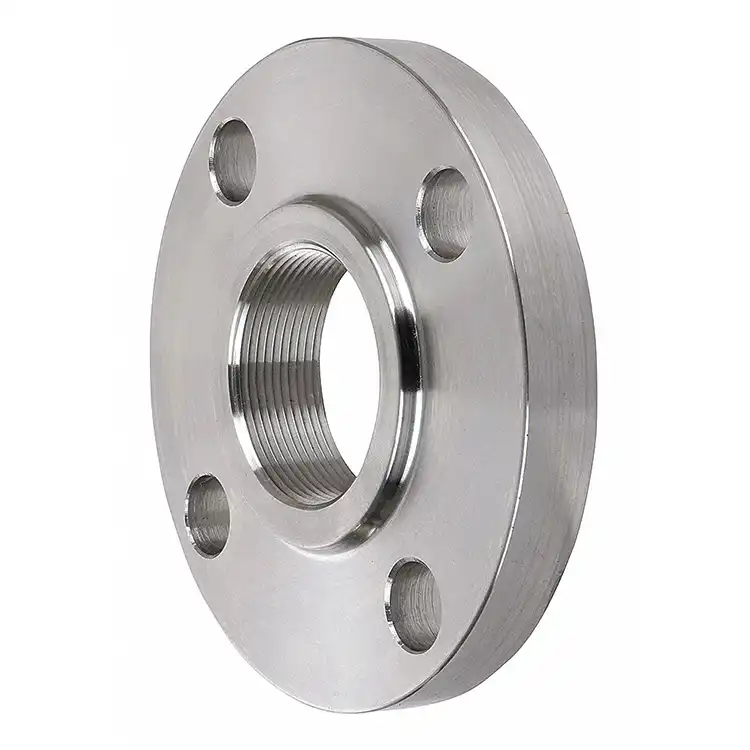
Understanding Threaded Flanges and Their Benefits for Small-Bore Pipes
How Threaded Connections Work in Practice
The tapered thread shape has crests and valleys that are smoothed and angled at 60 degrees. These crests and valleys press together during installation. As the assembly tools turn the link, the threads join more tightly, making a seal that won't leak without adding heat to the pipe system. This cold assembly method keeps the metal qualities of both the pipe and the joint the same, so there aren't any microstructural changes like there are in welding processes where heat is applied.
Material Options for Diverse Applications
HONG KAI FORGING produces Threaded Flanges from ASTM A105 carbon steel for general purpose. They employ stainless steel grades like ASTM A182 F304 and F316 for corrosive situations and alloy steels for demanding service conditions. Material selection affects temperature tolerance. Carbon steel may operate between -29°C and 538°C, depending on quality. Stainless steel variants withstand corrosion better in chemical processing environments, whereas alloy steel versions suit industrial units. Standards compliance ensures overseas projects are the same size. Threaded Flanges built to ASME B16.5 specifications (NPS ½" through 24", Class 150-600) are ideal for American pipe systems, whereas EN 1092-1 products (DN10-100, PN6-40) are appropriate for European applications. The 10K and 20K pressure values and JIS B2220 compliance fulfil Asian market demands.
Key Advantages Over Welded Alternatives
Taking away the need for welding tools during installation directly leads to lower costs and higher safety standards. It's not necessary for construction teams to have qualified welders, radiographic testing equipment, or hot-work tracking systems. All they need are normal threading tools. Getting hot-work permits often requires shutting down production or following strict safety rules that add days to project timelines. This method works especially well for projects in busy chemical plants or pipelines. When you thread galvanized pipe systems, the high temperatures that damage protective layers are avoided, so the zinc coating stays in place during the fitting process. This coating protects against early corrosion in water transport networks, fire control systems, and pipe installs. The zinc shield stays in place from the end of the pipe to the face of the flange. This protects against rust for decades without leaving any bare spots, which is what happens when you weld.
Comparing Threaded Flanges with Other Flange Types: Making the Right Choice
Weld Neck vs. Threaded: Installation Complexity Analysis
Because they gradually change from pipe to flange face, weld neck flanges are stronger for high-pressure, large-diameter uses. Because the stress is spread out well across the link, this design is better for important services above Class 600. However, the installation needs skilled welding, x-ray inspection, and often heat treatment after the weld, which adds days to the project plan for each link. Threaded options are easy to install and don't need any special tools or work. When pipe threads are machined to fit flange bores, safe connections can be made in minutes instead of hours. This cuts down on the time needed for cooling and checking. This speed advantage grows when working on projects with dozens or even hundreds of small-bore connections. This cuts down on labor costs by a large amount while still providing enough power for Class 150 through 600 uses.
Slip-On Flanges: When Simplicity Meets Limitations
Slip-on styles fit over the ends of the pipes before fillet welding holds the link in place. Because they are easier to line during assembly and cost less than weld neck designs, they are popular for moderate-pressure systems. Because of the need to weld on both the inside and outside of the flange, hot work methods and coating damage are still needed, just like with weld neck installations. Threaded Flange threaded connectors can carry Class 300 pressure in small-bore diameters without these issues. Since no heat is used, material properties remain constant. The metal changes in welded sections are prevented. Maintenance crews appreciate disassembling threaded connections without hurting them. This allows them disassemble equipment for servicing without cutting or grinding the parts, which would ruin them.
Socket Weld Considerations for Small-Bore Systems
A single fillet weld surrounds socket weld flanges, which contain a hole for pipe ends. This design produces high wear resistance and welding time savings compared to weld neck options. The fillet weld design prolongs joint life, making it ideal for fluctuating temperatures or vibrations. Screwed flanges may outperform socket welds in vibration-resistant applications if the threads are correctly engaged and sealed. Mechanically locking threads creates a robust connection that can withstand dynamic loading without weld breaking during stress cycles. In hydraulic power units and air control systems, threaded connections don't leak even when pressure fluctuates and the machine rattles.
Installation and Maintenance Guide for Threaded Flanges in B2B Settings
Step-by-Step Assembly Process
Check the pipe and flange threads first. Check for burrs, cross-threading damage, and other obstructions to contact. Clean threads using wire brushes and solvent to remove preservative coatings, grime, and rust. Pipe thread lubricants should match fluid type and temperature. PTFE tape works for water and air, while anaerobic sealants are excellent for chemical and hydraulic oil. Hand-tighten the flange to the pipe without pushing or crossing-threading. Finish the assembly by turning it with the correct tools until the flange face pushes against the gasket or fitting. Tightening too much may damage threads or split flanges, particularly in fracture-prone cast iron or alloys. Tighten until the flange face is flush, plus one to two thread turns, depending on pipe size and pressure.
Leak Prevention Best Practices
The thread sealer you choose affects its long-term performance. Applying PTFE tape clockwise on the pipe end prevents it from falling apart during construction. Wrap two or three layers over the exterior pipe threads, keeping the first thread unfilled to prevent sealant from entering the system fluid. Anaerobic compounds may cure in airless thread gaps to form a durable seal and tolerate severe chemicals. When attaching Threaded Flanges to tools or valves, gaskets must operate together. For elevated faces, use spiral-wound or compressed fibre seals that match system pressure and temperature. Full-face gaskets prevent leaks with flat-face designs and cover the whole flange. Bolts are uniformly distributed. Chemical compatibility matters when selecting a material. PTFE handles acidic substances well, while graphite handles high temperatures.
Maintenance Protocols for Extended Service Life
Check flange joints for leaks, corrosion and coating deterioration during routine inspections. Check for rust, white mineral layers, or wet places near connections every three months. Thermal imaging uncovers problem linkages in protected systems by detecting fluid seepage in temperature fluctuations. Temperature cycling and gasket releasing reduce bolt tension, which is considered while retightening. Schedule retorque operations once the system starts and the temperature stabilises within 24–48 hours. As part of annual maintenance, calibrated torque tools should check bolt tightness and tighten links without exceeding limits. Replace gaskets that indicate compression set, stiffening, or chemical deterioration during scheduled downtime to avoid leaks.
Procurement Considerations: How to Source the Best Threaded Flanges for Your Projects
Critical Certifications and Standards Compliance
The ASME B16.5 accreditation ensures that Threaded Flange supplies are exact in size and pressure. The hole diameters, bolt circle sizes, flange thicknesses, and thread shapes in this standard ensure compatibility with other ASME-compliant parts. European projects must comply with EN 1092-1 for regulatory clearance, whereas international site papers may need to fulfil several region standards. Material approvals indicate a product's chemical and mechanical properties from steel mill to completed product. 3.1 EN 10204 certifications contain manufacturer test findings, whereas 3.2 certificates include third-party material standards verification. These documents demonstrate that the product fulfils ASTM A105, A182, or comparable specifications. Quality inspections and government evaluations are possible. Integrating manufacturing facilities that link raw material heat numbers to end product lot codes allows HONG KAI FORGING to trace materials.
Quality Testing and Inspection Capabilities
Hydrostatic pressure testing verifies structures before items leave the plant. To check for leaks or distortion, test pressures rise to 1.5 times normal operating pressure and remain there. Correct dimensional inspection tools ensure bore diameters, thread profiles, and flange face finishes are fulfilled. To ensure gaskets are smooth, measure the surface finish. These non-destructive procedures discover internal faults, surface fractures, and material discontinuities: ultrasonic, magnetic particle, and dye penetrant. Quality control checks for Threaded Flange manufacturing faults before they reach customers, preventing costly field issues. Inspection findings are processed quicker by organisations with their own testing facilities. Reduces lead times without reducing quality.
Custom Manufacturing and Bulk Order Advantages
For custom manufacturing, which includes casting, heat treatment, machining, and finishing all under one roof, you need the ability to work with non-standard forms or materials. HONG KAI FORGING has complete production facilities in Dingxiang County, Shanxi Province. They can meet custom specs from DN15 to DN5000 and pressure values from PN6 to PN160. This vertical merging cuts down on lead times for engineered setups while keeping prices the same as regular catalog items. When you buy in bulk, the unit cost goes down because of volume price. This is especially helpful for big infrastructure projects or multi-year supply deals. By negotiating framework contracts, prices stay stable over long project timelines. This keeps budgets safe from changes in the market prices of raw materials. Reliable sellers keep extras of popular sizes in stock so that extra orders can be delivered quickly during building without having to pay extra for faster delivery.
Use Cases and Industry Applications of Threaded Flanges in Small-Bore Systems
Oil and Gas Sector Applications
Threaded connections are common in refineries' instrument air systems, analyser sample lines, and other pipe networks under 2 inches. These usage have volatile chemical atmospheres, and welding poses explosion hazards that need elaborate permission and fire watch systems. Repair personnel may add instruments or reposition pipes without halting production using screwed flanges. This allows operations to continue throughout facility upgrades. Offshore platforms appreciate Threaded Flanges because they are lighter than bonded versions that require additional support. When weather prevents welding, cold assembly works effectively in maritime environments. This allows construction timetables to be fulfilled despite wind, rain, or temperature issues. Stainless steel that resists corrosion can withstand salty and humid situations that tear down carbon steel, extending its lifespan.
Water Treatment Infrastructure
Galvanized steel pipes are used a lot in underground municipal water distribution networks to keep them from rusting. Threaded Flange and threaded links keep the zinc coating's integrity, which welding ruins. This keeps the system's corrosion shields in place all the way through. Installing fire suppression systems works in a similar way. For example, NFPA guidelines say that threaded assemblies are a good way to join wet pipe sprinkler systems that serve industrial buildings. Operators of treatment plants like how easy it is to take parts apart for maintenance or yearly changes because threaded connections make it possible. Changing valves, installing meters, and making changes to the process can all be done without cutting pipes or breaking links. This is called non-destructive maintenance, and it protects investments in infrastructure. Being able to quickly rearrange systems helps with projects to improve processes and increase capacity without having to spend a lot of money on rebuilding.
Chemical Processing Environments
For plants that work with chemicals that eat away at metal, stainless steel Threaded Flanges are the best choice because they don't have the heat-affected zone sensitivity that makes welded carbon steel subject to intergranular rust. The cold assembly method keeps the chromium oxide passive films that protect against corrosion in place. This stops the formation of chromium carbide, which happens during welding heat cycles. In batch processing plants, threaded designs are used a lot for sample ports, drain links, and vent lines. Threaded systems make it easy to change the arrangement of things, which is useful for pilot plants and research centers. During development, process engineers change the structure of pipes many times to try different combinations of equipment and flow patterns. Threaded connections allow for this kind of testing without building up soldered parts that need to be replaced over time because they have too many weld deposits. Screwed systems are great for temporary setups because they are not permanent.
Conclusion
Threaded Flanges are great for small-bore pipe systems because they don't need to be welded together, they keep protective coatings in place, and they're easy to maintain. When compared to welded options, the mechanical connection method removes hot-work dangers and greatly cuts down on assembly time. This makes screwed setups especially useful in busy manufacturing facilities. Different types of service conditions can be met with materials ranging from carbon steel to unusual metals. Compliance with international standards makes sure that projects around the world can work together. Correct installation methods and regular upkeep procedures ensure that the link is reliable for many years to come. Buying strategies that focus on certification compliance, material traceability, and source skills ensure the quality of parts that support the stability of systems throughout the lifecycles of facilities.
FAQ
1. What pressure ratings suit threaded flange applications?
For sizes below NPS 2, threaded configurations work well for Class 150 to Class 600, and some makers offer Class 2500 choices for specific high-pressure uses. Even at high pressures, the small bore diameter reduces the total force working on the threads. This allows for safe service in places where bigger diameters would need to be welded together. Most commercial uses are in the PN6 to PN40 range, which is the same as Classes 150 to 300.
2. Can threaded flanges perform in high-temperature services?
Depending on the material, carbon steel grades can keep their structure strong up to 538°C, while stainless steel grades can handle higher temperatures. The lack of heat-affected areas during installation protects the material's qualities that could be lost during welding. When working at high temperatures, picking the right thread glue is very important. Instead of PTFE tape, which breaks down at temperatures above 260°C, you need anaerobic compounds or metal-based pastes.
3. When should procurement teams choose threaded over welded flanges?
When welding isn't safe in dangerous environments, when keeping protective coats on is important for stopping rust, or when installation speed has a big effect on the project's cost, screwed connections are the best option. Systems that need to be taken apart often for repair or yearly changes benefit from being able to remove parts without damaging them. Threaded technology works best in small-bore situations with a diameter of less than 2 inches and mild pressures.
Partner with a Trusted Threaded Flange Manufacturer for Your Next Project
HONG KAI FORGING can meet your needs for small-bore pipe with Threaded Flange and screwed flanges that are made with precision and meet international quality standards. We can make uniform goods from DN15 to DN5000 in materials like carbon steel, stainless steel, and special alloys. Our production processes include forging, heat treatment, machining, and testing. We are located in Shanxi Province's famous forge area and have been making things for decades. We use strict quality control procedures to make sure that the products we make are accurate in size and work well. Competitive bulk prices, full material certifications, and global shipping operations help keep projects on schedule in the industry, chemical processing, water treatment, and energy sectors around the world. Get in touch with kevin.zhao@hkflange.com right away to talk to our expert team about your unique needs, get detailed specs for your application, or get personalized quotes for large orders.
References
1. Stewart, H.L. (2018). Pipe Fitters Handbook: Industrial Piping Components and Installation Methods. Industrial Press Inc.
2. American Society of Mechanical Engineers (2020). ASME B16.5: Pipe Flanges and Flanged Fittings—NPS 1/2 Through NPS 24 Metric/Inch Standard. ASME International.
3. Parisher, R.A. & Rhea, R.A. (2021). Pipe Drafting and Design—Fourth Edition: Materials, Joining Methods, and Installation Practices. Gulf Professional Publishing.
4. Nayyar, M.L. (2019). Piping Handbook—Eighth Edition: Component Selection and System Design. McGraw-Hill Education.
5. European Committee for Standardization (2017). EN 1092-1: Flanges and Their Joints—Circular Flanges for Pipes, Valves, Fittings and Accessories. CEN Brussels.
6. Ellenberger, J.P. (2016). Piping and Pipeline Calculations Manual: Construction, Design Protocols, and Maintenance Standards. Butterworth-Heinemann.
Clear Communication, and Reliable Technical Support