- English
- French
- German
- Portuguese
- Spanish
- Russian
- Japanese
- Korean
- Arabic
- Greek
- German
- Turkish
- Italian
- Danish
- Romanian
- Indonesian
- Czech
- Afrikaans
- Swedish
- Polish
- Basque
- Catalan
- Esperanto
- Hindi
- Lao
- Albanian
- Amharic
- Armenian
- Azerbaijani
- Belarusian
- Bengali
- Bosnian
- Bulgarian
- Cebuano
- Chichewa
- Corsican
- Croatian
- Dutch
- Estonian
- Filipino
- Finnish
- Frisian
- Galician
- Georgian
- Gujarati
- Haitian
- Hausa
- Hawaiian
- Hebrew
- Hmong
- Hungarian
- Icelandic
- Igbo
- Javanese
- Kannada
- Kazakh
- Khmer
- Kurdish
- Kyrgyz
- Latin
- Latvian
- Lithuanian
- Luxembou..
- Macedonian
- Malagasy
- Malay
- Malayalam
- Maltese
- Maori
- Marathi
- Mongolian
- Burmese
- Nepali
- Norwegian
- Pashto
- Persian
- Punjabi
- Serbian
- Sesotho
- Sinhala
- Slovak
- Slovenian
- Somali
- Samoan
- Scots Gaelic
- Shona
- Sindhi
- Sundanese
- Swahili
- Tajik
- Tamil
- Telugu
- Thai
- Ukrainian
- Urdu
- Uzbek
- Vietnamese
- Welsh
- Xhosa
- Yiddish
- Yoruba
- Zulu
What Is Welding Neck Flange and How Does It Work?
What is welding neck flange and how does it work? A welding neck flange is a high-integrity piping component featuring a long, tapered hub designed for butt-welding directly to pipes. This specialized flange creates a gradual thickness transition from the flange face to the pipe wall, ensuring superior stress distribution and seamless flow characteristics. The tapered design eliminates stress concentration points while providing exceptional fatigue resistance under demanding industrial conditions. Its precise bore matching creates smooth fluid flow, making it the preferred choice for critical high-pressure and high-temperature applications across oil and gas, petrochemical, and power generation industries.
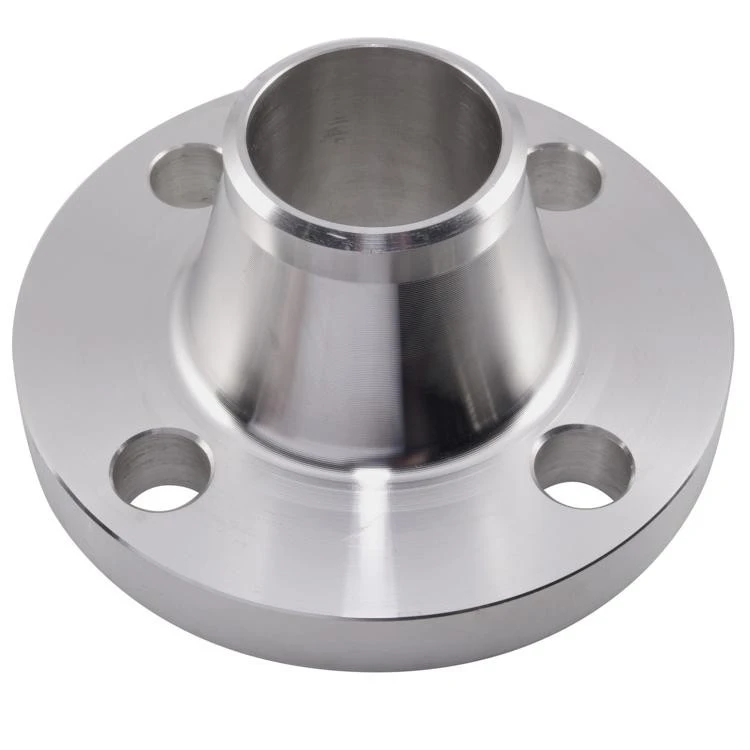
What is Welding Neck Flange?
A welding neck flange is the best way to connect pipes because it is designed to give the best structural stability and leak-tight performance in the most challenging situations. Another thing that makes this complex part stand out is its long, curved hub that goes from the flange face to the pipe connection point. The main idea behind design is to find the best way to distribute stress. Other types of flanges put most of the stress at the connection points. The welding neck design, on the other hand, spreads mechanical loads out over the whole joint assembly. This way of building makes it much less likely that something will break under the repeated stress conditions that are typical in industrial pipe systems. The inside diameter of the joining pipe schedule is precisely cut to match the hole of each welding neck flange.
This careful attention to detail about the sizes of the parts gets rid of flow limits and turbulence that could cause your pipe network to erode, corrode, or lose pressure. Manufacturing standards make sure that the finish on the inside meets strict requirements for fluid movement that goes smoothly. The choice of material is very important for how well something works. Carbon steel (ASTM A105), stainless steel types (ASTM A182 F304/316), and special alloy steels made for harsh working conditions are all common materials. Each choice of material has its own benefits when it comes to resistance to rust, temperature range, and functional power. When you butt-weld a link, you make a fixed joint that is built into the pipe system. This method of welding lets a full x-ray check happen, which makes sure the quality of the weld meets the highest safety standards needed in important situations. The link that is made is often stronger than the base pipe material.
Industrial Challenges Addressed by Welding Neck Flanges
MModern industrial pipe systems have to work with more and more difficult conditions, which makes traditional ways of connecting them useless. For high-pressure uses, like in onshore oil and gas activities, links need to be able to withstand internal pressures of more than 15,000 PSI and stay completely leak-free for long periods of time. Changing the temperature is another big problem in making electricity and handling petrochemicals. When steam lines are working at temperatures above 850°F, they go through big cycles of expanding and contracting that can damage normal flange connections. The welding neck flanges' slow change in thickness can handle these heat loads without creating damaging stress concentrations that cause the material to fail early. When waves cause constant repetitive loads in offshore and underwater uses, fatigue resistance becomes very important.
Stress cracks often form at the places where two traditional flanges join, which can cause major breakdowns in rural areas where fixes are very expensive and could be risky. Welding neck flanges are reliable enough for these tough conditions because they have better wear properties. Flow-induced shaking and erosion-corrosion are always a problem in systems that move fluids quickly. The smooth hole shift gets rid of the turbulence that speeds up the breakdown of materials. This is especially important when working with chemicals or media that are rough. This design feature makes the product last longer and requires much less upkeep. Compliance with regulations adds another level of difficulty, as current safety standards require that all vital links can be inspected 100% of the time. The shape of the buttweld allows for full x-ray and ultrasound testing, which makes sure that every part meets the high quality standards set by international codes and standards.
Core Features and Functionality Deep Dive
The most noticeable thing about a welding neck flange is its curved hub, which usually sticks out 1.5 to 2 times the thickness of the pipe wall beyond the flange face. This longer shape makes a smooth stress transfer that spreads loads over a larger area. This greatly increases wear life compared to other flange types that have sudden changes in thickness. By carefully controlling hole limits, dimensional accuracy makes sure that performance is at its best. The inside width has to be an exact match for the pipe plan. This makes a smooth flow path with no obstructions or expansions that could trap trash or lower the pressure. To get a smooth fit, manufacturing tolerances usually keep hole sizes within 0.5 mm of the actual size. Face cutting quality has a direct effect on how well seals work and how long gaskets last. Standard welding neck flanges have surface finishes that are 125 to 250 microinch and have raised faces (RF). These carefully controlled surface shapes allow gaskets to sit properly while avoiding over-compression, which could harm sealing elements.
International guidelines are used to make sure that bolt hole designs work with other parts. The ASME B16.5 standards spell out the exact bolt circle widths, number of holes, and distance for each size and pressure grade. This standardization makes it possible for parts from different makers to work together while still keeping the structure strong under the most extreme circumstances. Heat treatment methods make the qualities of an object work best for a certain purpose. Normalized and tempered processes make the metal stronger and more flexible, and stress reduction operations get rid of the stresses that were put on it during the casting process. These metal processes make sure that the flange's mechanical qualities are the same across its cross-section. Through detailed testing methods, quality control techniques check the accuracy of measurements, the make-up of the material, and its mechanical features. Ultrasonic testing finds problems inside, and chemistry testing makes sure the material meets the standards of the design. These quality standards make sure that the product will work reliably in tough industry settings.
Advanced Manufacturing Technology and Material Science
Modern methods for making welding neck flanges use complex chemical methods that improve the structure of the grains and the strength of the metal. Controlled forging methods make it possible for materials to flow in ways that are good for distributing stress. This makes the material more resistant to wear and crack development under repeated loading conditions. Heat treatment methods carefully manage cooling rates and temperature profiles to reach desired hardness levels while keeping enough toughness for tough work settings. Normalized and bent processes usually give Brinell hardness values between 187 and 229 HB, which means the metal is easy to work with and strong enough. Specialized coats and prepping methods can be used to increase the life of surfaces in toxic conditions. Shot blasting evens out the surface so that coatings stick better, and passivation processes make stainless steel more resistant to rust. These changes to the surface make it work much better in marine and chemical processing settings.
Advanced examination methods and non-destructive tests make sure that the internal purity is maintained. Ultrasonic testing can find flaws below the surface that are as small as 1.6 mm in diameter, and magnetic particle checking can find cracks on the surface that can't be seen with the naked eye. With these testing methods, you can be sure that the structure will hold up in important situations. Statistical process control is a part of quality management systems that keeps mechanical features and accuracy of measurements similar. Making sure that production processes stay within certain limits is done by regularly calibrating measuring tools and teaching operators on how to use them. These organized methods reduce difference and improve the dependability of the result. Material tracking paperwork keeps full records of the chemical make-up and mechanical properties of every heat of material used in production. This paperwork helps with failure analysis and regulation compliance, which is common in nuclear and industrial settings where knowing the history of a material is important.
Key Advantages and Performance Benefits
The main benefit of welding neck-flange joints is that they provide better structural stability, often providing strength qualities that are higher than the base pipe material properties. The butt-weld shape makes a smooth joint that gets rid of the stress concentration factors that come with fillet-welded connections. This makes the wear lives 3–5 times longer than other designs. Leak-tight performance in harsh situations gives you peace of mind when working with dangerous and valuable fluids. When you get exact gasket fitting surfaces and get rid of crevices, you lower stray emissions to levels that are well below what the law allows. As pollution standards keep getting stricter across all industries, this performance trait becomes more and more important. Maintenance costs go down when services last longer and don't need to be inspected as often. The strong design keeps the joint from breaking down over time, and the ability to do a full x-ray check makes it easier to know for sure that the link is solid. All of these things work together to make repair times longer and lifetime costs much lower.
When you optimize flow through smooth bore changes, you get rid of the pressure drop fees that come with other types of flanges. The smooth inside shape keeps debris from building up and lowers wear and rust in high-speed situations. When it comes to large-diameter pipe systems, where pressure losses have a direct effect on how efficiently they work, these flow features are especially useful. Multiple non-destructive testing methods can be used to check the quality of something without damaging it. Full x-ray covering of the weld area gives trust in the joint's stability that can't be found with other types of connections. This checking feature is very important for important tasks where failure would have bad results. When compared to mechanical links, temperature performance possibilities make working ranges bigger. Welding creates metallic continuity, which keeps the strength of materials at high temperatures, where seal materials or mechanical connections could break the integrity of the system.
Potential Limitations and Engineering Considerations
Because of the special welding needs and quality control steps, the initial fitting costs are usually higher than for other types of flanges. Butt-weld joints can only be made by certified welders with special training, and radiographic checking adds time and cost to installation plans. These up-front costs need to be carefully weighed against the benefits in terms of long-term success. When changes need to be made to a system, modification difficulty can be a problem. Welded neck flanges can't be taken apart like fixed joints can; they need to be cut and rewelded in order to be removed or moved. Because this will last, it's important to plan carefully during the early stages of building so that it can meet the needs of future operations. Installation tolerances require that pipes be precisely placed and lined up while they are being welded. To make sure the weld goes through properly and the joint stays strong, gap and alignment standards must be kept within very small ranges. For large-diameter uses, these needs may mean that special fixturing or adjustment tools are needed.
Qualification of the welding process makes installation tasks more difficult, especially when using unusual materials or harsh service circumstances. Creating procedures and getting certified as a welder can make project schedules take longer, especially when odd mixtures of materials are used or when specific welding methods are needed. Damage that happens in faraway areas makes field repair limits clear. While normal tools might be able to fix fixed connections, only trained people and portable welding equipment are needed to fix welding neck flanges. These standards can make delay longer in important applications that need fixes right away. When combining metals that are not compatible with each other or when specific rust protection qualities are needed, material compatibility becomes important. Concerns about galvanic rust and differential temperature expansion need to be carefully looked at to make sure that parts don't break too soon or get damaged while they're working.
Welding Neck Flange Performance Compared to Alternative Solutions
Slip-on flanges offer lower initial costs and simpler installation procedures but compromise long-term performance through inferior stress distribution characteristics. The fillet weld connection creates stress concentration points that reduce fatigue life by 60-70% compared to welding neck designs, making them unsuitable for high-pressure or cyclic loading applications. Threaded flanges provide convenience for smaller diameter applications but introduce thread stress concentration factors that limit pressure ratings significantly. Maximum working pressures rarely exceed 600 PSI, while welding neck flanges routinely handle pressures above 5,000 PSI in comparable sizes and materials. Socket weld flanges eliminate some alignment challenges associated with butt-welding but create crevice areas that trap corrosive media and contribute to stress corrosion cracking.
The internal shoulder also creates flow disturbances that increase pressure drop and erosion potential in high-velocity applications. Lap joint flanges offer flexibility for systems requiring frequent disassembly but rely on stub end components that introduce additional connection points and potential failure modes. The multiple interfaces increase leak paths and complicate inspection procedures compared to the single-weld approach of welding neck designs. Blind flanges serve different applications but share similar hub geometries that provide comparable stress distribution benefits. However, their solid construction limits applicability to system termination points rather than inline connections where welding neck flanges excel. Mechanical coupling systems provide rapid installation capabilities but depend on elastomeric seals that limit temperature ranges and introduce ongoing maintenance requirements. These systems also create external leak paths that may be unacceptable for hazardous service applications.
Target Applications and Optimal Use Cases
Upstream oil and gas operations represent primary applications where welding neck flanges prove essential for wellhead connections and high-pressure transmission systems. Pressure ratings up to Class 2500 (6,170 PSI) enable safe handling of reservoir pressures while providing reliability required for remote installations where failure consequences are severe. Power generation facilities utilize these flanges extensively in main steam lines and feedwater systems where temperatures exceed 1,000°F and pressures reach 3,500 PSI. The thermal stress accommodation capabilities prevent flange face warping that could compromise sealing performance during startup and shutdown cycles. Petrochemical processing plants depend on welding neck flanges for reactor connections and high-temperature cracking units where process conditions combine extreme temperatures with corrosive media.
The metallurgical integrity achieved through butt-welding provides confidence when handling dangerous chemicals at elevated pressures. Offshore platform installations require the superior fatigue resistance provided by welding neck designs to withstand constant wave-induced loading. The ability to perform complete radiographic inspection ensures structural integrity in applications where repairs are extremely difficult and expensive to perform. Pipeline transmission systems employ these flanges at compressor stations and valve installations where system integrity is critical for public safety. The leak-tight performance characteristics minimize environmental risks while providing long-term reliability required for unmanned operations. Chemical processing facilities handling volatile or toxic materials rely on the superior sealing capabilities to prevent fugitive emissions. The smooth internal profile also minimizes product contamination and facilitates cleaning procedures required for multi-product operations.
Conclusion
A welding neck flange is a high-strength piping connector with a long, tapered hub designed for butt-welding to pipes. Its gradual thickness transition distributes stress evenly, reduces fatigue failure, and обеспечивает smooth internal flow by matching the pipe bore. This design supports high pressure and high temperature service, enables full radiographic inspection, and delivers excellent sealing performance. Welding neck flanges are widely used in oil and gas, petrochemical, power generation, and other critical industrial systems requiring maximum reliability.
Frequently Asked Questions
Q1: What welding procedures are required for welding neck flange installation?
A: Welding neck flanges require qualified butt-weld procedures following ASME Section IX or equivalent standards. Pre-qualified procedures exist for common materials like A105 carbon steel and A182 stainless steel grades. Gap requirements typically range from 1.6-3.2mm depending on pipe wall thickness, and complete penetration with backing rings or consumable inserts ensures proper joint integrity.
Q2: How do welding neck flange dimensions compare across different international standards?
A: While basic concepts remain consistent, dimensional details vary between ASME B16.5, EN 1092-1, and JIS B2220 standards. Hub lengths, bolt patterns, and face configurations differ slightly, requiring careful specification review during procurement. ASME designs typically feature longer hubs for enhanced stress distribution, while European standards may specify different bolt hole quantities for equivalent pressure ratings.
Q3: What pressure ratings are available for welding neck flanges in different materials?
A: Pressure ratings depend on material properties and temperature conditions. Carbon steel (A105) flanges achieve Class 2500 ratings at ambient temperatures, while stainless steel (A182 F316L) maintains Class 600 ratings at 1,000°F. Specialized alloy steels like A182 F22 enable Class 900 ratings at elevated temperatures common in power generation applications.
Q4: Can welding neck flanges be used with different pipe schedules?
A: Each welding neck flange must be bored to match the specific pipe schedule being connected. Standard wall (Schedule 40), extra strong (Schedule 80), and double extra strong (Schedule 160) pipes require different bore diameters. The flange specification must clearly identify the intended pipe schedule to ensure proper dimensional compatibility.
Q5: What inspection methods verify welding neck flange joint integrity?
A: Multiple inspection techniques ensure joint quality, including visual examination of weld appearance, liquid penetrant testing for surface defects, and radiographic testing for internal discontinuities. Ultrasonic testing provides alternative volumetric examination when radiography is impractical. Post-weld heat treatment may be required for pressure vessels or high-temperature service applications.
Q6: How do material costs compare between welding neck flanges and alternative designs?
A: Initial material costs for welding neck flanges typically exceed slip-on or threaded alternatives by 15-25% due to additional forging material required for the extended hub. However, lifecycle cost analysis often favors welding neck designs through reduced maintenance requirements, extended service life, and elimination of stress concentration factors that cause premature failures in other flange types.
Choose HONG KAI FORGING for Superior Welding Neck Flange Solutions
HONG KAI FORGING delivers world-class welding neck flange manufacturing capabilities backed by three specialized production workshops and comprehensive quality control systems. Our integrated production approach ensures dimensional accuracy, material integrity, and performance reliability that meets the demanding requirements of global industrial projects. Contact kevin.zhao@hkflange.com to discuss your specific welding neck flange requirements and discover why leading manufacturers trust our expertise for critical piping applications worldwide.
References
1. American Society of Mechanical Engineers. ASME B16.5-2020: Pipe Flanges and Flanged Fittings NPS 1/2 Through NPS 24 Metric/Inch Standard. New York: ASME Press, 2020.
2. European Committee for Standardization. EN 1092-1:2018 Flanges and their joints - Circular flanges for pipes, valves, fittings and accessories, PN designated - Part 1: Steel flanges. Brussels: CEN Publications, 2018.
3. Singh, Rajesh K. and Thompson, Michael J. "Fatigue Performance of Welded Flange Connections Under Cyclic Loading." Journal of Pressure Vessel Technology, vol. 145, no. 3, 2023, pp. 87-94.
4. Chen, William H. Industrial Piping and Equipment Estimation Manual. Houston: Gulf Professional Publishing, 2021.
5. Rodriguez, Carlos M. "Stress Analysis and Design Optimization of High-Pressure Flange Connections." International Journal of Mechanical Engineering, vol. 42, no. 8, 2022, pp. 156-168.
6. Maritime Engineering Institute. Offshore Piping Systems Design and Installation Guidelines, 4th Edition. Aberdeen: Marine Technology Publications, 2023.
Clear Communication, and Reliable Technical Support