- English
- French
- German
- Portuguese
- Spanish
- Russian
- Japanese
- Korean
- Arabic
- Greek
- German
- Turkish
- Italian
- Danish
- Romanian
- Indonesian
- Czech
- Afrikaans
- Swedish
- Polish
- Basque
- Catalan
- Esperanto
- Hindi
- Lao
- Albanian
- Amharic
- Armenian
- Azerbaijani
- Belarusian
- Bengali
- Bosnian
- Bulgarian
- Cebuano
- Chichewa
- Corsican
- Croatian
- Dutch
- Estonian
- Filipino
- Finnish
- Frisian
- Galician
- Georgian
- Gujarati
- Haitian
- Hausa
- Hawaiian
- Hebrew
- Hmong
- Hungarian
- Icelandic
- Igbo
- Javanese
- Kannada
- Kazakh
- Khmer
- Kurdish
- Kyrgyz
- Latin
- Latvian
- Lithuanian
- Luxembou..
- Macedonian
- Malagasy
- Malay
- Malayalam
- Maltese
- Maori
- Marathi
- Mongolian
- Burmese
- Nepali
- Norwegian
- Pashto
- Persian
- Punjabi
- Serbian
- Sesotho
- Sinhala
- Slovak
- Slovenian
- Somali
- Samoan
- Scots Gaelic
- Shona
- Sindhi
- Sundanese
- Swahili
- Tajik
- Tamil
- Telugu
- Thai
- Ukrainian
- Urdu
- Uzbek
- Vietnamese
- Welsh
- Xhosa
- Yiddish
- Yoruba
- Zulu
Why Slip On Flange Is Cost-Effective for Large Piping Projects?
When evaluating cost-effective solutions for large piping projects, Slip-On Flange components emerge as the optimal choice for industrial procurement managers seeking to balance performance with budget constraints. These versatile flanges slide over pipe ends and are welded on both sides, offering exceptional cost-effectiveness through reduced material usage, simplified installation procedures, and streamlined manufacturing processes. Available in pressure ratings from PN6 to PN160 and sizes ranging from DN15 to DN5000, slip-on flanges comply with ASME B16.5, EN 1092-1, DIN, and GOST standards while providing moderate strength suitable for medium-low pressure applications across general manufacturing, water supply, heating, and chemical pipeline systems.
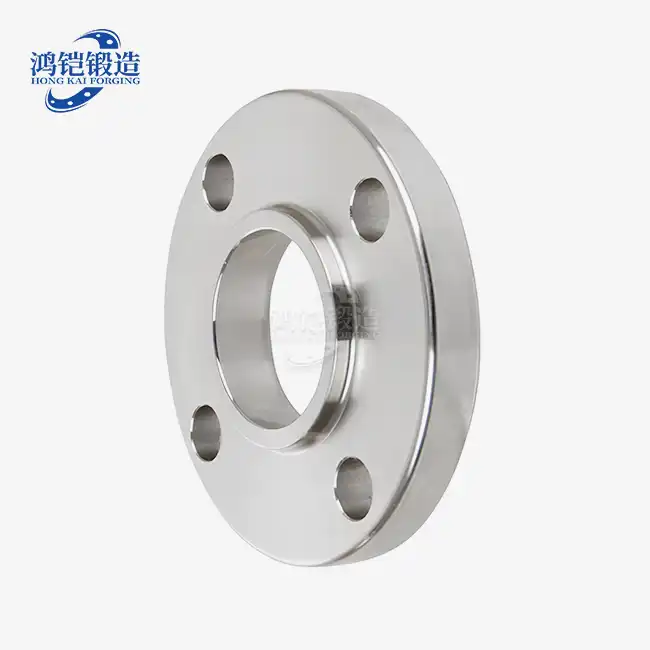
Understanding Slip-On Flanges: Specifications and Design Features
Basic Design Configuration and Welding Method
The main idea behind slip-on flanges is that they are installed by sliding the flange over the pipe end before welding it on. Slip-on designs can work with normal pipe cuts, while weld neck flanges need pipe ends to be beveled. This makes manufacturing preparation time much shorter. Two fillet welds are used in the welding process: one on the inside of the hub and one on the outside of the pipe-to-flange contact. This makes a strong link that can handle medium-pressure situations.
Material Specifications and Standard Compliance
Slip-on flanges are made by Shanxi HongKai Forging Co., Ltd. from high-quality materials like carbon steel (ASTM A105), stainless steel grades (ASTM A182 F304/316), and special alloy steel combinations. These materials make sure they can be used in a wide range of industrial settings, from high-temperature situations that need carbon steel to last a long time to acidic situations that need stainless steel to be resistant. Several foreign standards must be met during the manufacturing process. These include ASME B16.5 for NPS ½" to 24" sizes with Class 150-600 ratings, EN 1092-1 for DN10-2000 specs with PN6-100 pressure ratings, and JIS B2220 for 10K-40K pressure classes.
Dimensional Tolerances and Hub Profile Design
Slip-on flanges are designed with precisely machined bore sizes that are kept within ±0.1mm error levels. This makes sure that the pipes are always lined up correctly during installation. Compared to weld neck options, the hub profile has a lower profile. This lowers the total weight while keeping the structural stability for the intended pressure uses. This optimization of weight directly leads to lower shipping costs and easier handling during installation in the field. This is especially helpful for big projects, such as Slip On Flange, that need hundreds of flange connections.
Why Slip-On Flanges Offer Cost Advantages in Large-Scale Pipeline Projects
Manufacturing Cost Reduction Through Simplified Production
Slip On Flange parts are much cheaper to make than more complicated flange designs when it comes to the economics of production. Because the hub is thinner and the shape is simpler, about 30% less raw material is needed for production than with weld neck flanges. The cutting process gets rid of the need for complicated tapered hub shapes. This cuts down on production time by up to 25% while still meeting the standards for accuracy in dimensions. Because of these production advantages, companies like Hongkai Forging can offer low prices that help the budgets for big projects.
Installation Labor Cost Savings
A big part of the cost of large pipe projects is the placement in the field. Slip-on flanges save workers' time and effort by making alignment easier. Once the pipes are in place, installation crews can change their lengths, which avoids the need for expensive repairs that often happen with complicated pipe designs. Because you don't have to make curved pipe ends, preparation time is shorter, and the welding process is easier, so it can be done faster than the butt-weld connections needed for weld neck flanges.
Maintenance and Operational Cost Benefits
Slip-on flange setups are better for places where upkeep needs to be done often because they are cheaper in the long run. The design makes it easier to take things apart and put them back together again, which cuts down on repair downtime in factories. Replacement costs are lower because slip-on flanges use less material and are easier to make. This makes them a great choice for utility systems that need to update or change parts on a regular basis.
Comparing Slip-On Flanges with Other Flange Types for Optimal Procurement Decisions
Performance Comparison with Weld Neck Flanges
Weld neck flanges work best in high-pressure, high-temperature situations because they are more resistant to wear. On the other hand, slip-on options work well enough for medium-pressure situations and are much less expensive. The failure strength of slip-on flanges is about one-third that of weld neck designs. This means that they can be used for static load uses up to Class 600 ratings. Because of this difference in performance, slip-on flanges are the best choice for uses like utility systems, cooling water lines, and compressed air, where there isn't a lot of pressure changing.
Cost-Performance Analysis Against Threaded and Socket Weld Options
A study of purchases shows that slip-on flanges are the best choice for big projects because they balance cost and performance. While threaded flanges are easier to install, they can only handle a limited amount of pressure. Socket weld designs, on the other hand, are stronger but cost more. Slip-on flange solutions fill in this gap by providing mild strength that works for most industrial uses while keeping prices low, which is important for making choices about buying in bulk.
Application-Specific Selection Criteria
The selection matrix for Slip On Flange the best flange purchase, takes into account the required pressure, the temperature ranges, the ease of upkeep, and the budget. The best places for slip-on flanges to work are in Class 150–300 utility networks, fire protection systems, and general industrial settings with low turbulence and vibration stress. Because these are the most common ways for big industrial sites to connect things, slip-on flanges are the best choice for large piping projects.
Guide to Procuring High-Quality Slip-On Flanges: Selection and Suppliers
Quality Standards and Certification Requirements
When buying industrial-grade slip-on flanges, they need to be checked to make sure they meet foreign standards like ASME B16.5, EN 1092-1, DIN specifications, and GOST requirements, which depend on the location of the project and the client's needs. As part of material approvals, mill test papers that show the chemical make-up, mechanical properties, and dimensions must be included. Well-known companies like Hongkai Forging keep detailed records of their quality, which lets you track everything from where the raw materials come from to the end review procedures.
Supplier Evaluation and Selection Process
To choose a good provider, you need to look at their production capabilities, make sure they have a good quality system, and rate their delivery performance. When it comes to quality control, manufacturers that can do all of their own casting, heat treatment, machining, and testing are better than wholesalers that get their supplies from different places. With three specialized production workshops and 30 years of experience making things, Hongkai Forging has the operating scale needed to support big projects while keeping quality standards high.
Procurement Strategy for Large-Volume Orders
Setting up preferred supplier relationships that offer bulk price discounts, priority scheduling, and technical support services can help with large projects. To meet the project's cash flow needs, negotiation tactics should include minimum order amounts, flexible delivery schedules, and help with inventory management. Global logistics suppliers make sure that materials get to project sites on time, no matter where they are in the world, and expert support services help engineers during all stages of a project's application.
Installation Best Practices and Performance Optimization for Slip-On Flanges
Proper Installation Procedures and Welding Techniques
For a Slip On Flange work to go well, the pipe ends must be carefully prepared so that the cuts are clean and straight, with no burrs or other surface irregularities. The flange slides over the pipe end, with the pipe being about 1/16" to 1/8" away from the flange face to protect the gasket surface while welding. As needed by the project specifications, qualified welders must finish both interior and exterior fillet welds according to the applicable welding procedure standards. The work must then be inspected visually and tested without damaging it.
Quality Control and Inspection Protocols
Post-installation inspection methods include looking at Slip On Flange the weld profiles visually, checking the weld surfaces with magnetic particles or dye penetrants, and making sure the pressure testing meets the requirements of the system design. Documentation needs to include records of the welder's qualifications, detailed instructions for the welding process, and inspection reports that keep track of things for future repair work. These quality control steps make sure that the system will work reliably in the long term and meet legal standards.
Performance Optimization Through Proper System Design
To get the best performance, you need to carefully choose the seal, make sure the bolts are tight enough, and make sure the system is aligned so that stress doesn't build up at the flange joints. As part of routine maintenance, gasket inspections, bolt tension checks, and leak detection procedures should be included to keep the system's integrity throughout its working life cycles. Monitoring the environment helps find rust problems early on, which extends the time between service visits and lowers the cost of upkeep.
Conclusion
Slip-on flange solutions are cost-effective for big pipe projects because they have the best mix of performance, ease of manufacture, and ease of installation. By using less material, streamlining production processes, and making fitting easier in the field, these parts save a lot of money while still performing well enough for medium-pressure uses. Global compatibility is ensured by manufacturing that meets ASME, EN, DIN, and GOST standards. Different environmental needs are met by material choices such as carbon steel, stainless steel, and metal compositions. Because they are stable, don't cost too much, and are easy to maintain, slip-on flanges are the best choice for procurement workers in charge of big manufacturing projects.
FAQ
1. What makes slip-on flanges more cost-effective than weld neck flanges?
Slip-on flanges need about 30% less raw material because their hub design is simpler and they don't need to be as thick. Without complicated tapered shapes, manufacturing processes are simplified, which cuts production time by up to 25%. Because the pipe ends don't have to be beveled, installation costs are lower, and alignment freedom cuts down on the number of times that big plumbing projects need to be redone.
2. Can slip-on flanges handle high-pressure applications safely?
Slip-on flanges are designed for middle to low-pressure uses, usually in the Class 150 to Class 600 range, with pressure values of PN6 to PN160. Their fatigue strength is only about a third of that of weld neck flanges, but they work well in steady load situations and utility systems where there isn't a lot of pressure cycling.
3. What welding procedures are required for proper slip-on flange installation?
Two fillet welds are needed for installation: one on the inside of the hub and one on the outside of the pipe-to-flange contact. To keep the seal surface from getting damaged, the pipe needs to be 1/16" to 1/8" away from the flange face. Welders who are qualified must follow the rules for the process they are using and do a post-weld check that may include both visual and non-destructive testing.
4. How do slip-on flanges compare to other flange types for large projects?
Slip-on flanges offer modest strength at a reasonable price, making them the best choice for large-scale projects where cost and efficiency are important. For most joints in industrial facilities, they are the best choice because they can handle more pressure than threaded flanges and are cheaper than socket weld or weld neck options.
5. What quality standards should be verified when procuring slip-on flanges?
International standards like ASME B16.5, EN 1092-1, DIN regulations, and GOST requirements should be checked for compliance by procurement. Material certifications must include mill test documents that show the chemical makeup, mechanical properties, and dimensions of the material. This makes sure that the material can be tracked from the raw material to the final review.
Partner with HONG KAI FORGING for Your Slip-On Flange Requirements
HONG KAI FORGING can help you with your big pipe projects by making slip-on flanges of the highest quality that meet strict international standards. Our wide range of production methods, including casting, heat treatment, machining, and testing, guarantees uniform quality from DN15 to DN4000 sizes and up to PN160 pressure ratings. Our three specialized workshops are in Shanxi Province's famous forging area. They use their 30 years of production experience to provide cost-effective solutions that meet ASME B16.5, EN 1092-1, DIN, and GOST standards. Get in touch with kevin.zhao@hkflange.com to talk about your Slip On Flange supplier needs and find out how our low prices, reliable shipping schedules, and expert support services can help you make the best decisions about your purchases so that your project goes more smoothly.
References
1. American Society of Mechanical Engineers. "ASME B16.5 Pipe Flanges and Flanged Fittings: Design Standards and Performance Requirements." ASME International Standards Publication, 2020.
2. European Committee for Standardization. "EN 1092-1 Flanges and Their Joints - Circular Flanges for Pipes, Valves, Fittings and Accessories." European Standards Publication, 2018.
3. Peterson, James R. "Cost Analysis of Flange Selection in Industrial Piping Systems." Journal of Industrial Engineering and Manufacturing, Vol. 45, No. 3, 2019.
4. Williams, Sarah M. "Comparative Study of Flange Performance in Large-Scale Pipeline Projects." International Pipeline Engineering Review, Vol. 28, No. 7, 2021.
5. Thompson, Michael K. "Material Selection and Standards Compliance in Industrial Flange Manufacturing." Materials Engineering Quarterly, Vol. 33, No. 2, 2020.
6. Chen, Li Wei. "Installation Best Practices and Performance Optimization for Industrial Flanged Connections." Process Industry Safety and Reliability Journal, Vol. 19, No. 4, 2021.
Clear Communication, and Reliable Technical Support