- English
- French
- German
- Portuguese
- Spanish
- Russian
- Japanese
- Korean
- Arabic
- Greek
- German
- Turkish
- Italian
- Danish
- Romanian
- Indonesian
- Czech
- Afrikaans
- Swedish
- Polish
- Basque
- Catalan
- Esperanto
- Hindi
- Lao
- Albanian
- Amharic
- Armenian
- Azerbaijani
- Belarusian
- Bengali
- Bosnian
- Bulgarian
- Cebuano
- Chichewa
- Corsican
- Croatian
- Dutch
- Estonian
- Filipino
- Finnish
- Frisian
- Galician
- Georgian
- Gujarati
- Haitian
- Hausa
- Hawaiian
- Hebrew
- Hmong
- Hungarian
- Icelandic
- Igbo
- Javanese
- Kannada
- Kazakh
- Khmer
- Kurdish
- Kyrgyz
- Latin
- Latvian
- Lithuanian
- Luxembou..
- Macedonian
- Malagasy
- Malay
- Malayalam
- Maltese
- Maori
- Marathi
- Mongolian
- Burmese
- Nepali
- Norwegian
- Pashto
- Persian
- Punjabi
- Serbian
- Sesotho
- Sinhala
- Slovak
- Slovenian
- Somali
- Samoan
- Scots Gaelic
- Shona
- Sindhi
- Sundanese
- Swahili
- Tajik
- Tamil
- Telugu
- Thai
- Ukrainian
- Urdu
- Uzbek
- Vietnamese
- Welsh
- Xhosa
- Yiddish
- Yoruba
- Zulu
_1787370234928.webp)
_1787370304151.webp)
_1787370301856.webp)
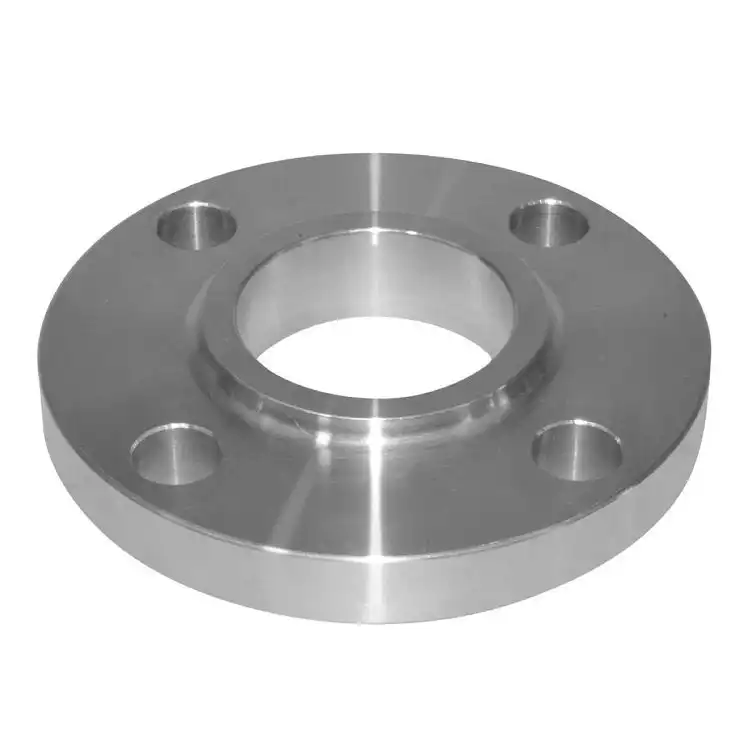
EN Flanges
Material: Carbon Steel, Stainless Steel, Alloy Steel, and Duplex Stainless Steel, as specified
Sizes: DN sizes vary by flange type and PN designation
Pressure Rating: PN designation varies by flange type and nominal size
Standard: EN 1092-1
Flange Face Type: Flat Face (Type A) or Raised Face (Type B1 or B2), where applicable
Connection Methods: Bolted joints with butt-welded, slip-on welded, or threaded pipe connections, depending on flange type
Manufacturing Process: Forging and Machining, or Plate Cutting and Machining, where permitted by the standard
Alloy Steel Flanges |
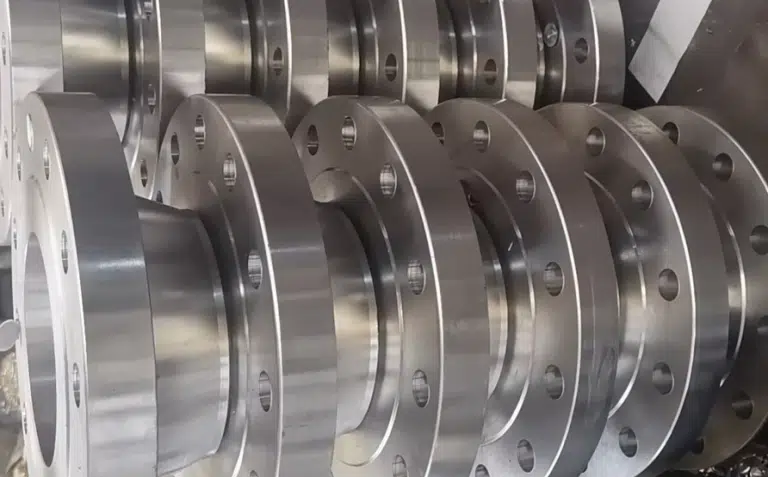
Our company produces EN standard flanges.
EN standard flanges were developed by the European Committee for Standardization from PN2.5 to PN400, and the common types are plate flanges, weld neck flanges, blind plates, threaded flanges, and so on.
EN Flange Standard |
What is the EN flange standard?
EN flange standard is a European flange standard system represented by the European Union, the origin of EN flange standard comes from the 20th century, when many countries have their own flange standard, such as Germany’s DIN flange standard, Britain’s BS flange standard, France’s NF flange standard, in order to better strengthen the trade of European countries, to realize the integration of, by the European Committee for In order to better strengthen the trade among European countries and realize the integration, the European Committee for Standardization took the lead in formulating the EN flange standard, which includes various flange specifications, dimensions, materials and other materials used in various industrial applications, which better guarantees the universality of the flanges and effectively protects the quality of the flanges, so that flanges produced by different manufacturers in different countries can be interchanged and intercommunicated, and promotes the process of the integration of the European industry.
EN standard flanges are mainly standardized as EN1092-1 and EN1759, covering from small low-pressure to large high-pressure pipelines. Common nominal pressure rating PN6-PN40, nominal diameter DN15-DN2000.
Below we provide you with a table of common technical parameters for EN flange standards:
| Parameter | Description |
| Pressure Rating | PN6,PN10,PN16,PN25,PN40 |
| Flange Size Range | DN15-DN2000 |
| Flange Type | 01Flat Flange, 02Flat Welding Flange with Neck, 03Flat Welding Flange with Neck, 04Flat Loose Sleeve Flange with Neck, 05Large Diameter Flat Flange, 06Large Diameter Flat Welding Flange with Neck, 07Large Diameter Flange with Neck Butt Welding Flange with Neck, 11Integral Flange, 12Flange Cover, 13Lining Flange, 14Flange Receiver, 15Personal Hole, 16Flange Shaft, 17Reducing Flange, 21Rotating Flange, 22Screwing Flange with Neck 23 Butt-welding ring loose flange, 24 Flat-welding ring loose flange, 25 Flap ring loose flange, 26 Butt-welding ring, 27 Flat-welding ring, 32 Blind plate, 33 Blind flange, 34 Stud ring, 35 Welded head, 36 Flat plate head, 37 Pressure ring. |
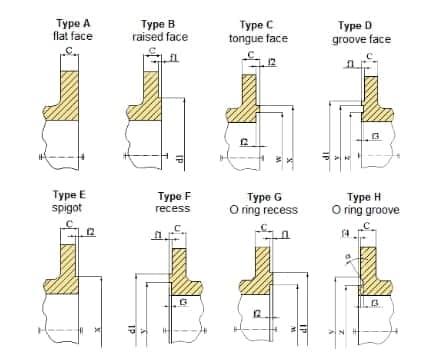
| Sealing surface | Flat Face(FF), Raised Face(RF), Male and Female Face(MF), Tongue and Groove Face(TG), Ring Joint Face(RJ) |
| Flange Material | Carbon Steel, Stainless Steel, Alloy Steel, etc. |
| Connection | Bolt, Weld, and Threaded Flange Surface treatment |
| Surface treatment | Anti-corrosion coating, painting, nickel plating or other coatings |
| Production process | Forging and casting |
| Inspection standard | Dimension and tolerance testing, surface quality testing, material testing, sealing testing, pressure testing, non-destructive testing, and more. |
| Marking | Marking of flanges with the manufacturer, size, pressure, dimensions, material steel number, etc. |
Common technical parameters of EN flange standard
In addition to the European EN standard flange, what are the other common flange standards?
The following are common flange standards in addition to EN flange standards:
- American ASME/ANSI flange standards: ASME B16.5, ASME B16.47.
- China GB flange standards: GB/T 9112-2010, GB/T 9113-2010, GB/T 17241-2008, GB/T 17242-2008. 3.
- British BS flange standard: BS 4504. 4.
- Japan JIS flange standard: JIS B2220. 5.
- Germany DIN Industrial Flange Standard: DIN 2501. 6.
- Russian GOST Flange Standard: GOST 12820. 7.
- Australian Standard for AS Flanges: AS 1163. 8.
DIN flange standard is replaced by the EN flange standard?
DIN flange standard is earlier than the EN flange standard is developed and managed by the German national standardization organization DIN, and later for European industrial integration, the European Committee for Standardization organization developed the EN flange standard, which is represented by the European Union European flange standard system.
The DIN flange standard is mostly used in Germany, EN flange is mostly used in the European market. As more and more European markets use EN flanges, DIN flanges will indeed have to be replaced by EN flanges, there is no complete replacement, but the two coexist in the present situation.
If you want to use EN flanges to replace DIN flanges, you have to do a full assessment of the project, EN flanges, and DIN flanges are of different sizes and pressures, so we have to choose the right size and pressure according to the project, to make sure that the flanges selected are suitable for the project will not cause leakage.
What is the difference between the European EN standard flange and the American ASME/ANSI standard flange?
European EN standard flange and the United States ASME / ANSI standard flange mainly have the following differences:
First, the standard development organization and the main use of different regions:
EN standard flange developed by the European Committee for Standardization is mostly used in the EU market.
American Standard ASME/ANSI standard flange developed by the American Society of Mechanical Engineers and the American National Standards Institute, is mostly used in the North American market.
Second, the pressure level is different:
EN European standard flange pressure level for PN6, PN10, PN16, 25, PN40, and so on.
ASME/ANSI American standard flange pressure level for Class75, Class150, Class300, Class400, Class600, Class900, Class1500, Class2500, etc..
Third, different size standards
EN standard: the use of metric units, flange size is usually in millimeters (mm) for the unit.
ASME/ANSI standards: the use of imperial units, flange size is usually in inches (inch) for the unit.
Customized Alloy Steel Flanges Process |
Customized Alloy Steel Flanges Process
Raw Materials
Raw material inspection by heat number; Chemical composition inspection
Cutting
Material identification; Production flow card.
Heating
Material identification; Furnace temperature monitoring; Heating temperature control.
Forging & Ring Rolling
Semi-finished size inspection; Visual inspection.
Rough Machining
Dimensional inspection; Ultrasonic Testing (UT).
Heat Treatment
Heat treatment records and charts; Furnace condition inspection; Hardness testing; Chemical composition and mechanical property inspection.
Finish Machining
Visual inspection; Dimensional inspection of 50% of products; Production flow card.
Finished Goods Inspection
Positive Material Identification (PMI); Marking inspection; Dimensional inspection.
Packing
Packaging inspection; Visual inspection.
Shipment
Shipment according to customer requireme
About HongKai |
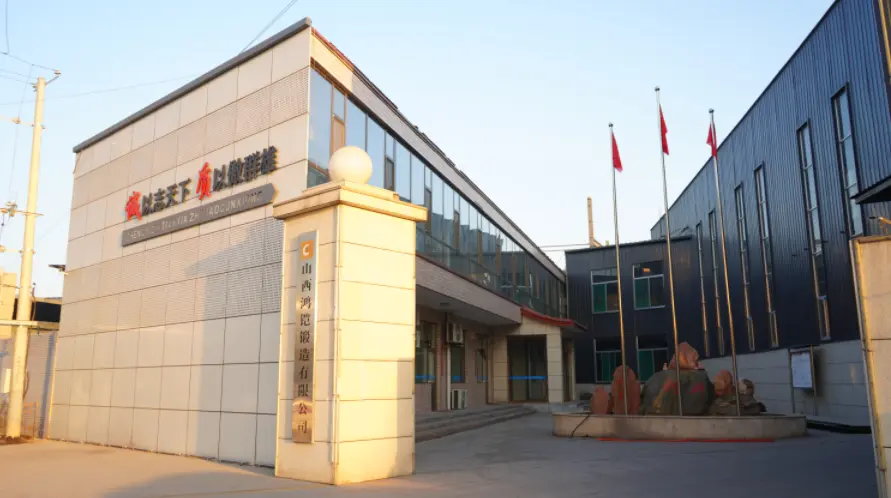
Shanxi HongKai Forging Co., Ltd. was located in Dingxiang County, known as the "Hometown of Forging" in Shanxi Province, which is part of Chinese energy and heavy chemical industrial base. The area boasts convenient transportation, abundant coal and power resources, fast communication, and an excellent environment. The company has three big workshops in total.
Along with capabilities in forging and heat treatment,Integrated production capabilities including machining, physical and chemical testing, surface treatment, and packaging and shipment. Possessing solid technical expertise, advanced production processes, and a complete quality inspection, reliable after-sales service, for customers worldwide and domestically multiple clients have provided a solid foundation for collaboration.
In addition, we can provide a variety of customized flanges and pipe fittings. Customers can give drawings or samples, and our company will produce them to fit your specific requirements.
Number Of Workers
Mid& Senior Engineers
Square Meters Of Area
Years Of Experience
Our Production Line
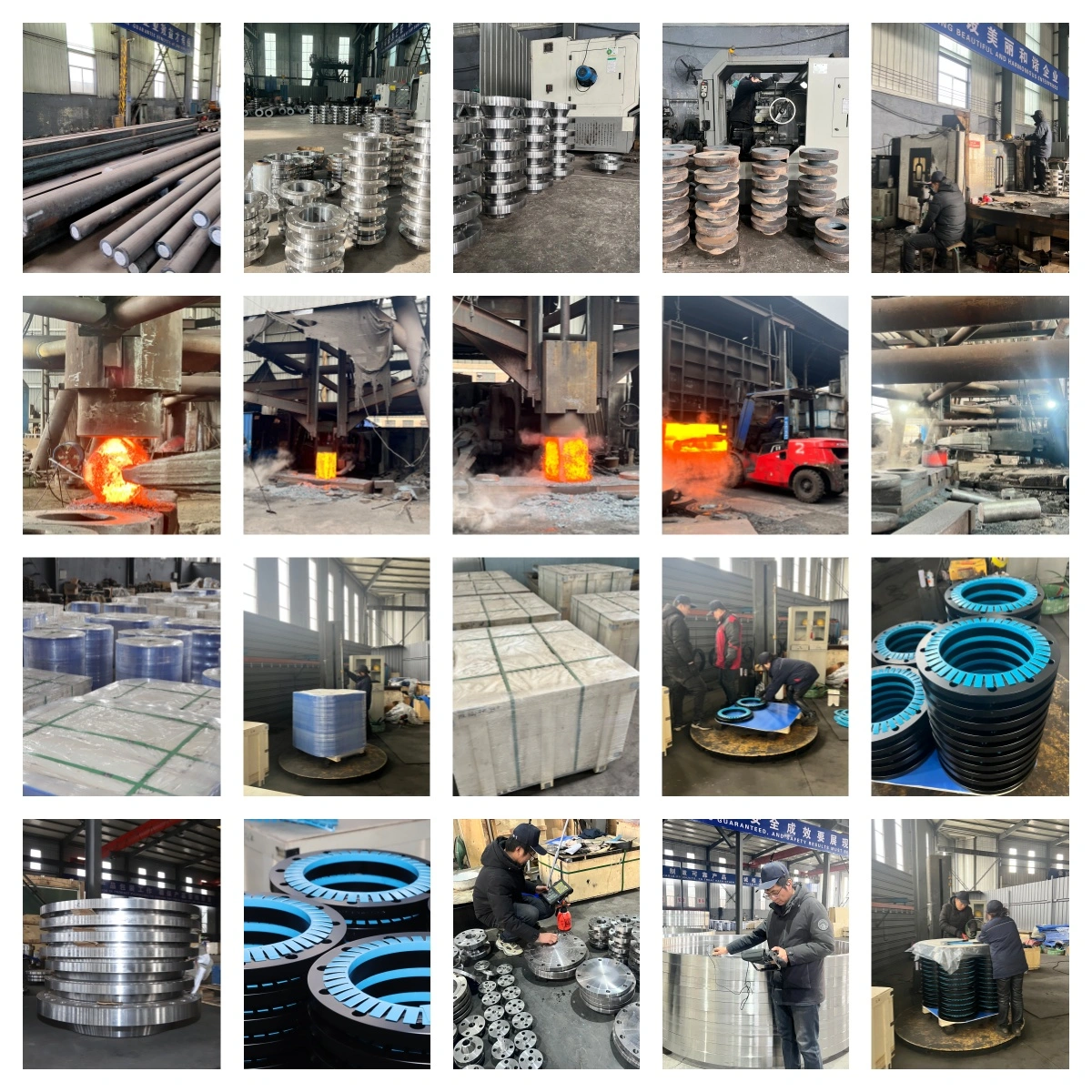
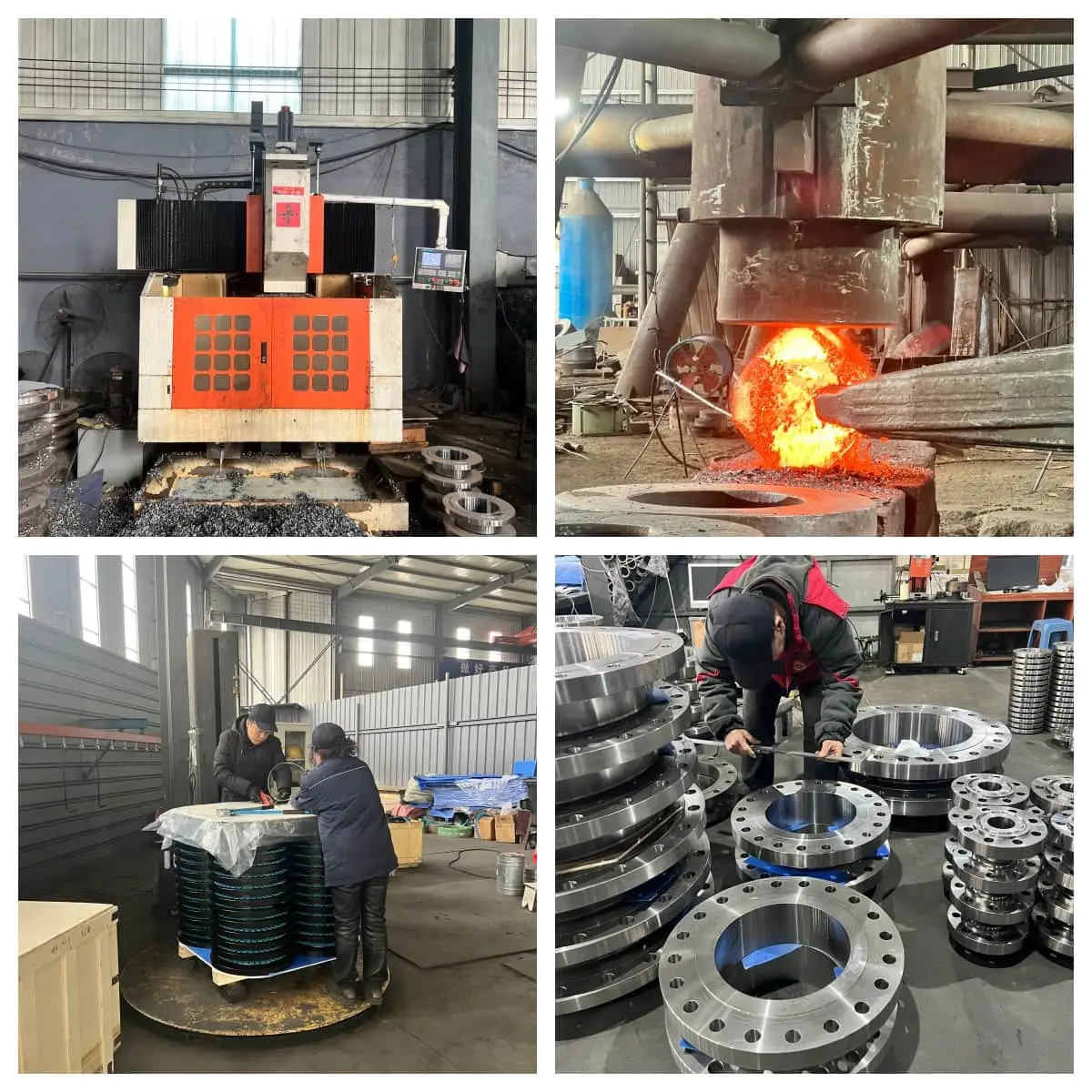
Our company has 8 pipe fitting production lines and 5 flange production lines. It has a full set of medium-frequency elbow hot-pushing machines, hot-die presses for reducers, cold-extrusion hydraulic presses for tees, forging hammers, vertical lathes, drilling machines, and other process-forming and mechanical processing equipment.
Among them, the Φ1020 mm large-diameter medium-frequency hydraulic pushing machine, Φ1420 mm large-diameter medium-frequency bending machine, and Φ2438 mm 4,000-ton large hot-die press have an annual production capacity of more than 80,000 tons.
Pipe Fitting Production Lines
Flange Production Lines
Annual Production Capacity
Quality Testing & Certificates |
FAQs |
Q:What are the materials of EN flanges?
A:The materials of EN standard flanges include carbon steel, stainless steel, alloy steel, etc. Customers can customize the materials according to the project needs, if you have any questions about material selection, you can contact our engineers to provide you with detailed guidance.
Q:What are the application fields of EN flanges?
A:EN standard flanges are mainly used in industrial pipelines of various industries which are suitable for EN standards.
Q:What is the price of EN flanges?
A:The price of EN standard flanges is not set in stone, it is mainly affected by many factors such as manufacturing materials, specification size, pressure size, quantity, etc. If you want to know the specific quotation of the flanges in your project, please send us your project requirements by email, and we will provide you with a detailed quotation sheet at the first time after receiving the email.
Q:What are the main countries that use EN flange standard?
A:The countries that apply European EN standard flanges are Austria, Hungary, Denmark, Finland, France, Germany, Greece, Iceland, Ireland, Italy, Luxembourg, the Netherlands, Norway, Portugal, Spain, Sweden, Switzerland, and the United Kingdom.
Q:How to determine whether a flange conforms to EN flange standard?
A:First, check whether the appearance is intact, then check the logo to determine the basic information of this flange, then check the EN standard, check whether the size and pressure are up to standard, use tools such as vernier calipers to measure the outer diameter, inner diameter, hole diameter, hole distance, etc. to see whether it is up to standard. Conditions allow you to use a spectrum analyzer to test the material, but also sealing, pressure, and non-destructive testing. If you don’t have these you can find a professional testing organization to test for you, common EN flange testing and certification organizations are TUV, BV, SGS, and so on.
Q:How to choose the manufacturer of EN flanges?
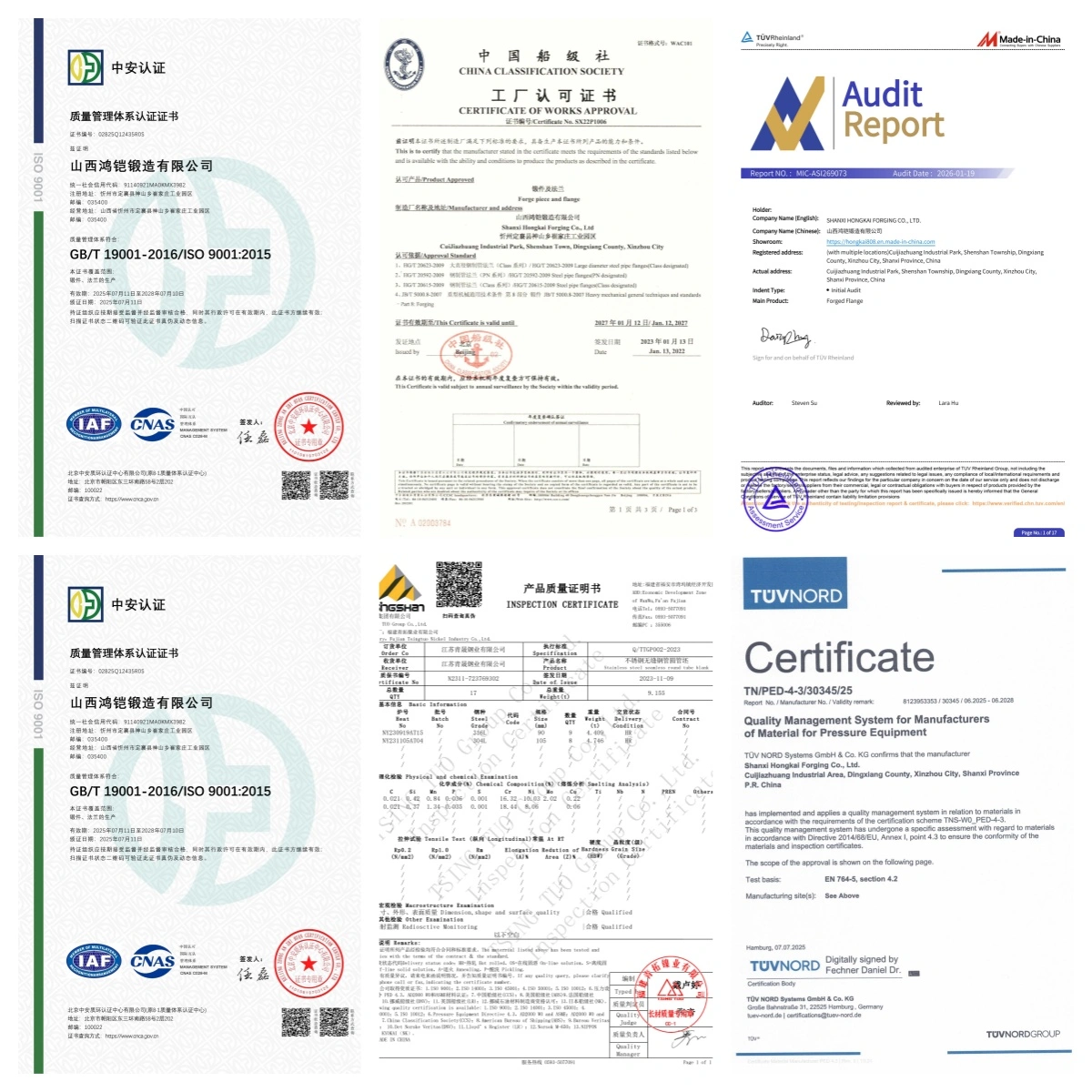
A:When choosing an EN flange manufacturer, we should communicate with the manufacturer, ask for all kinds of qualification certificates, and consider the manufacturer’s production capacity, qualification level, after-sales service, etc., at the same time, we also need to let them provide quotations, and the price of EN flanges is also one of the important considerations. Before ordering, it is best to let the manufacturer provide us with samples, try on the samples, and order the large quantity of goods only if you pass the test, we recommend the Chinese flange manufacturer-HONGKAI. HONGKAI, we are a flange manufacturer with many years of experience, we have a kind ISO9001 and various certificates, at the same time, we can provide third-party certification, the main thing is that we are affordable, so you can use a lower price to buy a reliable EN flange.
Clear Communication, and Reliable Technical Support