- English
- French
- German
- Portuguese
- Spanish
- Russian
- Japanese
- Korean
- Arabic
- Greek
- German
- Turkish
- Italian
- Danish
- Romanian
- Indonesian
- Czech
- Afrikaans
- Swedish
- Polish
- Basque
- Catalan
- Esperanto
- Hindi
- Lao
- Albanian
- Amharic
- Armenian
- Azerbaijani
- Belarusian
- Bengali
- Bosnian
- Bulgarian
- Cebuano
- Chichewa
- Corsican
- Croatian
- Dutch
- Estonian
- Filipino
- Finnish
- Frisian
- Galician
- Georgian
- Gujarati
- Haitian
- Hausa
- Hawaiian
- Hebrew
- Hmong
- Hungarian
- Icelandic
- Igbo
- Javanese
- Kannada
- Kazakh
- Khmer
- Kurdish
- Kyrgyz
- Latin
- Latvian
- Lithuanian
- Luxembou..
- Macedonian
- Malagasy
- Malay
- Malayalam
- Maltese
- Maori
- Marathi
- Mongolian
- Burmese
- Nepali
- Norwegian
- Pashto
- Persian
- Punjabi
- Serbian
- Sesotho
- Sinhala
- Slovak
- Slovenian
- Somali
- Samoan
- Scots Gaelic
- Shona
- Sindhi
- Sundanese
- Swahili
- Tajik
- Tamil
- Telugu
- Thai
- Ukrainian
- Urdu
- Uzbek
- Vietnamese
- Welsh
- Xhosa
- Yiddish
- Yoruba
- Zulu
Blind Flange vs Spectacle Blind: Pros and Cons
When selecting pipe termination solutions for industrial applications, the choice between Blind Flange and spectacle blind configurations significantly impacts operational efficiency, maintenance requirements, and long-term project costs. Standard blind flanges function as solid disc closures that completely seal pipe ends, preventing fluid leakage while providing secure access points for inspection and maintenance. Spectacle blind flanges, distinguished by their figure-eight design featuring two connected discs, offer operational flexibility by allowing quick transitions between open and closed positions without complete removal from the system. Understanding the engineering differences, material specifications, and application-specific advantages of each solution enables procurement professionals to make informed decisions that align with project requirements, budget constraints, and operational safety standards.
Understanding Blind Flanges and Spectacle Blind Flanges
When choosing pipe termination options for industrial uses, the difference between the Blind Flange and spectacle blind setups has a big effect on how well the project works, how much it costs in the long run, and how much it costs to maintain. Standard blind flanges work as solid disc closures that fully seal the ends of pipes. This stops fluid from leaking and makes it safe to check and fix things. Spectacle blind flanges, which have a figure-eight shape with two discs linked, give you operating freedom by letting you quickly switch between open and closed positions without taking the whole thing out of the system. Procurement pros can make choices that meet project needs, budget limits, and operational safety standards by learning about the engineering differences, material requirements, and application-specific benefits of each solution.
Design and Functionality of Blind Flanges
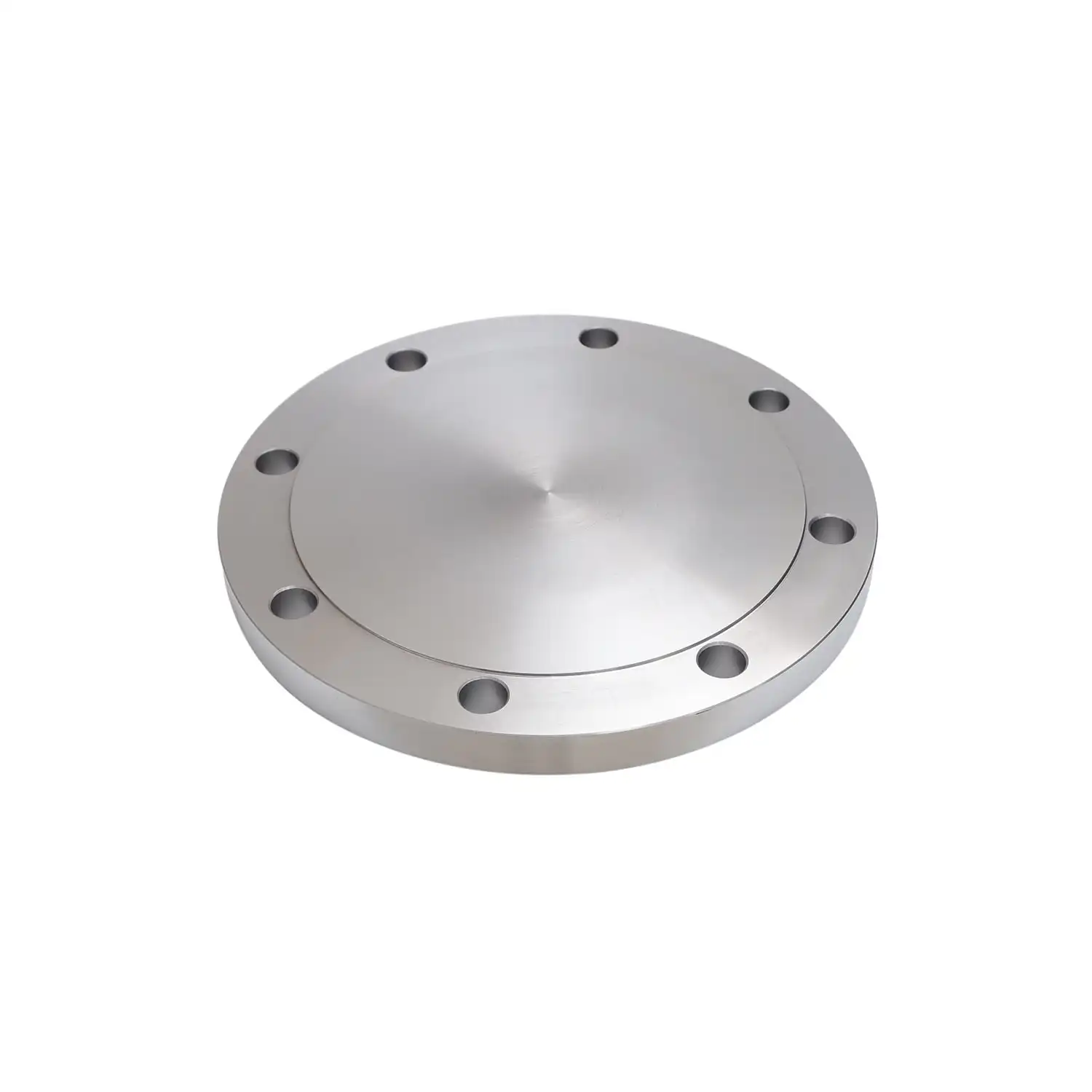
A Blind Flange is a solid disc part that is used to fully seal pipe ends and stop fluid from leaking in plumbing systems. This special part doesn't have any openings like most flanges do, which makes it perfect for line termination uses. The solid construction can handle the most bent stress in the middle while still keeping a strong gasket seating force around the edges. This makes sure that the seal works reliably in harsh industrial conditions. When safe, leak-proof seals are needed for the ends of high-pressure lines, these closing plates are very helpful. Because it can be taken apart, it's easy to do upkeep, inspections, and future system expansions without having to cut or join. If you need to make changes, all you have to do is take off the joint to get to the inside of the pipe or make the system bigger as needed.
Spectacle Blind Flange Configuration
The figure-eight or "spectacle" shape of spectacle blind flanges is made up of two round discs linked by a web or handle piece. One disc stays solid (blind position), and the other has a hole in the middle that fits the diameter of the pipeline (open position). With this two-disc design, the device can be turned between flow and separation settings without having to be taken completely off of the flanged connection. Because spectacle screens can be used in a variety of ways, they are especially useful in situations where isolation processes need to be done often. Maintenance workers can check the flow state visually and safely shut down parts of the pipeline for regular checks or emergencies. Because it is permanently installed between two standard flanges, it doesn't need to be taken apart in order to change positions.
Industrial Applications and Standards Compliance
International standards like ASME B16.5, ASME B16.47, EN 1092-1, and JIS B2220 are met by both types of flanges, making them compatible with piping systems around the world. To meet the needs of different environments and chemical interaction standards, the materials available include carbon steel, stainless steel types 304 and 316L, and different alloy steels. In industry, it is used in petrochemical factories, water treatment plants, ship installations, and power plants. Each location has its own problems when it comes to pressure rates, high temperatures, and exposure to corrosive media, which affects the choice of materials and design requirements.
Pros and Cons of Blind Flanges
Advantages of Standard Blind Flanges
The fundamental simplicity of blind flange design gives them a number of practical benefits that make them appealing for simple pipe termination tasks. The installation process is still pretty easy; all you need are standard flanged connection methods, the right gasket, and the right bolt pressure specs. Cost-effectiveness is a big plus, especially for situations where the pipe end needs to be fixed or semi-permanent. The materials are still cheaper than alternatives to vision blinds, and the form is simpler, which makes it easier to make. Standard availability in a range of sizes, from DN15 to DN5000, and pressure grades, from PN6 to PN160, makes sure that the supply chain is supported reliably. Because materials are so flexible, engineers can choose carbon steel for everyday tasks, stainless steel for places where corrosion is a problem, or special metals for places where temperatures are very high. The solid disc design gives the structure a lot of strength, and it can handle full system pressure without any risk of flow bypass or interior leaks.
Limitations and Operational Constraints
Even though Blind Flange installations have some benefits, they also have some practical limits that must be taken into account when designing the system. For any pipeline access, the flanged link has to be completely taken apart, which includes removing the bolts and replacing the gaskets. Space needs can be a problem in pipe areas that are already crowded and will need to be accessed for repair often. For the removal process to work, there needs to be enough room around the flange connection. This could make installations harder in tight areas or on pipe racks that are very close together. How well the seal works relies on which gasket is used, how well the surface is finished, and how it is installed. Leaks can happen when parts don't fit right or when gaskets wear out, and they need to be taken apart completely to fix. Because it is a fixed installation, changes to the system that need to be isolated for a short time may need more complicated shutdown processes.
Pros and Cons of Spectacle Blind Flanges
Operational Flexibility and Safety Benefits
Spectacle blind flanges work great in situations that need operating freedom and stricter safety rules. Being able to change between open and closed positions without taking the whole unit off cuts down on repair time and the chance of losing parts while changing positions. Visual flow status confirmation lets you check right away that the separation conditions are correct, which is very important for maintaining safety and following operations rules. The handle or web piece that sticks out makes it clear whether the system is in flow mode or isolation mode. This makes it less likely that operating mistakes will happen that could risk safety or process integrity. Maintenance efficiency goes up by a huge amount in systems that need to be isolated often. The quick position changes that are possible with spectacle blind setups are helpful for process facilities that do regular checks, cleaning, or equipment maintenance. The fixed fitting means that the gasket doesn't need to be replaced during normal operation cycles.
Design Complexity and Cost Considerations
When sight blind flanges get better at what they do, they get more complicated, bigger, and more expensive. When compared to normal blind flanges, the dual-disc design with connecting web needs a lot more material and production accuracy, which means it costs more to buy at first. It gets harder to install because the structure needs to be bigger and heavier. The figure-eight shape needs more room to move from one place to another, which could make it less useful in installations with limited space. For bigger circle vision blinds, you might need special lifting tools, which will add to the cost of installation and upkeep. Maintenance tasks get harder when they need to be done, even though they don't happen very often. Service on the dual-disc system with pivot mechanism needs to be done by someone with special training. Replacing a seal requires working with more than one gasket surface, and the bigger size of the unit makes it harder to handle during major maintenance tasks.
How to Choose Between Blind Flange and Spectacle Blind for Your Project
Operational Requirements Assessment
The choice between normal and spectacle blind designs should be based on the needs of the individual project. Even though it costs more at first, spectacle blind flexibility is usually worth it for tasks that need to be isolated often, like repairing process equipment or following regular inspection routines. Standard Blind Flange options are often the most cost-effective way to terminate systems that need to be fixed or semi-permanent. In situations where entry frequency is low and practical ease is more important than flexibility, the simplified design works reliably. Safety is a very important factor in the choosing process. In high-risk situations involving dangerous materials, high pressures, or working in a small area, installing spectacle blinds may be the best way to limit maintenance exposure and lower operating risks.
Material Selection and Environmental Factors
The environment has a big effect on the choice of material for both types of flanges. Carbon steel is a cost-effective material for standard industrial settings with normal levels of temperature and pressure. Grades 304 or 316L stainless steel are better at resisting rust in chemical processing or naval settings. When exposed to high temperatures or media that is very toxic, special grade steels are needed. Duplex stainless steels are stronger and don't rust, making them ideal for use in chloride-rich settings or offshore sites. The choice of materials must be in line with the design factors of the system and its long-term operating needs. The pressure class requirements must take into account how the system works and leave enough room for error. Standard ratings from Class 150 to Class 2500 are enough for most commercial uses. However, for high-pressure systems that are very specific, unique engineering solutions may be needed.
Supplier Selection and Quality Assurance
Working with reputable makers makes sure that you follow international rules and that your products work as expected. Material tracking, dimensional verification, and pressure testing procedures should all be part of quality assurance systems. Certified test results and material certificates are proof that the materials and tests meet the requirements of the regulations and the project is approved. When custom specs or unique materials are involved, lead time management is very important for making sure that projects run on time. Delivery times for standard setups are usually faster, while production times for complicated spectacle blind systems may be longer.
Installation and Inspection Best Practices
Proper Installation Procedures
To install a flange correctly, the matching surfaces must first be carefully prepared, making sure they are clean, smooth, and free of any flaws that could affect how well they close. When choosing a gasket, it's important to think about the temperature, pressure, and chemical stability of the product. To get regular gasket compression and stop distortion during bolt placement, tightening patterns must be followed in a planned way. The torque specs should be based on what the manufacturer recommends and what the relevant standards are. There should also be processes in place to make sure the installation was done correctly.
Inspection and Testing Protocols
Visual checks should be made for correct alignment, gasket positioning, and bolt engagement as part of post-installation checking processes. Before the system is put into service, pressure testing makes sure it is solid and finds any possible leaks. Regular maintenance plans need to include checking the state of the gaskets, making sure the bolts are tight, and looking at the surface for harm or corrosion. Preventive maintenance plans keep sealing systems working reliably for longer periods of time and increase their service life. Ultrasonic thickness measurement and magnetic particle inspection are two examples of non-destructive testing methods that can be used for important monitoring tasks. These methods help find problems with material decline or stress-related issues early on, before they become a threat to the stability of the system.
Conclusion
When choosing between blind flanges and spectacle blind designs, you need to carefully think about how the system will be used, how often it will need upkeep, and how much it will cost in the long run. Standard blind flanges are a reliable and cost-effective way to terminate pipes permanently when ease and structural stability are most important. Spectacle blind flanges are worth the extra money they cost at first because they give you more operational freedom, better safety, and less maintenance time in situations where you need to do isolation operations often. When choosing materials, they need to be compatible with the surroundings and the system's specifications. Also, they need to be installed and maintained correctly so they work at their best for as long as they're needed. When procurement workers understand these basic differences, they can make choices that improve the results of projects and the speed of operations.
HONG KAI FORGING delivers world-class Blind Flange and spectacle blind solutions engineered to meet demanding industrial requirements across global markets. Our comprehensive manufacturing capabilities encompass forging, heat treatment, precision machining, and rigorous quality testing, ensuring products that comply with ASME, EN, DIN, and GOST standards. With extensive size ranges from DN15 to DN4000 and pressure ratings up to PN160, we provide reliable blind flange supplier solutions for petrochemical, marine, and power generation applications. Contact kevin.zhao@hkflange.com to discuss your specific requirements and discover how our competitive pricing and proven reliability can optimize your next project.
References
1. Smith, J.R. "Industrial Flange Design and Application Standards." Mechanical Engineering Handbook, 2023.
2. Anderson, M.K. "Comparative Analysis of Blind Flange vs Spectacle Blind Performance in High-Pressure Systems." Journal of Process Engineering, 2022.
3. Thompson, L.C. "Material Selection Guidelines for Industrial Flanges in Corrosive Environments." Corrosion Prevention Quarterly, 2023.
4. Wilson, D.A. "Installation and Maintenance Best Practices for Pipeline Isolation Equipment." Industrial Maintenance Review, 2022.
5. Roberts, P.N. "Economic Evaluation of Spectacle Blind vs Traditional Blind Flange Systems." Process Economics International, 2023.
6. Martinez, C.E. "Safety Considerations in Industrial Piping Isolation Equipment Selection." Occupational Safety Engineering, 2022.
Clear Communication, and Reliable Technical Support