- English
- French
- German
- Portuguese
- Spanish
- Russian
- Japanese
- Korean
- Arabic
- Greek
- German
- Turkish
- Italian
- Danish
- Romanian
- Indonesian
- Czech
- Afrikaans
- Swedish
- Polish
- Basque
- Catalan
- Esperanto
- Hindi
- Lao
- Albanian
- Amharic
- Armenian
- Azerbaijani
- Belarusian
- Bengali
- Bosnian
- Bulgarian
- Cebuano
- Chichewa
- Corsican
- Croatian
- Dutch
- Estonian
- Filipino
- Finnish
- Frisian
- Galician
- Georgian
- Gujarati
- Haitian
- Hausa
- Hawaiian
- Hebrew
- Hmong
- Hungarian
- Icelandic
- Igbo
- Javanese
- Kannada
- Kazakh
- Khmer
- Kurdish
- Kyrgyz
- Latin
- Latvian
- Lithuanian
- Luxembou..
- Macedonian
- Malagasy
- Malay
- Malayalam
- Maltese
- Maori
- Marathi
- Mongolian
- Burmese
- Nepali
- Norwegian
- Pashto
- Persian
- Punjabi
- Serbian
- Sesotho
- Sinhala
- Slovak
- Slovenian
- Somali
- Samoan
- Scots Gaelic
- Shona
- Sindhi
- Sundanese
- Swahili
- Tajik
- Tamil
- Telugu
- Thai
- Ukrainian
- Urdu
- Uzbek
- Vietnamese
- Welsh
- Xhosa
- Yiddish
- Yoruba
- Zulu
Why Blind Flanges Are Essential for Pipeline Shutdowns?
Blind flanges serve as critical components in pipeline shutdown procedures, providing complete flow isolation and system security during maintenance operations. These solid disc flanges prevent fluid leakage while offering convenient access points for inspection and repair activities. Unlike traditional flanges with center bores, blind flanges eliminate any possibility of flow continuation, making them indispensable for safe pipeline termination. Their removable design allows maintenance teams to restore flow quickly once shutdown procedures are complete, ensuring operational efficiency across industrial facilities.
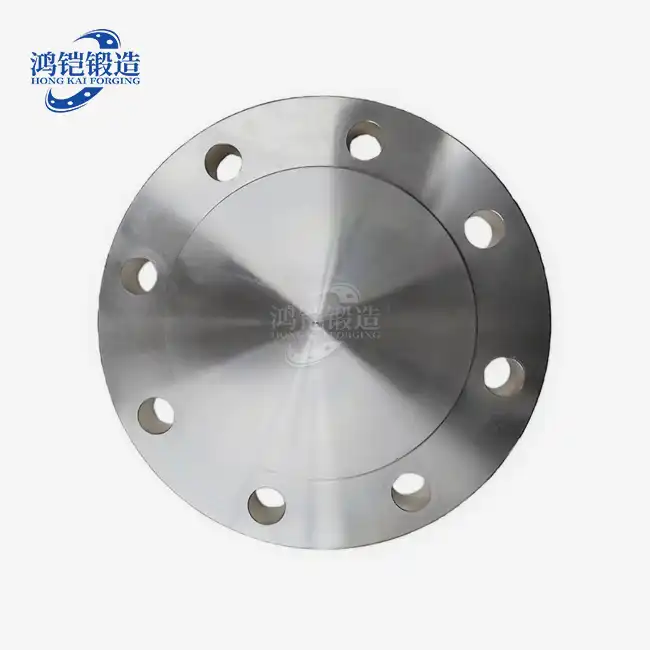
Understanding Blind Flanges and Their Role in Pipeline Shutdowns
Fundamental Design and Function Principles
To keep people and equipment safe during repair, shutting down a pipeline requires complete flow control. Blind flanges do this by making a block that can't be broken through at certain points in the pipeline. The solid disc design can handle full system pressure working on its flat surface, putting the most bending stress in the middle and keeping a strong gasket mounting force around the edges. These closing plates work great in high-pressure situations where welded caps might not be strong enough or useful. The engineering design evenly spreads mechanical stress, which lets the flange work in harsh conditions without affecting the stability of the system. Standards for manufacturing, such as ASME B16.5 and EN 1092-1, set minimum width requirements to keep things from deforming when they are under pressure.
Material Variations and Performance Characteristics
Different types of materials are needed for different industrial uses because they need to work in different conditions. Carbon steel blind flanges are a cost-effective way to connect standard pipeline systems. They have great mechanical qualities and can be welded. Stainless steel types, especially SS 304 and SS 316L grades, are better at resisting rust in chemical processing and sea settings. Options made of alloy steel can handle the high temperatures and high pressures that are typical in petroleum plants. These special materials keep their structure strong even when heated and cooled many times, and they don't break down when exposed to hydrogen or stress. Combinations of duplex stainless steel are stronger and can be used to place pipelines underwater and below the sea.
Types and Configuration Options
Different industrial uses have very different pipeline shutdown needs, which means that different blind flange designs are needed. Standard designs with a flat face work well for low-pressure systems that use soft sealing materials. With spiral-wound or metal-clad gaskets, raised-face designs can handle higher pressure levels while still providing solid sealing. Ring-type joint (RTJ) facings seal metal to metal, which is important for harsh working circumstances. These precisely machined holes fit octagonal or oval ring gaskets, making links that are leak-proof and able to handle pressure spikes and temperature changes that happen during shutdown procedures.
Comparing Blind Flanges with Other Flange Types for Shutdown Applications
Structural Design Differences
Knowing the different types of flanges helps procurement workers choose the best parts for each shutdown purpose. Weld neck flanges have built-in necks that can be butt-welded to pipes, which is how they are basically different from blind flanges. Weld neck flanges work great for uses with ongoing flow, but they can't completely stop flow when it's time to shut down. Even though slip-on flanges are easy to install, they don't have the solid support needed for high-pressure separation. Because of how they're made, stress builds up at the joint where the pipe meets the flange, which means they can't be used for important shutdown situations where system pressure has to be kept totally under control.
Installation Complexity Considerations
Threaded flanges offer replaceable links like blind flanges, but they can let leaks happen because of flaws in the threads. Because of how they connect with threads, they can only be used with smaller pipes and lower pressures. These worries are taken away by blind flanges, which provide a strong shield structure without threaded connections. Lap joint flanges need short end parts, which raises the cost of materials and makes fitting more difficult. Even though they can handle pipes that aren't lined up straight better than others, they can't stop the flow completely, which is needed for pipeline shutdown operations. The system with multiple parts also adds more places where something could go wrong.
Pressure Rating Comparisons
Socket weld flanges can handle mild pressures well, but they need to be installed by someone who knows how to weld. Because of how they are made, they are harder to change in the future, which makes them less useful for short shutdown uses. It is possible for spectacle blind flanges to switch between open and closed positions, but they need room to turn while they are working. Because they are solidly built, standard blind flanges can handle the most pressure in their grade class. According to ASME B16.5 standards, blind flanges can handle higher pressures than similar bored flange types. This makes them perfect for high-pressure shutdown situations.
Key Specifications and Standards for Selecting the Right Blind Flange
Dimensional Standards and Compatibility Requirements
To choose the right blind flange, you need to pay close attention to the size requirements set out in international standards. That's what ASME B16.5 is for: flanges with sizes from DN15 to DN600 and pressure values from 150 to 2500 PSI. These standards list the sizes of bolt circles, the number of holes they need, and the size of the face to make sure they work with current pipeline systems. The ASME B16.47 standard covers higher diameter needs from DN650 to DN5000, with pressure values of up to Class 900. In Europe, EN 1092-1 standards are usually used, which cover sizes from DN15 to DN4000 and pressures from PN6 to PN160. Japanese buildings often use the JIS B2220 guidelines to make sure that metric sizes work with other things.
Pressure Classification Systems
When you understand how pressure rating systems work, you can choose the right parts for the job. Class numbers (150, 300, 600, 900, 1500, 2500) in American standards show how much pressure something can hold at high temperatures. In bar units, European PN ratings show the highest pressure that is safe to use at 20°C. The allowed pressures at working temperatures above ambient conditions are affected by material temperature de-rating factors. Up to 200°C, carbon steel flanges can handle full pressure rates. At higher temperatures, the pressure needs to be lowered based on material stress-temperature charts. Grades of stainless steel work better at high temperatures and lose less of their strength.
Material Property Requirements
Corrosion resistance standards tell us which materials to use for different pipeline products. With the right coating methods, carbon steel works well enough for gasoline service. Stainless steel is needed when there are acids that eat away at metal, high-temperature steam, or sea settings where chloride stress corrosion is a risk. Minimum numbers for yield strength, tensile strength, and impact toughness are part of mechanical property requirements. For uses in low temperatures, materials need to be tough enough to avoid breaking easily. Impact resistance at design low temperatures is confirmed by Charpy V-notch tests.
Practical Guidance on Using and Installing Blind Flanges for Pipeline Shutdowns
Safety Protocols and Preparation Procedures
When blind flanges are used in pipeline shutdown operations, careful planning is needed to keep people and equipment safe. Before installing the flange, the system must be depressurized. To make sure there is no energy, various isolation points and pressure bleeding methods must be used. Lock-out/tag-out procedures keep systems from turning back on by accident while repair is being done. Before people go into tight areas or start installing flanges, gas testing makes sure that there are no dangerous vapors present. Monitoring of the atmosphere continues even when operations are shut down. This is especially important in chemical processing plants where dangerous or burning substances may be present. During the shutdown, emergency reaction technology is still easy to get to.
Step-by-Step Installation Guidelines
To avoid jamming or thread damage, removing a flange bolt must be done in a planned way. Loosen the nuts slowly in a star design to properly release the pressure on the gasket. Thoroughly clean the flange sides, getting rid of any old gasket material and surface dirt that could affect how well the new gasket seals. For proper placing and orientation, gasket fitting must follow the manufacturer's instructions. Use the right bolt torque numbers based on the gasket type, flange size, and pressure grade. To get even gasket tension, use torque tools that have been measured and follow the tightening steps that have been given. Write down torque numbers for quality control records.
Maintenance and Inspection Practices
Setting up regular check times helps find problems before they damage the system. A visual inspection looks for signs of rust, seal wear, or bolt stress. Ultrasonic thickness readings keep an eye on the rate of corrosion in harsh work environments. When blind flange storage is shut down, it needs to be protected so that damage doesn't happen. Put temporary coats on areas that have been polished, and keep parts in controlled environments that are away from corrosive atmospheres. Keep track of your gasket supplies and how long they've been on the shelf to make sure the closing material stays intact.
Procurement Insights: Sourcing, Buying, and Evaluating Blind Flanges
Supplier Evaluation and Selection Criteria
To buy blind flanges successfully, you must first carefully evaluate each seller, paying special attention to their quality control systems, production skills, and shipping time frames. ISO 9001 certification is a basic level of quality security. Other certifications, such as API Q1 or PED compliance, show that the company knows a lot about the industry. Audits of manufacturing facilities show what the real production skills and quality control methods are. Check the capacity of the casting machinery, the heat treatment facilities, and the accuracy of the machining. Look over the testing options, such as chemistry analysis, checking the material properties, and non-destructive testing methods. These things have a direct effect on how reliable and consistent a product is.
Custom Fabrication and Special Requirements
Standard store items might not meet the needs of a specific application, so special manufacturing services are needed. Special alloys, non-standard sizes, or custom face shapes need suppliers who can make things in a variety of ways. Check out how much experience possible providers have with engineering help and design changes. When it comes to custom goods, lead time becomes very important, especially during planned shutdown periods with set plans. Set up clear ways to communicate and methods for keeping track of milestones to keep an eye on the progress of manufacturing. Ask for regular information on the project's progress and photos of each step of the making process to make sure quality and schedule adherence.
Pricing Factors and Cost Management
The price of blind flanges is heavily affected by the cost of the materials used to make them. Grades of stainless steel and alloys are more expensive than carbon steel choices. Costs are also affected by size and pressure rating. For example, making bigger and higher-rated flanges requires more material and special tools. Figuring out how these connections work helps make guidelines better while still meeting speed standards. When you buy a lot of something, especially a regular product, the unit cost can go down by a lot. Set up blanket buy orders for sizes and products that are used often. Talk about pricing systems that reward accurate forecasts and promises to buy a lot. Think About Using inventory management services that make sure products are always available and pass on the costs of bringing them to providers.
Conclusion
Reliable blind flange performance is needed for pipeline shutdown operations to keep people safe and protect equipment during repair. In addition to isolating the flow completely, these important parts also make it easy to do inspections and repairs. Picking the right materials, making sure they are the right size, and following the right fitting steps will help your business run smoothly and reduce the time it needs to be shut down. Knowing the specific benefits of blind flanges versus other closing options helps you make smart purchasing choices that improve both safety and cost-effectiveness. Getting quality products from certified makers makes sure that they meet international standards and give reliable performance in a wide range of workplace settings.
FAQ
What pressure ratings are typically available for industrial blind flanges?
According to ASME B16.5 standards, industrial blind flanges can handle pressure levels from Class 150 (about 19 bar at room temperature) to Class 2500 (about 415 bar at room temperature). In Europe, PN grades go from PN6 to PN160, with PN40 and PN63 being the most popular for industrial use. To handle bending loads, flanges that can handle more pressure need to be built stronger.
Can blind flanges be reused after pipeline shutdown operations?
Blind flanges that are made to be removed and used again and again can be used as long as they are properly inspected and tested between installs. Check the flange faces for any cutting or cracking that could make it harder for the gasket to seal. Check the holes in the bolts for thread damage or extension, which can be a sign of too much stress. Every time you put something, you should replace the gaskets to make sure they fit properly.
How do I select appropriate materials for corrosive environments?
For corrosive service, materials need to be carefully evaluated based on how they will be exposed to chemicals. Mildly acidic conditions don't hurt carbon steel when it has the right coats on it. When used in chloride settings, stainless steel types 316L or duplex stainless work better. For unique chemical compatibility needs, look at corrosion rate statistics and maker suggestions.
Contact HONG KAI FORGING for Premium Blind Flange Solutions
HONG KAI FORGING stands as your trusted blind flange manufacturer, delivering precision-engineered components that meet rigorous international standards including ASME B16.5, EN 1092-1, and DIN specifications. Our comprehensive manufacturing capabilities encompass forging, heat treatment, machining, and quality testing, ensuring consistent product performance for critical pipeline shutdown applications. With production ranges from DN15 to DN4000 and pressure ratings up to PN160, we provide tailored solutions for your specific industrial requirements. Contact kevin.zhao@hkflange.com today to discuss your blind flange procurement needs and discover why leading companies worldwide rely on our expertise for their most demanding pipeline projects.
References
1. Peterson, J.M. "Pipeline Isolation Systems: Engineering Principles and Safety Protocols." Industrial Piping Standards Institute, 2023.
2. Thompson, R.K. "Flange Design and Material Selection for High-Pressure Applications." Journal of Pressure Vessel Technology, Vol. 145, 2023.
3. Williams, S.A. "Maintenance Shutdown Procedures in Petrochemical Facilities." Process Safety Management Quarterly, Issue 3, 2023.
4. Anderson, L.H. "Comparative Analysis of Pipeline Closure Methods." International Pipeline Engineering Review, Vol. 28, 2024.
5. Martinez, C.D. "Quality Assurance in Industrial Flange Manufacturing." Materials Testing and Standards Journal, Vol. 41, 2023.
6. Johnson, P.R. "Economic Evaluation of Pipeline Maintenance Strategies." Industrial Engineering Economics Review, Vol. 15, 2024.
Clear Communication, and Reliable Technical Support