- English
- French
- German
- Portuguese
- Spanish
- Russian
- Japanese
- Korean
- Arabic
- Greek
- German
- Turkish
- Italian
- Danish
- Romanian
- Indonesian
- Czech
- Afrikaans
- Swedish
- Polish
- Basque
- Catalan
- Esperanto
- Hindi
- Lao
- Albanian
- Amharic
- Armenian
- Azerbaijani
- Belarusian
- Bengali
- Bosnian
- Bulgarian
- Cebuano
- Chichewa
- Corsican
- Croatian
- Dutch
- Estonian
- Filipino
- Finnish
- Frisian
- Galician
- Georgian
- Gujarati
- Haitian
- Hausa
- Hawaiian
- Hebrew
- Hmong
- Hungarian
- Icelandic
- Igbo
- Javanese
- Kannada
- Kazakh
- Khmer
- Kurdish
- Kyrgyz
- Latin
- Latvian
- Lithuanian
- Luxembou..
- Macedonian
- Malagasy
- Malay
- Malayalam
- Maltese
- Maori
- Marathi
- Mongolian
- Burmese
- Nepali
- Norwegian
- Pashto
- Persian
- Punjabi
- Serbian
- Sesotho
- Sinhala
- Slovak
- Slovenian
- Somali
- Samoan
- Scots Gaelic
- Shona
- Sindhi
- Sundanese
- Swahili
- Tajik
- Tamil
- Telugu
- Thai
- Ukrainian
- Urdu
- Uzbek
- Vietnamese
- Welsh
- Xhosa
- Yiddish
- Yoruba
- Zulu
Socket Welding Flange: Dimensions, Pressure Ratings & Use Cases
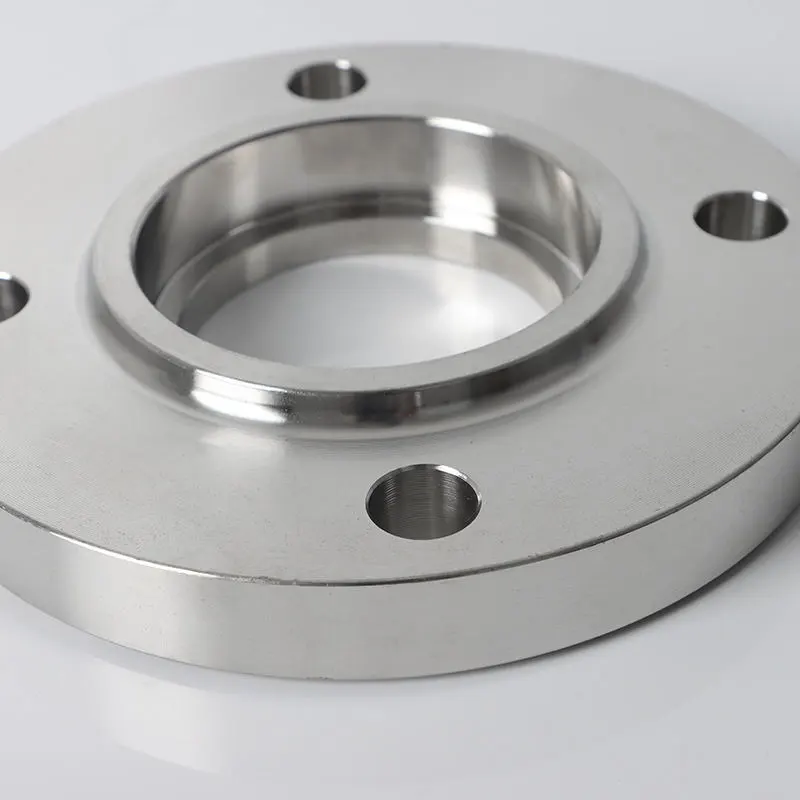
Socket welding flanges are an important part of modern pipe systems because they are very reliable in high-pressure and high-temperature situations. The Socket Welding Flange has a precision-engineered socket that fits over the pipe end. This allows external fillet welding while stopping the internal weld from sticking out. Because of how they are made, they can't be used on small-diameter, high-pressure pipes where maintaining leak integrity is very important. When procurement pros know about their different sizes, pressure grades, and uses, they can make smart choices that improve system performance and cut costs in a wide range of fields, from nuclear power generation to processing petrochemicals.
Understanding Socket Welding Flanges: Dimensions and Standards
Essential Design Characteristics and Construction
Socket welding flanges have a counterbore that is set back and fits the pipe end. External fillet welding makes a strong mechanical link. This special design stops the internal weld metal from sticking out, which makes them perfect for situations where flow leakage needs to be avoided. The socket naturally lines up the parts, so there's no need for tack welding during installation. This is especially helpful in tight areas where exact positioning is hard to achieve. To make sure that the dimensions are exact, the process starts with precise casting and then moves on to careful cutting. Each flange goes through a lot of quality checks to make sure it meets international standards and works well even in tough conditions. The small structure makes them more resistant to tiredness than regular slip-on designs, which makes them great for places with a lot of vibration.
International Standards and Compliance Requirements
Our socket welding flanges are safe and compatible around the world because they meet a number of foreign standards. Flanges with pressure classes from 150 to 2500 are governed by ASME B16.5 and range from NPS 1/8" to 4". The EN 1092-1 standards cover sizes from DN6 to DN100 and pressure ranges from PN16 to PN400. The JIS B2220 standards cover sizes from DN6 to DN100 and pressure ranges from 10K to 40K. The sizes of the standards range from DN15 to DN100, and the pressure ranges from PN6 to PN160. These detailed standards make sure that our Socket Welding Flange goods meet strict safety standards in a wide range of industry settings and markets. Standardization also makes it easier for current systems and parts from different makers to work together.
Material Specifications and Grade Options
The choice of material is very important for how well and how long a plate lasts. When used for normal purposes, carbon steel types like ASTM A105 are very strong and don't cost too much. For chemical handling conditions, stainless steels like ASTM A182 F304/316L are better at resisting corrosion. For certain high-temperature uses that need better creep protection, alloy steel grades are offered. For example, the normal expansion gap is 1/16 inch (1.6 mm), the face finish is 125–250 RMS according to ASME B16.5, the hardness ratings for carbon steel grades are HB ≤ 200, and the temperature runs from -29°C to +400°C based on the material. These standards make sure that the best performance is achieved in a wide range of operating situations.
Technical Comparison: Socket Welding Flange vs Other Flange Types
Performance Analysis Against Alternative Designs
In some situations, socket welding flanges are clearly better than other types of flanges. They have 50% higher failure strength than slip-on flanges, which makes them better for places with a lot of shaking. Unlike threaded flanges, they make permanent links that don't leak and can be used to move dangerous media without worrying about the threads wearing out over time. The external fillet weld design makes it easy to check visually and keeps catalysts and process media from getting contaminated inside. This benefit is especially useful in petrochemical settings where the purity of the process can't be harmed. When compared to butt weld flanges, the single external weld needs less precise cutting and preparation. This lowers the total project costs while keeping performance the same.
Structural Integrity and Leak Prevention
The Socket Welding Flange socket alignment seals off stray emissions. This is crucial for costly or harmful material that must never leak. This design eliminates internal weld spatter, ensuring smooth flow and protecting sensitive operations. The Lap Joint Flange's built-in alignment function speeds installation and reduces welding errors, so workers can finish the task quickly, even in challenging field circumstances.
Installation and Working Principles of Socket Welding Flanges
Installation Best Practices and Procedures
To install socket welding flanges correctly, you need to follow standard welding methods and meet certain size requirements. After fully inserting the pipe into the hole, it should be pulled out by 1/16 inch to make room for growth. This gap lets the structure expand with temperature changes while keeping its stability when it's being used. For the external fillet weld, qualified welding methods should be used. For the root pass, GTAW (Gas Tungsten Arc Welding) is usually used, followed by SMAW (Shielded Metal Arc Welding) for the fill and cap passes. If the material is good enough and the job calls for it, a post-weld heat treatment may be needed. Visual inspection of the finished weld makes sure that the penetration is correct and that there are no flaws.
Industrial Applications and Case Studies
Socket welding flanges are ideal for high-pressure hydraulic systems where shaking and pressure variations would destroy threaded connections. Large equipment and power plants need these flanges for hydraulic control systems. Socket Welding Flange is utilised in hazardous processing lines for process integrity. External welds make them easier to monitor and prevent internal contamination. These flanges are used in the process industries to connect instruments, make analyzer sample lines, and connect small-bore process pipes in places where dependability is important. Power plants use Socket Welding Flange parts for instrumented connections and lines that sample superheated steam because the design can handle temperature cycles better than threaded options.
Procurement Guide: Buying Socket Welding Flanges for Your Business
Supplier Selection Criteria and Quality Assurance
To choose the right provider, you need to look at their manufacturing skills, safety certifications, and shipping history. Look for suppliers who are certified to meet national, ASME, EN, DIN, JIS, GOST, and other standards. This will make sure that your projects meet both local and foreign standards, no matter where they are. Excellence in manufacturing should include casting, heat treatment, drilling, and thorough testing as all-in-one skills. To make sure that something works well for a long time, quality assurance procedures must include checking the size, certifying the material, and applying pressure. For important uses, suppliers should give material tracking documents and compliance certificates. Dependable delivery and good packing protect the purity of the product while it's being shipped to project sites.
Cost Factors and Volume Considerations
Price depends on material quality, pressure class, and quantity purchased. Volume discounts add up for large operations, and Socket Welding Flange bespoke manufacturing may need additional tools. Consider the whole cost of ownership, including installation, maintenance, and product lifespan, when evaluating options. Lead times depend on how much of an item is available and how much can be made. Standard grades and sizes usually have faster delivery times, while unusual materials or non-standard forms may need longer production times. By planning buying plans around these factors, you can avoid project delays and the costs that come with them.
Enhancing Your Procurement Strategy with Socket Welding Flanges
Supplier Capabilities and Value-Added Services
These days, providers offer a wide range of services that go beyond just delivering goods. As part of technical support, application engineering, help choosing materials, and fitting suggestions are all given. Some providers offer custom machining services that let you change standard goods to fit your specific needs. After-sales support includes things like guarantee coverage, getting new parts, and help with fixing technical problems. When it comes to important uses, where downtime costs more than the cost of parts, these services are especially helpful. Supports quality control systems and regulatory compliance needs with documentation packages that include material certificates, dimensional reports, and installation directions. This all-around method is shown by Shanxi HongKai Forging, which can do forging, heat treatment, machining, Socket Welding Flange, and a lot of different kinds of tests all at the same time. Our central location in Shanxi Province gives us easy access to a lot of energy and raw materials, which lets us offer low prices without lowering the quality of our products.
Long-term Partnership Benefits
Building relationships with dependable providers can lead to better prices, faster schedule, and the ability to work together technically on tough applications. When suppliers know your exact needs, they can suggest changes and improvements that can lower costs or boost performance. This kind of cooperation is especially helpful when working on new projects or moving into areas where they haven't been used before. As materials science and production methods improve, so does the technology behind the Socket Welding Flange. Working with forward-thinking providers makes sure that you can use these new technologies while still being able to use current systems and processes.
Conclusion
For high-pressure, small-diameter pipe uses in many different industries, socket welding flanges are an important way to connect pipes. Their special design, which combines external welding with internal socket alignment, makes them work better than threaded options while still being cheaper than butt weld setups. When you know about measurement standards, material choices, and application needs, you can make smart purchasing decisions that save you money now and last for a long time. The technology has been used successfully in many important areas, such as nuclear power and petroleum processing. This shows that it is useful for keeping systems running smoothly when failure is not a choice.
FAQ
1. What are the main advantages of socket welding flanges over slip-on types?
Socket Welding Flange components offer 50% higher fatigue strength compared to slip-on designs, making them superior for high-vibration applications. The socket design provides built-in pipe alignment, eliminating tack welding requirements and reducing installation time. The external fillet weld makes it easy to check visually and keeps process media from getting into the internal join.
2. How do I select appropriate pressure ratings for my application?
The working pressure, temperature, and safety factors needed by the codes affect the choice of pressure grade. ASME B16.5 gives numbers for pressure and temperature for different types of material and flanges. Talk to skilled engineers to make sure you make the right choice based on your working conditions and the rules that apply to you.
3. Are custom sizes available for unique pipeline requirements?
To meet special size needs that aren't covered by normal size ranges, socket welding flanges can be made to order. Usually, custom manufacturing takes longer and costs more for tools. Giving sellers thorough information like measurement sketches, the amount of material needed, and the required specs helps them give accurate quotes and delivery times.
Partner with HONG KAI FORGING for Premium Socket Welding Flange Solutions
HONG KAI FORGING is ready to help you with your important pipe projects by making Socket Welding Flange products that are precisely designed and meet the highest standards in the industry. Our wide range of production skills, including forging, heat treating, machining, and testing, ensure stable quality and on-time delivery. As a top provider of socket welding flanges, we keep a large inventory and can make unique parts to meet the needs of a wide range of projects. Get in touch with kevin.zhao@hkflange.com right away for expert advice, cheap quotes, and custom solutions that will help you make the best decisions about your purchases and ensure the long-term reliability of your system.
References
1. American Society of Mechanical Engineers. "Pipe Flanges and Flanged Fittings: NPS 1/2 through NPS 24 Metric/Inch Standard." ASME B16.5-2020.
2. European Committee for Standardization. "Flanges and their Joints - Circular Flanges for Pipes, Valves, Fittings and Accessories." EN 1092-1:2018.
3. ASTM International. "Standard Specification for Carbon Steel Forgings for Piping Applications." ASTM A105/A105M-2019.
4. Japanese Industrial Standards Committee. "Steel Pipe Flanges." JIS B 2220:2004.
5. Deutsches Institut für Normung. "Flanges and Their Joints - Circular Flanges for General Purpose Applications." DIN 86044:2008.
6. National Association of Corrosion Engineers. "Materials Requirements - Sulfide Stress Cracking Resistant Metallic Materials for Oilfield Equipment." NACE MR0175-2021.
Clear Communication, and Reliable Technical Support
_1787370234928.webp)
_1785982897695.webp)