- English
- French
- German
- Portuguese
- Spanish
- Russian
- Japanese
- Korean
- Arabic
- Greek
- German
- Turkish
- Italian
- Danish
- Romanian
- Indonesian
- Czech
- Afrikaans
- Swedish
- Polish
- Basque
- Catalan
- Esperanto
- Hindi
- Lao
- Albanian
- Amharic
- Armenian
- Azerbaijani
- Belarusian
- Bengali
- Bosnian
- Bulgarian
- Cebuano
- Chichewa
- Corsican
- Croatian
- Dutch
- Estonian
- Filipino
- Finnish
- Frisian
- Galician
- Georgian
- Gujarati
- Haitian
- Hausa
- Hawaiian
- Hebrew
- Hmong
- Hungarian
- Icelandic
- Igbo
- Javanese
- Kannada
- Kazakh
- Khmer
- Kurdish
- Kyrgyz
- Latin
- Latvian
- Lithuanian
- Luxembou..
- Macedonian
- Malagasy
- Malay
- Malayalam
- Maltese
- Maori
- Marathi
- Mongolian
- Burmese
- Nepali
- Norwegian
- Pashto
- Persian
- Punjabi
- Serbian
- Sesotho
- Sinhala
- Slovak
- Slovenian
- Somali
- Samoan
- Scots Gaelic
- Shona
- Sindhi
- Sundanese
- Swahili
- Tajik
- Tamil
- Telugu
- Thai
- Ukrainian
- Urdu
- Uzbek
- Vietnamese
- Welsh
- Xhosa
- Yiddish
- Yoruba
- Zulu
Welding Neck Flange Market Trends and Growth Forecast
The market for Welding Neck Flange components is incredibly strong and keeps growing, thanks to high demand from key building sectors around the world. According to the latest market research, the world market will grow at a rate of 4.8% per year until 2030, and it will be worth $2.1 billion by 2028. This growth is due to more money being put into infrastructure for green energy, oil and gas exploration, and chemical processing plants, all of which need high-performance piping systems that can work in harsh circumstances.
Current Market Landscape of Welding Neck Flanges
Welding Neck Flange components are in high demand around the world right now. This is mostly because of important businesses like oil and gas, petroleum processing, and power generation facilities. Most action is centered in North America, Europe, the Middle East, India, and China, where industrial growth is still driving the need for purchases.
Regional Market Distribution
Market segmentation shows that different regions have different needs and tastes. In North America, markets put a lot of weight on ASME B16.5 compliance for sizes from NPS ½" to 24" and pressure values from Class 150 to Class 2500. In Europe, buying things is based on EN 1092-1 standards, which cover sizes from DN10 to DN2000 and pressure ranges from PN6 to PN400. Japan and India are two Asian markets that strictly follow the JIS B2220 standards for sizes DN10 to DN1000 and pressure classes 10K to 40K.
Material Specifications and Standards Compliance
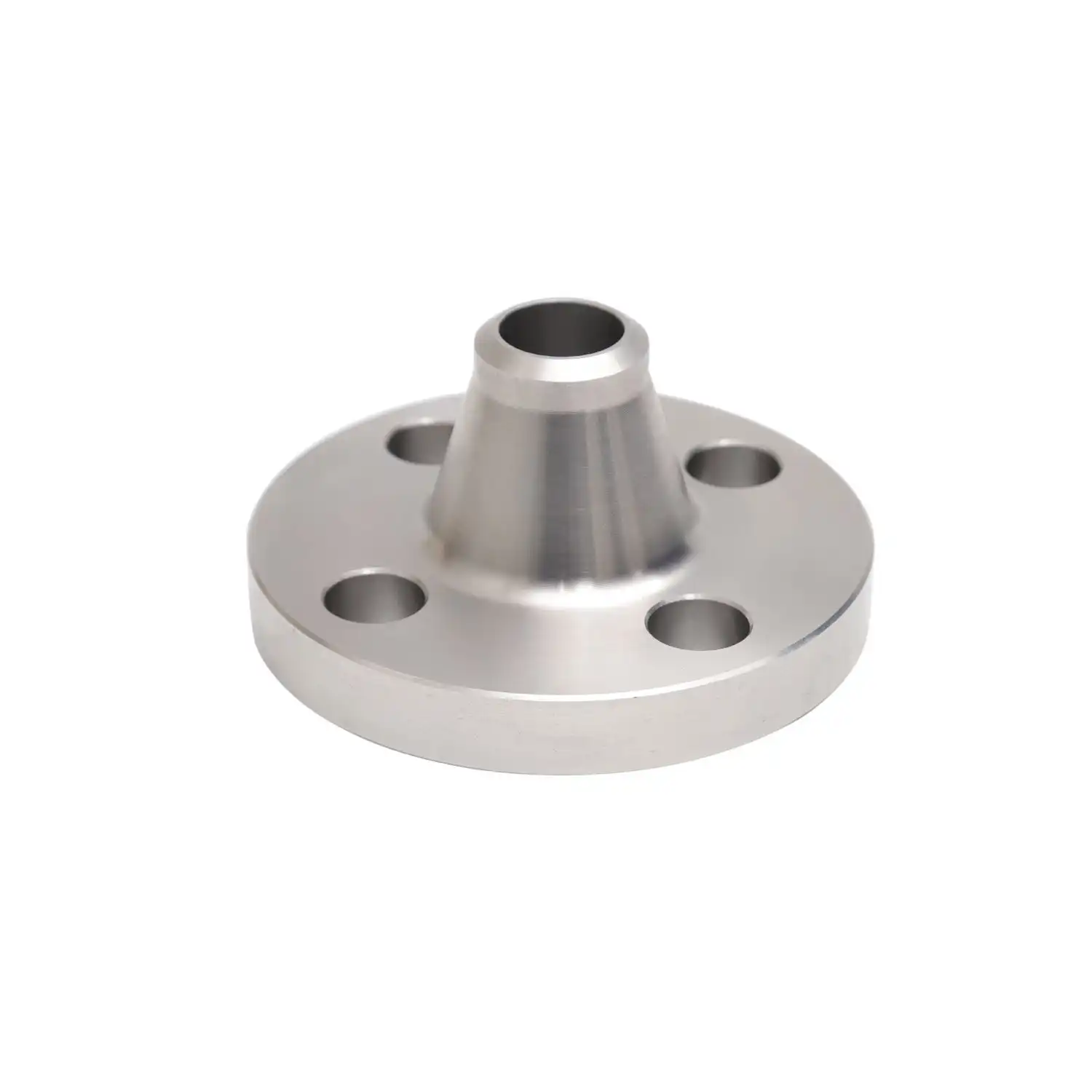
The market divides goods into groups based on the types of materials they are made of. The main groups are carbon steel (ASTM A105), stainless steel (ASTM A182 F304/316L), and alloy steel (ASTM A182 F11/F22). These materials are put through a lot of tests to make sure they meet foreign standards like ASME B16.5, ASME B16.47, EN 1092-1, DIN, and GOST. Because these flanges have a tapered hub design, the stress is spread out better, going from the flange base to the pipe itself. This makes them much more Welding Neck Flange resistant to failure under tough operating conditions.
Emerging Trends Shaping the Welding Neck Flange Industry
As the modern market changes, it shows a number of new trends that are changing how goods are bought and how they are made. As working needs become more stringent, the industry acts by coming up with new materials and improving the manufacturing process.
Advanced Material Technologies
Duplex and super-duplex stainless steel types are popular in situations where corrosion protection and mechanical strength are very important. In offshore settings and chemical processing situations where standard carbon steel options don't work well, these new materials perform better. Tighter dimensional limits are possible thanks to gains in manufacturing precision. Current standards keep standard sizes within ±1mm of accuracy, and range surface finishes from 125 to 250 µin Ra for sealing surfaces.
Digital Transformation in Procurement
Online procurement tools change the way things are bought by letting you compare prices, check specifications, and see if a seller is qualified, all in real time. Digital documentation systems make it easier to track down materials by giving full certification packages that include mill test certificates, dimensional records, and quality assurance paperwork. These technological improvements shorten the time it takes to buy something and make the supply chain clearer.
Sustainability Initiatives
Environmental awareness affects the way things are made, with providers putting in place plans to recycle materials and forge tools that use less energy. Strategies for lowering carbon footprints become more important when choosing a supplier, especially for big building projects where environmental impact studies affect when the project can be approved and when it can be built.
Comparative Analysis: Welding Neck Flange Vs. Other Flanges
Understanding the differences in performance between Welding Neck Flange parts and other flange types helps you make the best choices about system design and procurement. Each type of flange has its own benefits that are best for different applications and fitting conditions.
Performance Advantages Over Slip-On Flanges
When compared to fillet-welded slip-on options, welding neck designs with a butt-weld connection offer better structural stability. This way of connecting allows for a full radiography inspection, which makes sure that the quality of the weld is checked around the whole joint. The curved hub design better handles thermal expansion, keeping the seal's integrity, Welding Neck Flange through changes in temperature that would weaken the performance of a slip-on flange.
Material Selection Considerations
For chemical processing applications, stainless steel options offer excellent corrosion protection. For normal industrial applications, carbon steel options offer cost-effective solutions. Alloy steel compositions fill in holes in performance by improving temperature protection and mechanical qualities for specific uses. The accuracy of the hole cutting ensures smooth flow, removing turbulence and lowering erosion and rust compared to other types of flanges that have internal profiles that aren't continuous.
Procurement Guide: How to Choose and Buy Welding Neck Flanges
For buying strategies to work, they need to take into account a lot of factors, such as technical requirements, source skills, and total cost. Making good buying choices means balancing the needs of the current project with the needs of long-term operating success.
Technical Specification Assessment
To figure out the pressure rating, you have to look at the highest working pressures, temperature ranges, and safety factor standards. Standard compliance verification makes sure that the new system will work with current parts and meet legal standards. The choice of face type between Raised Face (RF), Flat Face (FF), and Ring Type Joint (RTJ) configurations is based on the needs of the sealing system and the fit of the gaskets.
Supplier Qualification Criteria
The manufacturing capability review looks at things like the company's ability to produce goods, its quality certification status, and its access to expert help. Integrated production centers that can forge, heat treat, machine, and test products offer complete options while keeping quality control high throughout the whole production process. Delivery times and prices are affected by how close the parts are to each other and how well they can be moved. This is especially true for parts with large diameters or thick walls.
Cost Optimization Strategies
Volume price systems encourage buying in bulk, which can lead to big cost savings for big projects or setups with multiple phases. Planning ahead for lead times helps manufacturers stick to their plans and avoid having to pay extra for faster service, which raises unit costs by a lot. To find the best value propositions, total cost analysis looks at the original buy price, installation costs, maintenance needs, and expected service life to determine optimal value propositions.
Market Growth Forecast and Strategic Recommendations
Industry predictions show that the market for Welding Neck Flange will continue to grow until 2030,thanks to trends in investing in infrastructure and efforts to make technology better. Some of the things that are driving growth are the creation of green energy projects, the updating of industrial facilities, and plans to industrialize emerging markets.
Technology Innovation Impact
Improvements to the manufacturing process make the dimensions more accurate while lowering the cost of production. Forging methods that are more advanced can make diameters bigger and improve the mechanical qualities of metals. Using automated screening technologies in quality assurance systems makes sure that products always work well and cuts down on the time it takes to make them.
Strategic Market Positioning
Successful providers give a wide range of services, not just making products. These services include expert advice, help with installation, and upkeep. Geographic diversification tactics help even out changes in regional markets while taking advantage of new possibilities in industrial markets that are still growing. The ability to comply with regulations makes sure that market entry stays open as safety and environmental standards change.
Risk Management Considerations
Changes in the prices of raw materials mean that pricing plans and ways of managing goods need to be flexible. Uncertainties in geopolitics affect supply lines around the world. To make sure buying security, it is important to have a variety of suppliers and plan for what might go wrong. As international standards change, quality assurance methods must also change to keep up with the times and keep their prices low enough to compete in global markets.
Conclusion
The market for Welding Neck Flange shows strong growth potential thanks to investments in infrastructure and new technologies. Trends right now favor providers who can offer complete solutions, high-tech materials, Welding Neck Flange and digital purchasing. As the market grows until 2030, companies that find a good mix between new ideas and dependability will be rewarded. These companies will be able to give industrial customers high-performance parts that can adapt to changing business needs and offer great value.
FAQ
1. What advantages do welding neck flanges offer over other flange types?
Welding Neck Flange parts offer better structural stability through butt-weld connections, which allow for full x-ray analysis and high resistance to wear. The curved hub design evenly spreads stress and allows for thermal expansion. This makes them perfect for high-pressure and high-temperature situations where other flange types would make the system less reliable.
2. How do I choose the right materials for uses that involve high pressure?
The working factors, such as pressure, temperature, and media compatibility, affect the choice of material. Standard uses are good for carbon steel, while chemical conditions require stainless steel types that don't rust. For power production uses, alloy steel choices offer better temperature capabilities. For the best results, look at charts that show how well different materials work together and the technical standards.
3. Where can I find reliable manufacturers offering competitive lead times?
The most reliable supply lines come from well-known companies that can do all of their own work. Look for providers that have services like forging, heat treating, machining, and testing right there in their own buildings. Being close to major industry hubs and having a history of exporting goods ensures consistent delivery performance for both domestic and foreign projects.
Partner with HONG KAI FORGING for Superior Welding Neck Flange Solutions
Hong Kai Forging is a great company that makes great products because it can do everything in-house, including forging, heat treating, cutting, and full quality testing. Our manufacturing skills cover sizes from DN15 to DN4000 and pressure levels up to Class 2500. We make sure that our products meet ASME B16.5, EN1092-1, DIN, and other foreign standards. We are in Shanxi Province's well-known forging hub, and we offer low prices, approved material quality, and dependable global transportation support. Get in touch with kevin.zhao@hkflange.com to talk about your project needs and find out why top industrial procurement teams around the world trust HONG KAI FORGING as their reliable Welding Neck Flange provider for key infrastructure applications.
References
1. Industrial Flange Market Analysis and Growth Projections 2024-2030, International Steel Research Institute
2. Global Pipeline Infrastructure Investment Trends and Component Demand Forecasting, Energy Industry Publications
3. ASME B16.5 and B16.47 Standard Compliance Guidelines for High-Pressure Piping Systems, American Society of Mechanical Engineers
4. Comparative Performance Analysis of Flange Types in Critical Industrial Applications, Journal of Industrial Engineering Research
5. Supply Chain Optimization Strategies for Industrial Component Procurement, International Manufacturing Review
6. Material Science Advances in High-Performance Flange Manufacturing, Metallurgical Engineering Quarterly
Clear Communication, and Reliable Technical Support
_1789355450419.webp)